
Israeli Bombardment Leaves Gaza Facing Toxic Contamination For Decades, Report Warns
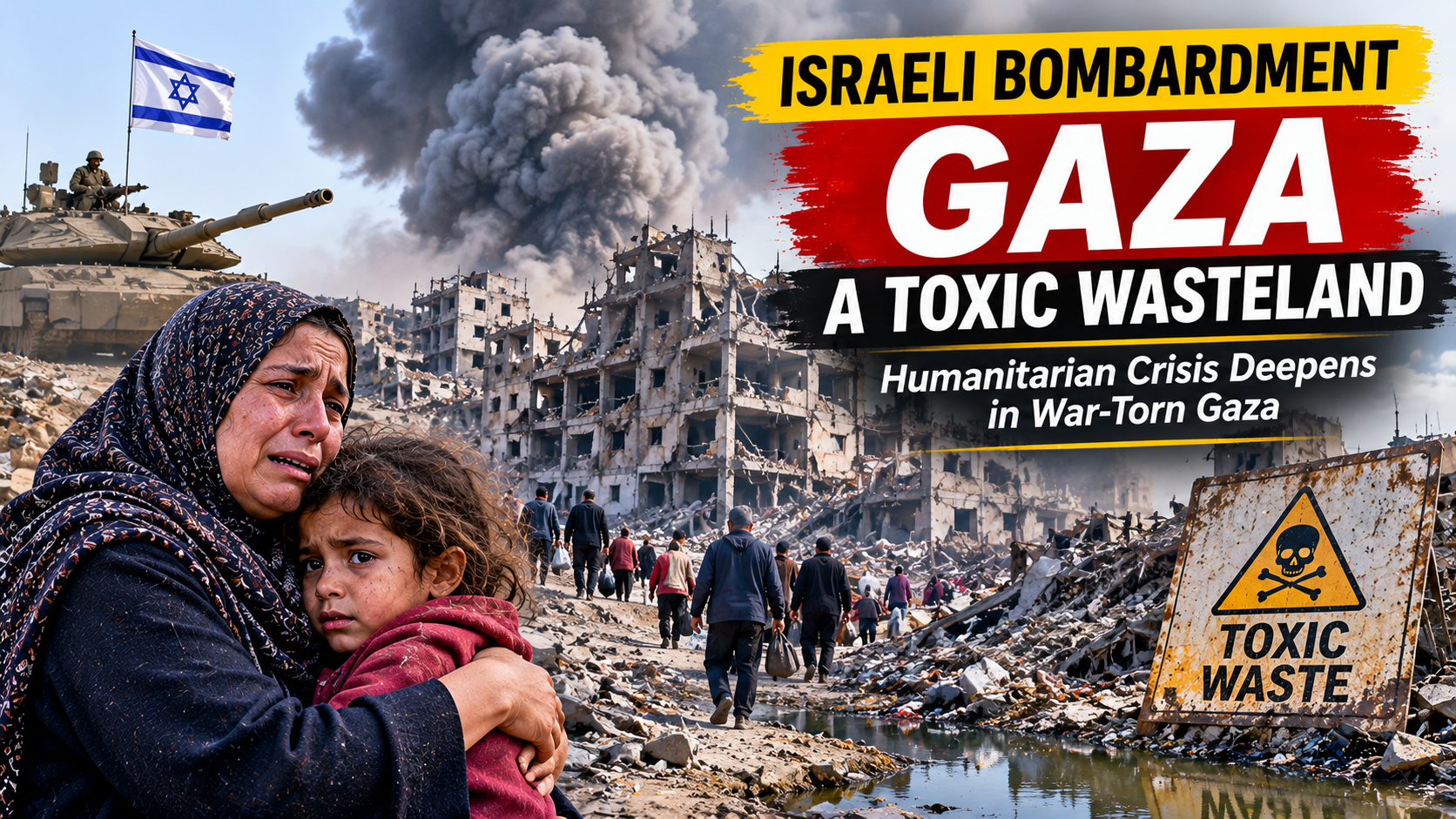
Gaza is facing widespread environmental contamination following more than three years of Israeli military bombardment, with a new report warning that toxic pollution could threaten Palestinian lives for decades.
The report, published on 23 November 2026 by Oxfam and the Conflict and Environment Observatory (CEOBS), found indicators of potential contamination across more than 99 per cent of the Gaza Strip. Its analysis also estimated that approximately 78 per cent of Gaza's land area had been directly affected by the scale and intensity of Israeli military operations. Researchers warned that the destruction of buildings, infrastructure and essential environmental systems had created serious risks for the territory's population.
The research identified several categories of potentially hazardous substances, including heavy metals, explosive residues, asbestos from destroyed buildings, dioxins and biological contaminants. These pollutants can enter the environment through explosions, fires, damaged infrastructure and accumulated debris. The report warned that Palestinians could be exposed through contaminated air, food and drinking water, as well as direct contact with polluted soil and rubble. Children and pregnant women were identified as particularly vulnerable to the associated health risks.
Researchers used satellite imagery, remote sensing, scientific analysis and publicly available information to assess the geographical spread of contamination. The highest levels of potential pollution were identified in Gaza City, Khan Younis, Rafah, Jabalia and along the Salah al-Din Road. These locations experienced extensive bombardment, ground military operations, infrastructure destruction and significant debris accumulation. However, the researchers acknowledged that restrictions on bringing specialist testing equipment and technical expertise into Gaza have prevented a complete assessment of the contamination.
Water contamination emerged as one of the most serious concerns. Analysis of groundwater testing data found faecal coliform bacteria in 19 per cent of 79 wells sampled across Gaza in July 2026. This compared with two per cent of groundwater wells reported as contaminated in 2021. The presence of these bacteria indicates possible contamination from human or animal waste and can signal the risk of disease-causing pathogens entering drinking water supplies.
The report also highlighted the extensive damage to Gaza's sewage and wastewater infrastructure. Only 19 per cent of sewage pumping stations were reported to remain functional, while approximately 30 per cent of the wastewater network retained some operational capacity. As a result, around 40,000 cubic metres of untreated sewage were entering the Mediterranean Sea each day, with a further 15,000 cubic metres being lost through cesspits and other leakage routes. The situation increases the risks of groundwater pollution and the spread of waterborne diseases.
Air pollution presents another long-term concern, particularly in densely populated areas where destroyed buildings have left large quantities of dust and potentially hazardous materials. Gaza City, Jabalia and North Gaza were identified as areas facing particularly high potential risks. Wind, vehicle movements and debris-clearance activities can disturb contaminated particles, allowing them to become airborne and increasing the possibility of respiratory exposure among residents living close to damaged structures.
The United Nations Environment Programme has estimated that military operations have generated more than 61 million tonnes of debris across Gaza. The accumulated material includes destroyed homes, damaged infrastructure and other structures that may contain asbestos, chemicals and unexploded ordnance. Clearing the rubble will therefore require more than conventional demolition and waste removal. Specialist environmental assessments and safe disposal procedures will be necessary to reduce further exposure during reconstruction.
Oxfam International executive director Amitabh Behar warned that the environmental destruction had severely undermined the conditions necessary for human safety and survival. He said Palestinians were being exposed to toxins through multiple routes and that the consequences could continue for generations without effective clean-up and recovery measures. The organisations called for independent environmental investigations, access for technical specialists and urgent action to identify and reduce contamination risks.
Israel rejected the report's findings. Its Foreign Ministry described the assessment as misleading and criticised Oxfam's credibility, arguing that the destruction reflected the scale of Hamas's military infrastructure, including tunnels and weapons facilities in civilian areas. Israel also said restrictions on heavy equipment entering Gaza were linked to concerns that such machinery could be used for military purposes. The Israeli military has maintained that it seeks to minimise harm to civilians and civilian infrastructure during operations.
The report raises significant questions about the environmental challenges that will face Gaza even after active hostilities end. Rebuilding homes, restoring water supplies and reopening essential services will depend on addressing contamination alongside physical reconstruction. Oxfam and CEOBS argue that independent investigations, environmental remediation and accountability must form part of the recovery process to protect the health and future of Gaza's population.
For further local news, community updates and story tips, contact news@lakelandpost.co.uk or 0333 090 2080.