
Republican Lawmakers Criticize Trump’s Emerging Iran Peace Deal Amid Rising Party Divisions
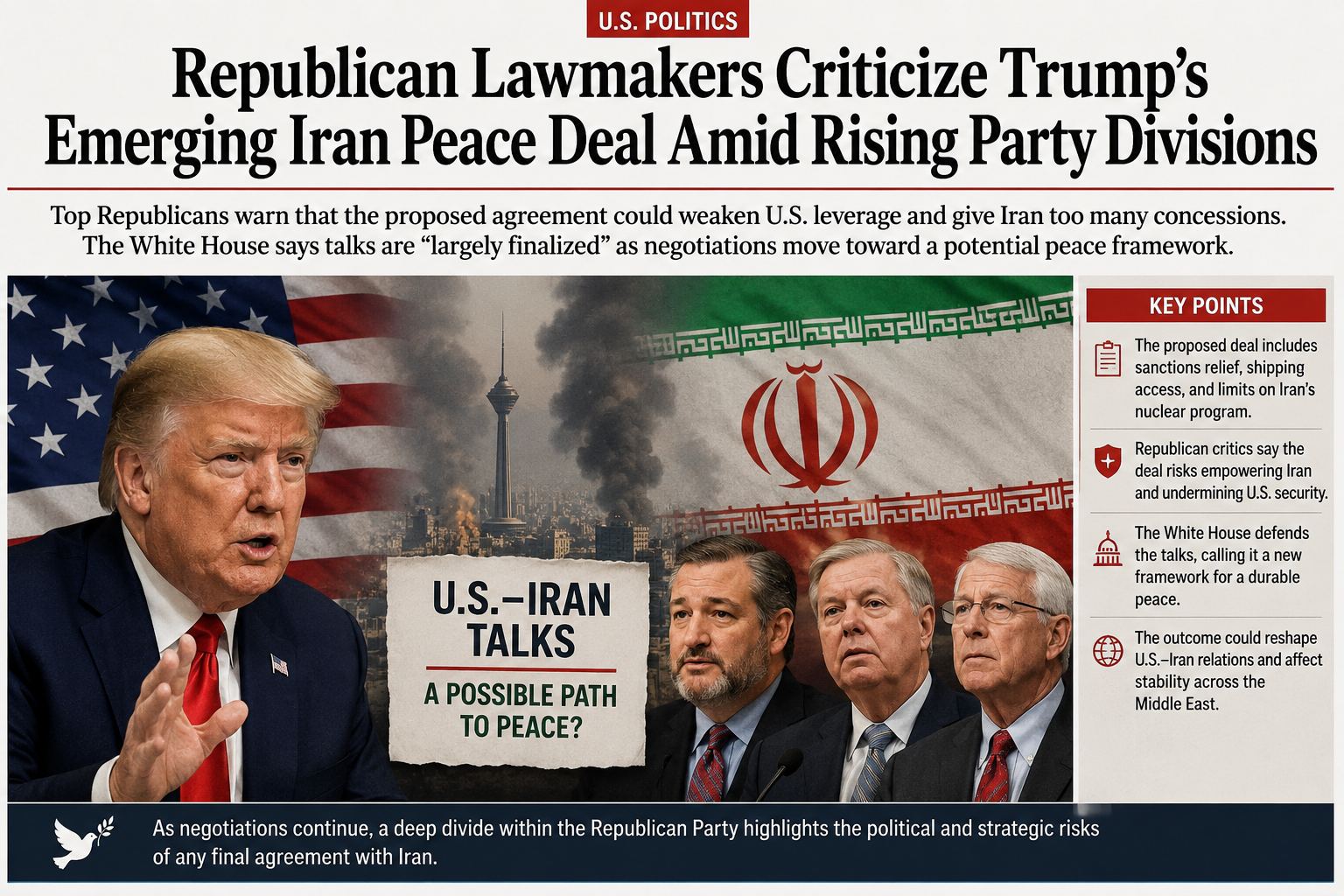
WASHINGTON President Donald Trump’s efforts to broker a possible end to the war with Iran are facing growing resistance from within his own Republican Party, highlighting deep divisions over how the United States should handle Tehran as negotiations near a critical stage.
According to reports from ongoing discussions, the proposed agreement includes steps toward easing sanctions on Iran, reopening key energy and shipping routes such as the Strait of Hormuz, and limiting Iran’s nuclear program in exchange for broader diplomatic normalization and de-escalation of military tensions. The White House has described the talks as “largely negotiated,” though officials stress that final details are still being worked out.
However, several prominent Republican lawmakers are voicing strong objections. Senators including Ted Cruz, Lindsey Graham, and Roger Wicker argue that the deal, as currently understood, risks giving Iran significant concessions without sufficient guarantees that it will permanently curb its nuclear ambitions or regional influence. Critics have specifically raised concerns about potential sanctions relief and any arrangement that could allow Iran to retain enrichment capabilities.
Senator Wicker described the idea of a temporary ceasefire framework as potentially dangerous, warning it could undermine long-term U.S. security objectives. Senator Cruz has also been particularly vocal, insisting that Iran must not be allowed to maintain any capacity for uranium enrichment under any agreement.
President Trump, meanwhile, has defended his approach, stating that negotiations are still ongoing and that critics are misrepresenting the deal. He emphasized that the current proposal is not a return to previous international agreements he rejected in the past, but rather a new framework intended to secure a more durable peace.
Secretary of State Marco Rubio has echoed the administration’s position, arguing that the goal remains preventing Iran from acquiring nuclear weapons while avoiding further escalation of the conflict.
The debate comes at a time when the broader Middle East situation remains fragile, with ongoing concerns about energy security, regional stability, and the economic impact of disruptions to global oil routes. While diplomatic momentum appears to be building, the sharp divide within the Republican Party underscores the political risks facing any final agreement.
As negotiations continue, both supporters and critics agree that the outcome could have long-term consequences not only for U.S.–Iran relations but also for global security and the balance of power in the Middle East.