
US Army Secretary Dan Driscoll Resigns Amid Tensions With Defense Secretary
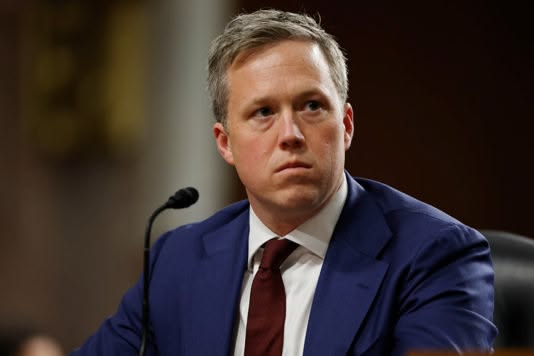
US Army Secretary Dan Driscoll has resigned from his position following months of reported tension with Defense Secretary Pete Hegseth, marking another significant change among senior military leaders in the Trump administration.
President Donald Trump accepted Driscoll's resignation on Monday evening, according to a US official cited by ABC News. The White House subsequently praised Driscoll's performance and described him as highly effective during his time leading the Department of the Army.
White House spokesperson Anna Kelly said Driscoll had advanced the administration's priorities by strengthening military readiness and lethality while also contributing to diplomatic efforts involving Russia and Ukraine. The White House statement credited his work with helping make the US Army more powerful.
Driscoll had served as Army secretary since February 2025, making his departure the latest in a series of changes affecting the Pentagon's senior leadership. His resignation comes after months of reported disagreements with Hegseth over the direction and management of the Army.
One major source of tension involved Hegseth's decisions concerning senior Army officers. US officials told ABC News that Hegseth had fired or sidelined several senior officers who were being considered for promotion to general, creating disagreement between the two civilian leaders.
The relationship was further strained by the removal of General Randy George, the former Army Chief of Staff. Hegseth dismissed George in April without publicly explaining the reason, while Driscoll had maintained a close working relationship with the senior officer.
Driscoll subsequently told members of Congress that he did not know why George had been removed. The decision was viewed as particularly significant because George had been the Army's highest ranking uniformed officer and had worked closely with Driscoll on the service's priorities.
Driscoll had also taken on responsibilities that went beyond the traditional role of an Army secretary. The Trump administration selected him for a diplomatic initiative involving Russia and Ukraine, including a visit to Ukraine as part of efforts to restart peace negotiations.
His involvement in the diplomatic effort reflected the confidence placed in him by the White House. The assignment was unusual for a service secretary, whose primary responsibilities normally centre on overseeing the training, equipping and administration of the Army.
Driscoll also developed a reputation for supporting changes to military procurement and modernisation. He pushed for reforms aimed at making the Army more adaptable and cost effective while placing greater emphasis on emerging military technologies, including drones.
His political connections also helped establish his influence within the administration. Driscoll had previously met Vice President JD Vance at Yale Law School and maintained a relationship with him after serving as a cavalry officer in the 10th Mountain Division.
The resignation adds to wider uncertainty surrounding the Pentagon's senior leadership. Driscoll's departure follows other significant personnel changes involving senior Army officers, while disagreements over the future direction of the service have continued.
The White House did not present the resignation as a dismissal and instead issued strong praise for Driscoll's record. Officials highlighted his contribution to military operations, readiness and diplomatic efforts while thanking him for his service to the administration.
Driscoll's departure is expected to have wider implications for the Army as the Pentagon continues to undergo leadership changes. His tenure had included efforts to modernise the service, strengthen readiness and respond to changing military requirements, including the growing importance of relatively inexpensive drone technology.
The resignation also comes at a significant time for the US military, with the administration managing major overseas security commitments while simultaneously making changes to military leadership and organisational priorities. The loss of another senior figure could increase scrutiny of the Pentagon's approach to personnel and strategic planning.
Driscoll is understood to have planned to leave the post on September 3, according to a source familiar with his actions. His departure after roughly 18 months in the position makes him the latest senior US military official to leave amid continuing changes within the defence establishment.
The White House has not indicated who will permanently replace Driscoll as Army secretary. His resignation brings to an end a period in which he became a prominent figure in both Army modernisation and the administration's diplomatic efforts, while his disagreements with Hegseth increasingly attracted attention.
Got a news story or tip to share? Contact our editorial team by emailing news@lakelandpost.co.uk or call us directly on 0333 090 2080.