
West Cumbrian Students Explore Fukushima Nuclear Legacy During Japan Trip
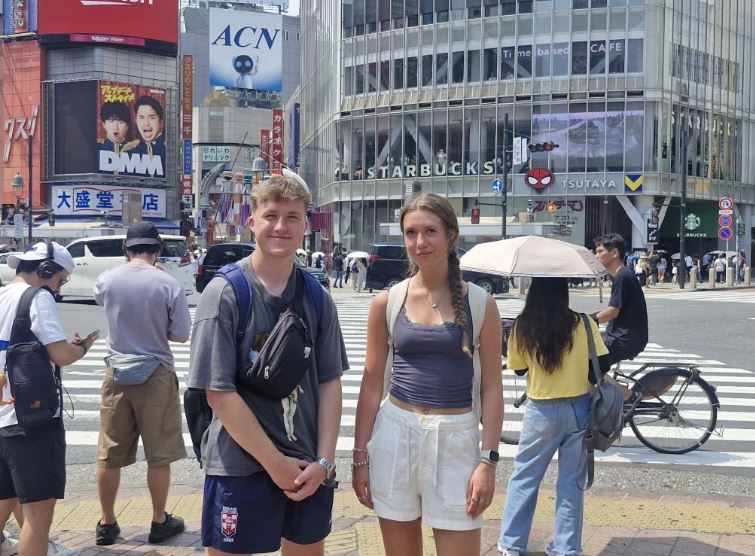
Two West Cumbrian students have returned from an educational trip to Japan where they explored the legacy of the Fukushima nuclear disaster.
Ava Maxwell and Ace Savage, students at St Benedict’s Catholic High School in Whitehaven, travelled to Japan during the summer holidays as representatives of their school. The trip formed part of the international NDF STEAM programme, giving them the opportunity to work alongside Japanese students while learning about science, technology, engineering, arts and mathematics.
One of the most significant parts of the visit was a trip to the Fukushima Daiichi nuclear power plant. The students were able to learn about the ongoing decommissioning work at the site and gain a closer understanding of the challenges created by the earthquake and tsunami that affected the area in 2011.
The visit provided the students with an opportunity to explore nuclear energy beyond what they would normally encounter through classroom study. Seeing the site and learning about the work taking place there allowed them to consider the technical and environmental issues involved in managing the long term consequences of a major nuclear accident.
The programme also gave Ava and Ace an insight into the experiences of communities affected by the Fukushima disaster. Understanding the relationship between nuclear facilities and surrounding communities formed an important part of the educational experience, alongside the technical aspects of decommissioning and environmental management.
During their time in Japan, the students also visited the British Embassy in Tokyo. The visit added another element to their programme, allowing them to experience an international working environment while learning more about the connections between Britain and Japan.
The trip involved considerably more than organised educational visits. Ava and Ace also experienced everyday life in Japan and explored Tokyo, using the city's extensive rail network as part of their travels.
The students covered the equivalent of a half marathon on foot while navigating the capital's railway system. The experience gave them an opportunity to develop their independence while becoming familiar with a transport system very different from what they would normally encounter at home.
Ava described the journey as an experience she would remember for a long time. She said the opportunity to visit Fukushima Daiichi had changed her understanding of nuclear energy, decommissioning and the difficulties communities can face following a major disaster.
She also highlighted the wider cultural experience provided by the trip. Spending time in Japan and experiencing its culture and daily life meant the programme extended beyond a conventional educational visit and gave the students an opportunity to learn through direct experience.
The trip also contributed to Ava's personal development. She said the experience had increased her confidence and independence while improving her communication skills, particularly through interacting with people in unfamiliar surroundings and taking part in activities away from home.
The visit also strengthened her interest in possible future careers linked to STEM and environmental subjects. Meeting professionals and seeing nuclear work being carried out in person helped her consider the types of careers she may wish to pursue in the future.
Ace similarly described the trip as memorable, particularly because of the opportunity to meet people he would not otherwise have encountered. Working alongside new people provided an additional dimension to the educational programme and required the students to communicate and collaborate in unfamiliar settings.
The experience also gave Ace the opportunity to speak with leaders working within the nuclear sector. He said visiting the Fukushima site provided an exceptional opportunity to learn directly about the industry and the work involved at a location with such a significant history.
Presenting work during the programme also helped Ace develop his public speaking skills. Working in groups with people he had not previously met required him to communicate effectively, while presenting the group's work gave him further experience in explaining ideas to others.
For both students, the Japan visit combined technical education with personal development and cultural experience. The programme gave them a chance to explore nuclear science in a real world setting while developing skills that can be useful in education, employment and future professional environments.
The experience also has particular relevance for students from West Cumbria, where the nuclear sector forms an important part of the local economy and employment landscape. Exposure to international nuclear projects can provide young people with a broader understanding of the industry and the range of careers connected with it.
Ava and Ace's visit demonstrated how educational programmes can connect classroom learning with real world experiences. Their time in Japan allowed them to examine the technical challenges surrounding Fukushima while also considering environmental issues, community impacts and the wider responsibilities associated with nuclear energy.
The students have now returned to Whitehaven with new experiences from their time in Japan and a greater understanding of nuclear science and environmental issues. Their participation in the international programme has also provided practical opportunities to develop confidence, communication and public speaking skills alongside their academic interests.
Got a news story or tip to share? Contact our editorial team by emailing news@lakelandpost.co.uk or call us directly on 0333 090 2080.