
Supreme Court Allows Trump White House Ballroom Construction To Continue
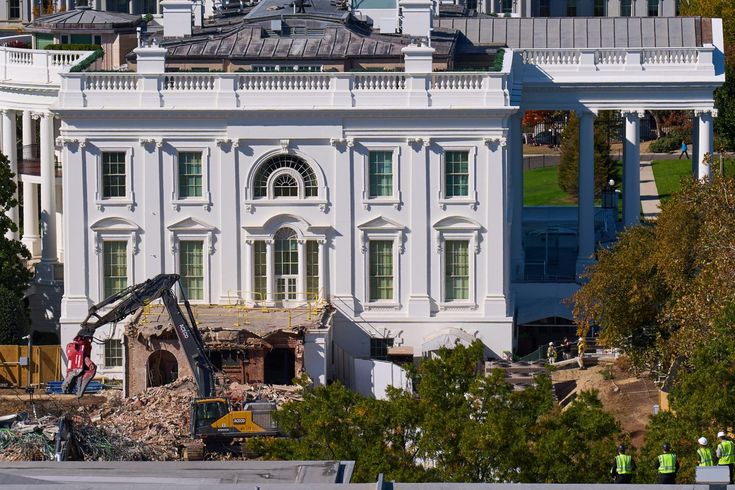
The US Supreme Court has cleared the way for construction of a controversial new ballroom at the White House to continue, allowing the Trump administration to proceed while a legal challenge against the project remains unresolved.
The court issued a 5 to 4 decision allowing above ground construction to continue after the National Trust for Historic Preservation challenged the project in federal court. The organisation argues that substantial changes to the White House require congressional authority.
Chief Justice John Roberts joined the court's three liberal justices in dissenting from the decision. In his opinion, he argued that the ruling was not a victory for the separation of powers and warned that the construction was likely unlawful.
The Supreme Court's majority did not make a final ruling on whether the Trump administration had the legal authority to carry out the project. Instead, the justices concluded that the National Trust was likely unable to establish the legal standing required to challenge the construction in federal court.
The court also considered the government's argument that stopping construction would cause irreparable harm. The administration told the justices that work was progressing rapidly and that preventing above ground construction would create significant difficulties for the project.
The legal dispute centres on Trump's decision to demolish the White House East Wing and replace it with a new ballroom complex. The National Trust maintains that Congress, rather than the president alone, has the authority to approve such a substantial alteration to the White House.
Trump initiated the demolition of the East Wing in late 2025 as part of plans for the new development. The project has since become a major point of contention over presidential authority, historic preservation and the limits of executive power.
The planned ballroom is expected to cover approximately 90,000 square feet and has an estimated cost of $400 million. The administration has described the wider development as an important security project and has argued that some of its features are necessary because of threats to the president and the White House.
Construction has continued at a rapid pace while the legal proceedings have taken place. The administration told the Supreme Court that around 250 workers were operating around the clock and that the structure was approximately 65 per cent complete.
The Supreme Court's decision effectively allows that work to continue while the underlying case proceeds. This means the ruling does not permanently settle the question of whether the project itself is lawful.
A lower court had previously ordered the administration to halt above ground construction while allowing certain underground and security related work to continue. The administration appealed that decision and asked the Supreme Court to intervene.
The National Trust's case argues that the Trump administration proceeded without obtaining the necessary congressional approval. The organisation has sought to stop the project while the courts consider whether the president has the authority to make such a major change to the White House complex.
Chief Justice Roberts expressed particular concern about the constitutional implications of allowing the work to proceed. His dissent argued that the president occupies the White House temporarily and does not have unlimited authority to fundamentally alter the historic building without congressional involvement.
The decision represents a significant legal victory for Trump, who has strongly defended the project and criticised the lawsuit brought by preservationists. Following the ruling, the president celebrated the decision and described the planned building as a major addition to Washington.
Despite the Supreme Court ruling, the legal challenge itself has not been brought to an end. The majority's decision was focused on the immediate question of whether construction should be allowed to continue and did not definitively determine the administration's underlying legal authority.
The case therefore leaves open a broader constitutional dispute concerning the power of the executive branch over federal property. The continuing litigation could determine whether the administration ultimately has the authority to complete the project as planned.
For now, construction can continue, with the White House administration able to press ahead with the project as the legal proceedings continue. The Supreme Court's intervention means the building is likely to advance significantly before the courts reach a final resolution of the wider dispute.
Got a news story or tip to share? Contact our editorial team by emailing news@lakelandpost.co.uk or call us directly on 0333 090 2080.