
New artwork celebrates Barrow’s identity at University of Cumbria campus
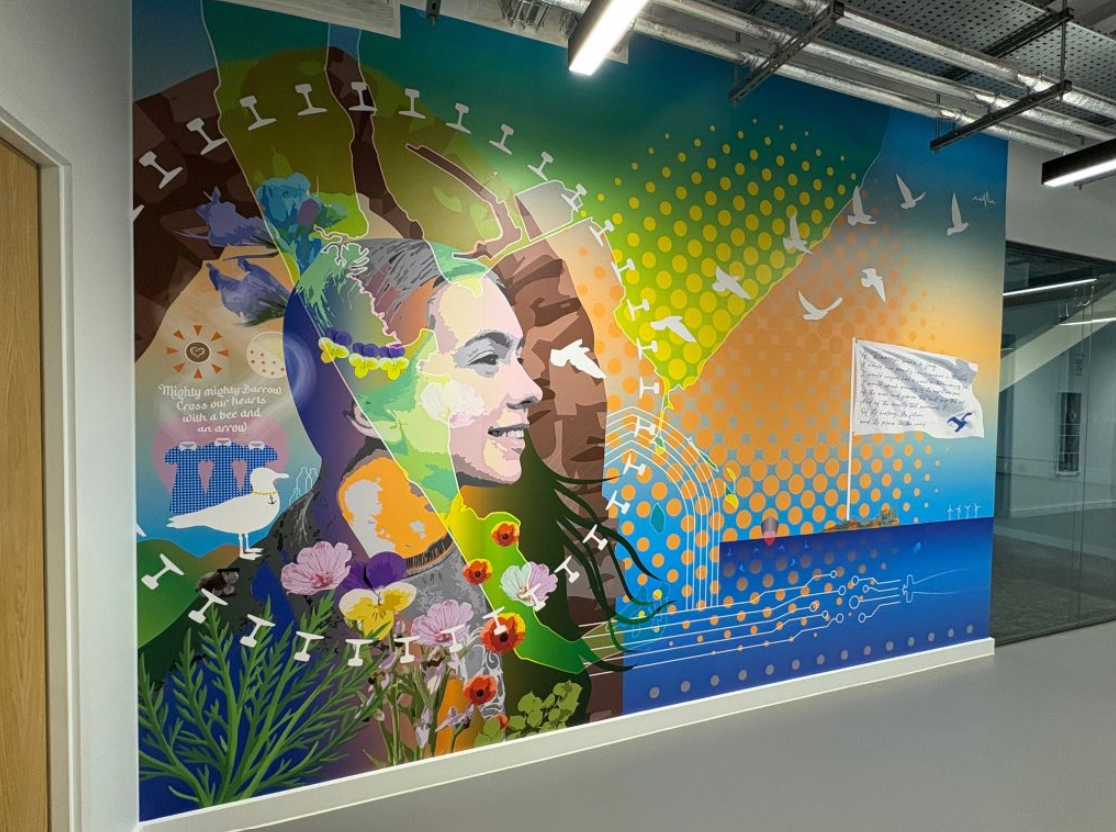
Two new murals celebrating Barrow’s identity and community have been unveiled at the University of Cumbria’s Barrow campus.
The artworks were created through a collaborative project involving local people, university staff and students, Barrow arts organisation BarrowFull and international street artist ATMA. The project was commissioned by the university and designed to create artwork that reflected the character of Barrow while establishing a stronger visual connection between the new campus and the community around it. Rather than simply commissioning artwork for the building, organisers wanted local people to influence what appeared on its walls and ensure their experiences and ideas became part of the finished designs.
Around 40 people from across the Barrow community took part in a series of creative workshops alongside University of Cumbria staff and students. A further 30 people contributed ideas and experiences through verbal feedback, giving the project a broader range of local perspectives and helping artist ATMA understand what Barrow means to the people who live, work and study there. The workshops provided an opportunity for participants to share drawings, shapes, words, colours and other creative responses that could later be incorporated into the murals.
The workshops explored three main themes connected to the town and its future. Participants were invited to consider the pride people feel about Barrow and the qualities that make its community distinctive, while also reflecting on the opportunities created by the arrival of the university. A further theme focused on new opportunities, possible paths and future prospects for Barrow as the town continues to experience regeneration and investment.
ATMA used the contributions from those sessions as the starting point for two large-scale artworks with distinctly different identities. Individual ideas gathered through the workshops were brought together and transformed into the finished murals, allowing personal contributions from residents and students to become part of permanent artwork within the university campus. The process was intended to ensure the finished pieces were rooted in local experiences rather than being created independently of the community they represent.
The two completed murals are titled ‘Grand Barrow’ and ‘Shift’, with each occupying a different area of the university building. ‘Grand Barrow’ is located on the ground floor, while ‘Shift’ can be found on the first floor. Together, the works provide a visual representation of the relationship between people, place and partnership, reflecting themes that have also shaped the university’s developing role in the town.
The artworks were formally unveiled during a special reception at the Barrow campus. Guests heard from Professor Brian Webster Henderson OBE, Deputy Vice Chancellor of the University of Cumbria, and artist ATMA, who explained some of the ideas and thought processes behind the murals. Attendees were then taken on a walking tour of the building to see both artworks and understand how the community contributions had developed into the completed pieces.
Artwork produced during the community workshops was also displayed as part of the unveiling event. This gave visitors the chance to see some of the original material that helped shape the final designs and provided a clearer picture of how the project developed from early conversations and creative exercises into large-scale permanent installations. ATMA was also available to meet guests and discuss the inspiration behind the finished murals.
The project was delivered in partnership with BarrowFull, a Barrow-based arts and culture organisation that works on projects designed to bring creative activity into public spaces and connect artists with local communities. BarrowFull said the workshops created an opportunity for people to think about where they live, what they are proud of and what they hope for in the future, before turning those discussions into something that can be seen within the university campus every day.
For the University of Cumbria, the murals form part of a wider commitment to developing strong relationships with the communities in which it operates. The university’s Towards 2030 strategy places emphasis on its role as an anchor institution and on responding to the needs and opportunities of the places around its campuses. The Barrow artwork provides a visible example of that approach, with local voices directly contributing to the character of the university’s newest campus.
The murals also arrive as the university continues to establish its presence in Barrow following the opening of its Buccleuch Dock Road campus. The site forms part of the Barrow Learning Quarter and has welcomed students studying subjects including Mechanical Engineering and Adult Nursing, with further courses and opportunities being developed in response to regional skills needs. The university has described its ambition as being a university in Barrow and for the Furness region.
The community artwork therefore sits alongside the university’s wider educational and economic role in the town. Its Barrow campus has been developed to bring higher education closer to local people while working with employers and partners on skills development, and the new murals provide another way of connecting the building with the town’s identity and aspirations. The university has also hosted cultural and community events at the campus since opening.
Artist ATMA said the project was centred on listening before creating, with the workshops allowing people to describe what Barrow means to them and share hopes for the future. The artist’s role was then to bring those different contributions together into artwork that felt authentic to the town and its people, with the finished murals intended to create a sense of pride and connection for those who see them.
Professor Brian Webster Henderson said the murals represented the university’s ambition to work as an anchor institution within the communities it serves. He described the artworks as an expression of local voices, creativity and aspirations, while highlighting the partnership between the university and the wider Barrow community that made the project possible.
Kathrin Bonnar, Producer at BarrowFull, said art could encourage people to think about where they live, what they value and where they want to go next. The project has now turned those conversations into permanent artwork within the campus, ensuring that ideas contributed through the workshops remain visible as students, staff, visitors and members of the wider community use the building.
The two murals are now permanent features of the University of Cumbria’s Barrow campus, creating a lasting connection between the institution and the community around it. With the artwork drawing directly on local contributions, the project provides a visible celebration of Barrow while reflecting the town’s changing identity, its people and the opportunities associated with its continuing regeneration.
Got a news story or tip to share? Contact our editorial team by emailing news@lakelandpost.co.uk or call us directly on 0333 090 2080.