
Lifeboat Crew Escorts Broken Down Fishing Vessel Into Workington Harbour
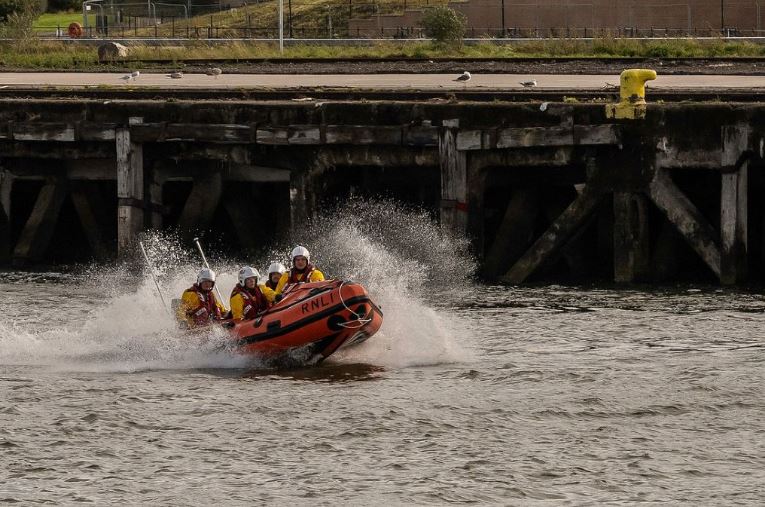
Workington RNLI volunteers assisted a fishing vessel after mechanical failure left the small boat drifting near the town’s harbour.
The station’s D Class lifeboat James R Allen was requested by Belfast Coastguard after the 16 foot fishing vessel encountered difficulties close to Workington pier. The initial request for assistance was received shortly before 3.30pm, with the vessel reported to be drifting and no other boats in the immediate area. The situation prompted the launch of the volunteer lifeboat crew to provide assistance and ensure the fishing vessel could return safely to harbour.
The lifeboat was launched at 3.50pm after the request for assistance had been received. The volunteer crew made their way towards the fishing vessel and arrived on scene approximately five minutes after launching. By the time the RNLI crew reached the location, the disabled boat was already being towed by another vessel, meaning the lifeboat did not need to establish a separate tow.
The RNLI crew instead took on an escort role, accompanying the fishing vessel and the boat providing the tow back towards Workington harbour. This allowed the volunteers to monitor the situation as both vessels made their way into the harbour. The presence of the lifeboat provided additional support while the disabled fishing boat was brought back into a safe location.
The 16 foot vessel had suffered a mechanical failure which left it unable to continue under its own power. With the fishing boat drifting near the harbour entrance, assistance was required to prevent the situation from developing into a more serious incident. The fact that another vessel had already begun towing it meant the RNLI crew could focus on escorting the operation rather than carrying out a direct tow themselves.
The fishing vessel was safely brought back into Workington harbour under the supervision of the RNLI crew. Once inside the harbour, the 16 foot boat was secured to its berth, bringing the immediate incident to a safe conclusion. There were no further details reported about damage to the vessel or any injuries connected with the mechanical failure.
The lifeboat’s involvement demonstrates the role of volunteer crews in responding to vessels experiencing difficulties close to the Cumbrian coastline. Mechanical failures can leave smaller boats without propulsion and vulnerable to tides, wind and other conditions. Even when another vessel is able to provide assistance, the presence of a lifeboat can provide an additional layer of safety during the return journey.
The timing of the response also allowed the crew to reach the vessel quickly after the initial request was made. The James R Allen launched at 3.50pm and reached the scene around five minutes later, giving the volunteers an opportunity to assess the situation while the fishing boat was already being towed. The crew then accompanied the vessels until they were safely inside the harbour.
Workington RNLI operates as part of the wider search and rescue network responding to incidents around the local coastline. Calls can involve vessels experiencing mechanical problems, people getting into difficulty at sea or other situations requiring specialist assistance. Volunteer crews are trained to respond to a range of incidents and can be deployed when the coastguard considers their support necessary.
In this case, the incident was resolved without the need for a prolonged lifeboat operation. Once the fishing vessel had been secured at its berth, the RNLI crew were able to return to their station. The James R Allen arrived back at the lifeboat station at 4.05pm, less than an hour after launching.
The quick return was important because lifeboats must remain ready for further emergencies. After returning to the station, the crew made the vessel ready for its next potential search and rescue operation. This preparation forms an important part of the work carried out by volunteer crews, who need to ensure their lifeboat and equipment are available whenever another call is received.
The incident also highlights the value of early reporting when a vessel develops a mechanical problem. A fishing boat that loses power can quickly become difficult to control, particularly if it is drifting in an area affected by tides or close to harbour infrastructure. Contacting the coastguard allows the situation to be assessed and appropriate assistance to be requested before conditions deteriorate.
The fishing vessel was fortunate that another boat was available to provide a tow before the RNLI crew arrived. However, the lifeboat remained involved to ensure the tow could be completed safely and that the disabled vessel reached its berth. The coordinated response between the coastguard, the assisting vessel and the RNLI crew allowed the incident to be resolved efficiently.
For the volunteer crew, the call was completed within a relatively short period, with the lifeboat launched, reaching the casualty, escorting the vessels into harbour and returning to station within approximately 35 minutes. The operation nevertheless demonstrates how quickly circumstances at sea can require assistance and how important it is for rescue crews to remain prepared for deployment.
The successful return of the fishing vessel to Workington harbour brought the incident to a safe conclusion without any reported escalation. The 16 foot boat was secured on its berth after being escorted into the harbour, while the James R Allen returned to its station and was prepared for future duties.
Got a news story or tip to share? Contact our editorial team by emailing news@lakelandpost.co.uk or call us directly on 0333 090 2080.