
Lake District Walkers Help Rescue Injured 77 Year Old Man And Grandson
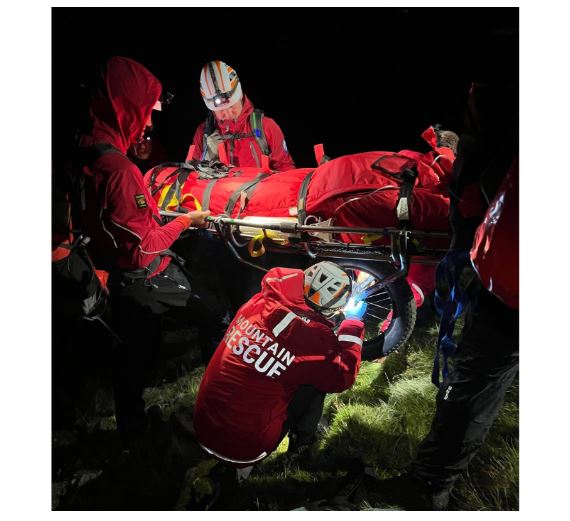
Two Lake District walkers helped raise the alarm after finding an injured 77-year-old man and his grandson in difficult conditions.
Cumbria Police received an emergency call through an iPhone Emergency SOS at around 8.30pm on September 17 after the pair were found at Skew Gill, a steep ravine on the side of Great End. Wasdale Mountain Rescue Team was deployed alongside the Maritime and Coastguard Agency to assist with the rescue. However, poor weather prevented the rescue helicopter from reaching the location, meaning the operation had to be carried out by mountain rescue volunteers on foot.
A team of 14 Wasdale Mountain Rescue volunteers made their way to the casualties and assessed their condition after reaching the remote location. Both the older man and his grandson were described as very cold when rescuers arrived, and the team took immediate steps to warm them and make them more comfortable. Further assessment found that the 77-year-old had suffered injuries to his wrist and knee, increasing the urgency of getting him safely off the hillside.
The terrain around Skew Gill presented additional challenges for the rescuers, particularly because of the steep ravine and difficult weather conditions. With the helicopter unable to reach the location, the mountain rescue team had to organise a ground evacuation instead. The injured man was prepared for removal from the hill while his grandson was also assisted as the operation continued through the evening.
The two walkers who initially came across the casualties remained with them while waiting for help to arrive. They stayed at the location for so long that their head torches eventually ran out, leaving them without their own lighting equipment. Their decision to remain with the casualties provided important support while the rescue operation was being organised and helped ensure the pair were not left alone in the difficult conditions.
The walkers were confident that they could find their way back to Seathwaite once the rescue team had arrived. Mountain rescue volunteers therefore provided them with spare head torches so they could safely make their way back to their vehicle. This allowed the walkers to leave the hillside while the rescue team continued dealing with the injured man and his grandson.
The 77-year-old was eventually placed on a stretcher and carried from the hill by the rescue team. Once the evacuation was completed, he and his grandson were handed over to the North West Ambulance Service for further care. The operation required considerable coordination between the mountain rescue volunteers, emergency services and the agencies involved in the attempted helicopter response.
The incident highlighted the difficulties emergency services can face when responding to casualties in remote mountain locations. Although an emergency helicopter was requested, weather conditions meant it could not reach the scene. This left the mountain rescue volunteers to carry out the evacuation by ground, requiring a larger team and specialist equipment to move the injured man safely through challenging terrain.
The use of the iPhone Emergency SOS system also played an important part in bringing the incident to the attention of emergency services. The technology can provide a means of contacting help when people are in remote locations, although access to emergency communications can still depend on circumstances and available connectivity. In this case, the emergency call allowed the rescue response to be initiated during the evening.
Wasdale Mountain Rescue Team thanked the Maritime and Coastguard Agency for attempting to assist with the incident despite the weather conditions. The team also expressed its thanks to the two walkers who reported the situation and stayed with the casualties until help arrived. Their actions formed an important part of the response before the mountain rescue team could reach the location.
The incident was one of several demanding callouts handled by Wasdale Mountain Rescue Team over the same weekend. On Saturday, September 19, volunteers were called to three separate incidents involving an injured woman, three men who had become lost and a group attempting the Three Peaks challenge.
The first Saturday incident was reported at Gavel Neese, near Burnthwaite Farm, at around 1.45pm after Cumbria Police received a call concerning a woman with an injured ankle. After initially experiencing difficulties making contact with those who had reported the incident, rescuers located the casualty not far from Burnthwaite Farm. Twelve volunteers assessed her and established that she had sustained a significant fracture to her ankle.
The injured woman was given pain relief before the rescue team reduced and realigned the ankle and placed it into a vacuum splint. She was then carried a short distance by stretcher to an ambulance, allowing her to be transferred for further medical treatment. The operation demonstrated the range of medical and evacuation skills required by mountain rescue volunteers when dealing with injuries away from roads and easily accessible locations.
Later that afternoon, at around 4.45pm, another emergency call was received concerning three men who had become lost and were stuck at Little Narrowcove. An assistant team leader spoke with the group, who were uncomfortable about moving from their location. Eight rescue team members were subsequently deployed and reached the men before escorting them back down to Wasdale Head, where they waited for a family member to collect them.
A third incident was reported at around 11.15pm when Cumbria Police received a call from a group of four people taking part in the Three Peaks challenge at Hollow Stones. One member of the group had suffered a knee injury, but after speaking with them, a team leader was able to support the group in making their own way safely off the mountain.
Two mountain rescue team members monitored the group's progress by telephone as they descended. This allowed the team to maintain contact with the walkers while avoiding the need for a larger physical deployment, provided that the group remained able to continue safely. The incident was brought to a safe conclusion with the group making their way down under remote support.
The series of callouts highlights the varied situations faced by mountain rescue volunteers across the Lake District, from serious injuries requiring stretcher evacuation to walkers who become lost or need guidance to reach safety. Weather, darkness, steep terrain and limited access can all complicate rescue operations, requiring teams to assess each situation carefully and choose the safest available response.
The rescue involving the 77-year-old man and his grandson also demonstrated the importance of people looking out for others in remote areas. The two walkers did not simply report what they had found and leave the location. Instead, they stayed with the casualties until their lighting equipment ran out, helping to provide reassurance and support while specialist assistance was arranged.
Mountain rescue teams continue to advise people heading into the Lake District to plan carefully, carry suitable equipment and be prepared for rapidly changing conditions. Reliable navigation equipment, adequate lighting and appropriate clothing can be particularly important when walks extend into the evening or take place in exposed and remote areas.
Got a news story or tip to share? Contact our editorial team by emailing news@lakelandpost.co.uk or call us directly on 0333 090 2080.