
Great North Air Ambulance Records 173 Cumbria Call Outs In Three Months
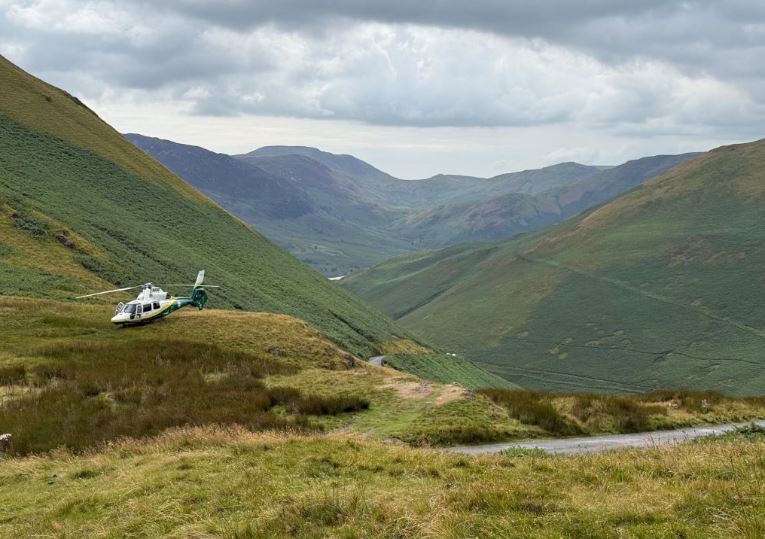
Great North Air Ambulance Service teams responded to 173 incidents across Cumbria during a busy three month period this summer.
The charity's critical care teams attended 173 incidents across Cumbria between June 21 and September 22, highlighting the continuing demand for its emergency medical response. The service, which has a base at Langwathby, was among several regional teams responding to serious incidents during the period. Across its wider operating area, the charity attended 557 emergency call outs during the same three months.
Cardiac arrests and road traffic collisions were the most common types of incidents attended by the service during the period. These were followed by falls, medical emergencies and assaults, reflecting the wide range of situations in which the charity's specialist teams can be called upon. The service provides critical care support to patients in locations where rapid medical intervention can be particularly important.
Cumbria accounted for 173 of the charity's 557 responses across the North. The remaining call outs included 331 in the North East, 24 in Northumberland, 10 on the Isle of Man, eight in Scotland, seven in Yorkshire and four in Lancashire. The figures demonstrate the broad geographical area covered by the charity and the volume of emergency work undertaken by its teams.
The service's base at Langwathby provides an important operational point for responding to incidents across Cumbria and surrounding areas. Air ambulance crews can provide specialist medical care at the scene before transporting or supporting patients as required. Their ability to reach difficult or remote locations can be particularly significant in a county where rural communities and challenging terrain can make conventional emergency response more complex.
The figures have been released as the charity continues to plan for future demand and strengthen the resilience of its helicopter fleet. Great North Air Ambulance Service has designed plans for three Airbus H145 D2 helicopters as part of its longer term approach. The organisation currently operates with two helicopters and says an additional aircraft would provide greater resilience when one helicopter is unavailable.
The charity has already secured financing for two of the planned aircraft. It is now raising funds towards the deposit for a third helicopter through its Operation SOS: Secure Our Service appeal. The campaign has a target of £2.5m and had raised 33 per cent of that target when the latest figures were announced.
Phil Lambert, chief pilot, said the current two helicopter arrangement leaves the organisation with limited room for disruption. He explained that if one aircraft is undergoing maintenance while the other develops a fault, the service could be unable to respond to a 999 call by helicopter. A third aircraft, he said, would provide greater operational resilience.
The additional helicopter is intended to ensure that the charity can maintain greater availability when one aircraft is undergoing scheduled maintenance or becomes unavailable because of a technical issue. Maintaining access to an operational aircraft is particularly important for an emergency service where response times can influence the treatment available to seriously ill or injured patients.
The 173 Cumbria call outs also demonstrate the range of incidents requiring the charity's specialist teams. Road traffic collisions can involve serious trauma requiring advanced treatment, while cardiac arrests require rapid intervention and coordinated emergency care. Falls and medical emergencies can occur in a wide variety of settings, including rural and difficult to access locations.
The service's critical care teams provide specialist medical support beyond what may be available through basic emergency response. Their work can include treating patients at the scene and stabilising them before further transportation. The ability to bring highly trained clinical personnel and specialist equipment directly to an incident is a central part of the air ambulance model.
The summer period covered by the figures included a substantial number of emergency responses across the charity's wider operating region. The total of 557 incidents demonstrates the volume of work undertaken by its crews over three months, with Cumbria accounting for a significant proportion of the overall activity. The figures provide an indication of the continuing demand for rapid critical care response across the region.
Great North Air Ambulance Service is now calling for further public support for Operation SOS as it works towards funding the third helicopter. More than £1.5m still needs to be raised before the end of the year for the appeal to reach its £2.5m target. The organisation says securing the additional aircraft is important to maintaining the future resilience of its lifesaving service.
The appeal comes as the charity continues to respond to hundreds of emergency incidents each year. The latest three month figures include emergencies involving cardiac arrests, collisions, falls, medical conditions and assaults, demonstrating the varied nature of the calls received by its teams. Each incident can require a different combination of specialist clinical care, aviation support and coordination with other emergency services.
For communities across Cumbria, the service provides an emergency resource capable of reaching patients in a wide range of locations. The county's combination of towns, rural areas, roads and challenging landscapes means that air ambulance support can form an important part of the wider emergency response network. The latest figures show that crews were called to 173 incidents in Cumbria alone during the three month period.
The planned expansion of the helicopter fleet is intended to strengthen that capability over the longer term. With financing already secured for two aircraft, the charity is concentrating its fundraising efforts on the final helicopter required to complete the planned three aircraft fleet. The Operation SOS campaign is therefore focused on providing the financial support needed to increase resilience and reduce the risk of the service being unable to respond by air.
The charity's latest appeal figures show that 33 per cent of the £2.5m target had been raised, leaving more than £1.5m still to secure. Great North Air Ambulance Service is asking members of the public to support the campaign as it works towards meeting the target before the end of the year.
Got a news story or tip to share? Contact our editorial team by emailing news@lakelandpost.co.uk or call us directly on 0333 090 2080.