
Fort Hood Shooter Nidal Hasan Set To Face Firing Squad In December
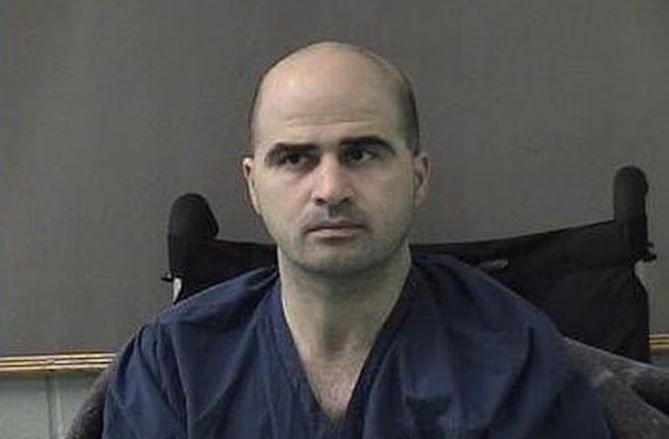
Nidal Hasan is scheduled to face a firing squad at Fort Hood in December after his death sentence was approved by the US president.
The former US Army major and military psychiatrist is due to be executed at 1pm Central Time on December 3, according to a memorandum issued by Acting Army Secretary Adam Telle. The execution is scheduled to take place at Fort Hood in Texas, the same military installation where Hasan carried out the 2009 shooting. If it proceeds as planned, it would mark the first execution carried out by the US military in more than six decades.
Hasan was convicted over the November 2009 attack at Fort Hood, which resulted in the deaths of 13 people and injuries to 32 others. At the time of the shooting, he was an Army psychiatrist and had been assigned to the military installation in Texas. He opened fire inside a medical processing facility where soldiers were preparing for deployment, creating one of the deadliest attacks ever carried out on a US military base.
The attack took place on November 5, 2009, when Hasan entered the Soldier Readiness Processing Center and began shooting. Twelve soldiers and one civilian were killed during the attack, while dozens of others were wounded. Hasan was subsequently shot and seriously injured before being taken into custody and later facing military proceedings for the killings and attempted killings.
A military court found Hasan guilty on all 42 counts brought against him in August 2013. The charges included 13 counts of premeditated murder and 32 counts of attempted murder. Five days after the guilty verdict, the court imposed a death sentence, placing Hasan on military death row at the US Disciplinary Barracks at Fort Leavenworth in Kansas.
Hasan's case then went through years of appeals and legal review before reaching its final stages. The US Supreme Court rejected his request for review in March 2025, leaving the military conviction and death sentence intact. The completion of the appellate process cleared the way for the administration to consider whether the sentence should ultimately be carried out.
President Donald Trump approved Hasan's death sentence on October 2, 2026. The decision followed a recommendation from Defence Secretary Pete Hegseth, who supported execution by firing squad. Under the military system, presidential approval is required before a death sentence imposed by a court martial can be carried out.
The Army then set the execution date in accordance with the rules governing military executions. The regulations require the execution date to fall within a specified period after presidential approval of the sentence. Acting Army Secretary Adam Telle subsequently directed that Hasan be executed by firing squad at Fort Hood on December 3.
The planned method of execution is itself significant because firing squads have not been used by the US military for decades. If Hasan's execution takes place as scheduled, it would be the first military execution since 1961. It would also represent the first execution by an Army firing squad since 1945, when Private Eddie Slovik was executed during the Second World War.
Military executions are extremely uncommon in the United States. Although the military justice system retains the power to impose the death penalty for certain offences, executions have been rare outside periods of war. Hasan is currently one of only four prisoners on the military's death row, making his case an unusual event within the modern US military justice system.
The decision to use a firing squad has also raised questions about how the execution would be conducted. Army regulations establish procedures governing military executions but do not provide detailed instructions covering every specific method. Officials have not publicly disclosed the precise arrangements that would be used at Fort Hood, including the location, personnel involved or the detailed firing squad procedure.
Hasan could also seek further legal action before the scheduled execution. Legal experts have noted that he may be able to file a habeas corpus petition in a civilian federal court. Such proceedings could potentially delay the execution while courts consider any remaining legal arguments. The existence of possible further litigation means that the December date does not necessarily guarantee that the execution will take place on schedule.
Questions have also been raised about how Hasan was notified of the execution decision. His former civilian lawyer, John Galligan, said he had spoken with Hasan and raised concerns about whether the required notification procedures had been followed correctly. Galligan questioned why the process appeared to be moving so quickly and raised concerns about Hasan's medical condition.
Hasan is paralysed from the waist down and uses a wheelchair, circumstances that could create additional practical considerations if he is transferred from Fort Leavenworth to Texas. His medical condition has also become part of the wider discussion surrounding the planned execution. Military officials have not publicly provided detailed information about how those issues would be handled.
The location chosen for the execution is also closely connected to the case. Fort Hood was the scene of the 2009 attack, meaning the planned execution would take place at the same military installation where the killings occurred. The decision gives the date particular significance for survivors and relatives of those who died in the attack.
The Fort Hood shooting had a lasting impact on the US military and the families affected by the violence. Soldiers were killed and injured while attending routine military processing activities, and the incident prompted extensive scrutiny of security procedures and the handling of Hasan before the attack. The deaths of 13 people and injuries suffered by 32 others have remained central to the case throughout the subsequent court proceedings.
Hasan largely represented himself during his 2013 military trial and admitted that he was responsible for the shooting. His case became the subject of extensive legal and political attention because of his stated motivations and the circumstances surrounding his military service. The court ultimately imposed the death penalty after finding him guilty of the charges brought against him.
The planned execution comes after the Trump administration renewed its support for capital punishment. The federal government has taken steps to expand the use of different execution methods, while the military has separately prepared for the possibility of carrying out death sentences against prisoners held under military authority. Hasan's case is the first to move towards an execution under the current military death penalty process in decades.
The Army has previously conducted planning exercises for military executions, although none have resulted in an execution for more than 60 years. Officials have said such planning is part of standard preparation for possible presidential orders. The current case has therefore required the military to move from contingency planning towards practical arrangements for a specific execution.
Despite the scheduled date, significant legal and procedural questions remain. Hasan retains the possibility of seeking relief through the civilian courts, while questions about notification and the precise execution arrangements could generate further legal scrutiny. Any successful challenge could delay the process beyond December 3.
If the execution proceeds, it will represent the first time the US military has carried out a death sentence since 1961. It would also make Hasan the first US military prisoner executed by firing squad since the Second World War. The event is therefore expected to attract considerable attention because of both the history of the Fort Hood attack and the rarity of military executions.
For the families of those killed and the survivors of the 2009 attack, the scheduled execution marks another major stage in a case that has continued for nearly 17 years. Hasan has remained on military death row since his 2013 sentencing while appeals and legal reviews continued. The December date now provides a formal timetable for the sentence, although further legal proceedings could still affect what happens next.
The Army is expected to continue preparations for the planned execution while Hasan retains his remaining legal options. The case will remain subject to military and civilian legal procedures before any sentence can be carried out. Unless the scheduled date is changed or further legal action intervenes, Hasan is due to face a firing squad at Fort Hood on December 3.
Got a news story or tip to share? Contact our editorial team by emailing news@lakelandpost.co.uk or call us directly on 0333 090 2080.