
Chickenpox vaccines for young children start across UK
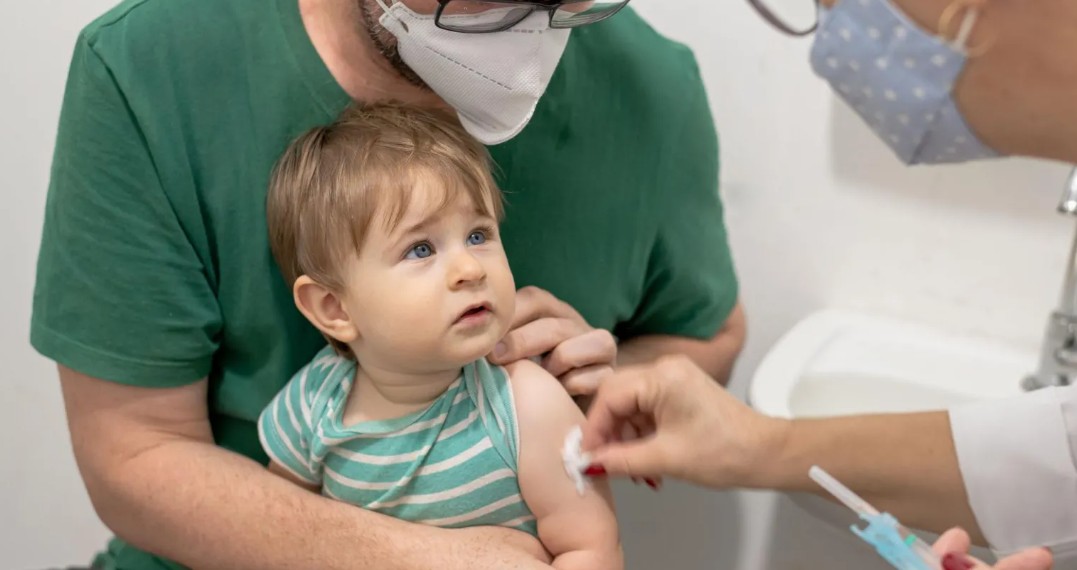
All young children in the UK will now be offered protection against chickenpox on the NHS for the first time, following the introduction of a new combined vaccine.
The chickenpox vaccine will be given as part of a four-in-one jab known as MMRV, which also protects against measles, mumps and rubella. It will be offered at 12 months and 18 months of age, replacing the existing MMR vaccine. Children up to the age of six will also be eligible for catch-up doses.
Health experts say the move is expected to significantly reduce the number of families affected by chickenpox each year and prevent the most serious complications linked to the infection.
Until now, parents who wanted to protect their children against chickenpox had to pay privately, often costing up to £200.
From 1 January, the MMRV vaccine will be added to the routine childhood vaccination programme in England, Wales and Northern Ireland. Scotland has announced it will begin rolling out the vaccine in early January.
Chickenpox is a highly contagious infection that is very common in young children. It usually causes an itchy, blistering rash that eventually scabs over, along with fever, aches and general discomfort. While most children recover within a week, the illness can be painful and often results in time off school or nursery.
Around 90% of children catch chickenpox before the age of 10. Although it is usually mild, health officials warn that it can occasionally lead to serious complications.
Dr Gayatri Amirthalingam, deputy director of immunisation at the UK Health Security Agency, said that while severe cases are rare, chickenpox can be dangerous.
“For some babies, young children and even adults, chickenpox can be very serious, leading to hospital admission and, in rare cases, it can be fatal,” she said.
Possible complications include bacterial infections of the skin, inflammation of the brain known as encephalitis, lung inflammation called pneumonitis, and strokes. Babies, adults and pregnant women are at higher risk of severe illness.
One mother, Maria Horton from Plymouth, said she would have chosen vaccination if it had been available when her daughter was younger. Her daughter Beth suffered a stroke weeks after catching chickenpox at the age of two-and-a-half.
“She collapsed, her arm and leg went floppy and she had a seizure,” Ms Horton said. Beth has since lived with long-term effects, including limited use of her right hand, speech difficulties and chronic pain.
“If I’d known years ago what I know now, I wouldn’t hesitate to give her the vaccine,” she said. “If you could stop something catastrophic happening to your child, you absolutely would.”
Dr Claire Fuller, NHS England’s national medical director, described the introduction of the vaccine as “a hugely positive moment for children and their families”.
Health Secretary Wes Streeting urged parents to ensure their children receive the vaccine, calling the rollout a “historic milestone” that will help protect children from a disease that sends thousands to hospital every year.
The MMRV vaccine has been used safely for decades in countries including the United States, Canada, Australia and Germany. These countries have seen sharp falls in chickenpox cases and serious complications.
Studies show the chickenpox component of the vaccine is around 97% effective after two doses and provides long-lasting protection.
The UK had previously delayed introducing the vaccine due to cost concerns and worries that it could lead to an increase in shingles among adults. However, long-term data from countries such as the US has not shown this to be a problem.
NHS England estimates that chickenpox costs the UK economy around £24 million each year due to lost income and productivity, while the vaccine programme could save £15 million annually in NHS treatment costs.
In November 2023, the Joint Committee on Vaccination and Immunisation recommended the introduction of the vaccine, paving the way for its inclusion in the national programme.
The Royal College of Paediatrics and Child Health welcomed the decision, while the Royal College of GPs said childhood vaccines are among the most important health interventions available.
Who is eligible for the vaccine?
The MMRV vaccine will be offered as part of the routine childhood immunisation schedule.
Children born after 1 January 2026 will automatically receive two doses at 12 months and 18 months.
A catch-up programme will apply to older children:
– Children born on or after 1 January 2025 will receive two doses at 12 months and 18 months
– Children born between 1 July 2024 and 31 December 2024 will receive two doses, at 18 months and again at three years and four months
– Children born between 1 September 2022 and 30 June 2024 will receive one dose at three years and four months
– Children born between 1 January 2020 and 31 August 2022 will be offered a single dose later in 2026
Children aged six or older by the end of 2025 will not be eligible, as they are likely to have already had chickenpox.
GP surgeries will contact parents and carers when vaccinations are due to arrange appointments