
Andy Burnham Promises Major 10-Year Plan Setting Out Long-Term Vision For Britain
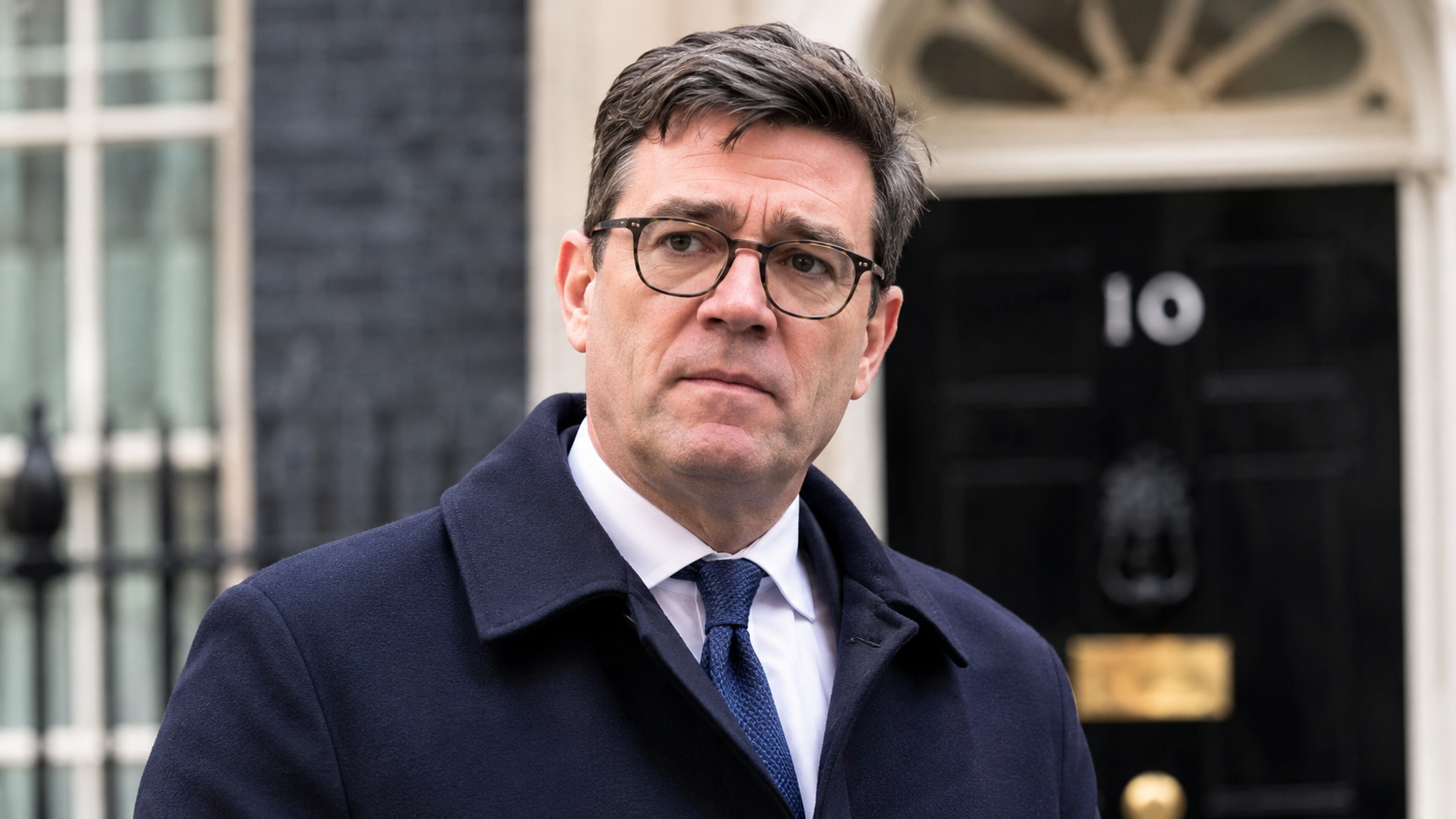
Prime Minister Andy Burnham has promised a substantial 10-year strategy for Britain, insisting it will provide a clear direction for the country's future development.
Mr Burnham made the commitment following questions about the scale and ambition of the Government's long-awaited national plan. The document is expected to outline the administration's priorities and establish a longer-term framework for governing the country until 2037. However, concerns have emerged over whether the proposed strategy will contain sufficiently detailed commitments or simply introduce a longer process of consultation. The Prime Minister has rejected suggestions that the plan will fall short of expectations, maintaining that it will present a comprehensive vision for Britain's future.
The Prime Minister's comments came during an interview following the Commonwealth Heads of Government Meeting in Antigua. He was responding to reports suggesting that the document might be considerably less ambitious than previously indicated. Those reports raised questions about whether the Government intended to publish a fully developed strategy or release an initial statement before beginning a lengthy consultation exercise. Mr Burnham disputed that interpretation and said the significance of the forthcoming document was being underestimated. He insisted that the Government was bringing together different policy priorities into a single, coherent national direction.
Mr Burnham said the strategy would be substantial and designed to explain how different areas of Government policy fitted together. Rather than presenting a limited programme covering only the immediate future, he indicated that the document would establish a broader vision for the country. His comments suggest that the administration wants to connect economic decisions, public services and longer-term national development within one framework. The Prime Minister also made clear that the Government would not simply publish a document designed to postpone difficult decisions, responding directly to concerns about the proposed approach.
The publication timetable, however, remains uncertain. The Government had previously indicated that the 10-year plan would be released in December, but Mr Burnham acknowledged that the process could extend into the beginning of the following year. He said December or January should be treated as possible publication dates because a final timetable had not yet been established. The comments represent a possible delay from the original expectation, although the Prime Minister maintained that the eventual document would still deliver the level of detail and ambition he had promised.
The proposed strategy follows the Government's first Budget under Chancellor John Healey, which was presented as a relatively small and stable financial statement. Several significant long-term spending questions were not fully addressed in that Budget, leaving expectations that they would be considered through subsequent Government planning. The 10-year document is therefore expected to provide further direction on how the administration intends to manage competing financial priorities. Its contents will be particularly important for understanding how ministers plan to balance investment in public services with national security and wider economic responsibilities.
Defence spending is among the major issues awaiting further clarification. The Government faces the challenge of setting out how Britain intends to increase defence expenditure to 3.5 per cent of national output by 2035. Achieving that objective will require longer-term financial planning and decisions about military capabilities, equipment and national security commitments. Although the first Budget did not provide a complete explanation of how the target would be funded, ministers have indicated that the issue will receive further attention. The forthcoming spending review is expected to provide an important opportunity to establish the financial arrangements.
Welfare spending is another area likely to feature prominently in the Government's longer-term approach. Rising costs have created pressure to consider how the welfare system can remain financially sustainable while continuing to provide support to people who need it. Ministers have indicated that decisions on this issue remain part of the wider Government agenda. However, the 10-year strategy will need to explain how any proposed changes fit within the administration's broader economic and social priorities. The balance between controlling public expenditure and maintaining essential support will be an important consideration in future policy discussions.
The spending review scheduled for the following year is also expected to play a significant role in determining the Government's financial direction. Chancellor John Healey has pointed to the review as an opportunity to establish longer-term funding arrangements, particularly in relation to defence and military investment. This process will help determine how public resources are allocated across different departments and national priorities. The relationship between the 10-year plan and the spending review will therefore be important, as the Government seeks to translate its overall ambitions into practical financial commitments and departmental responsibilities.
Another significant area of policy development is the proposed transfer of additional powers to local leaders across Britain. Mr Burnham has previously expressed support for greater devolution, allowing regional and local authorities to have more influence over decisions affecting their communities. The approach could involve giving local leadership structures greater responsibility for shaping economic development, public services and regional priorities. Any further proposals would form part of the wider debate about how decisions should be made across the country. The 10-year strategy could provide an opportunity to explain how the Government intends to develop this approach.
Social care reform is also expected to be considered as part of the Prime Minister's longer-term programme. The sector faces significant challenges involving demand for services, funding arrangements and the provision of support for people who require assistance with daily living. Reforming the system would require coordination between national Government, local authorities and care providers. Although the full details of the proposed approach have not yet been confirmed, Mr Burnham has previously identified social care as an important area for change. Its inclusion in the wider strategy could help establish how the Government intends to address these long-standing pressures.
The Prime Minister's emphasis on bringing different policy areas together suggests that the strategy is intended to serve as more than a collection of separate announcements. Defence, welfare, social care, local government and public spending all involve decisions that extend beyond a single financial year. A 10-year framework could provide a structure for explaining how these priorities will be addressed over time. However, the effectiveness of the approach will depend on the level of detail eventually published, the financial commitments attached to its proposals and the extent to which individual departments can translate the overall objectives into practical action.
Questions will remain over the document's final scope until the Government confirms its publication arrangements and releases the full proposals. The possible move from December to January means the original timetable may change, although Mr Burnham has indicated that the Government is continuing to develop its plans. The strategy is expected to become an important statement of the administration's priorities through to 2037. Its publication will provide a clearer indication of how the Government intends to approach major national challenges and whether its long-term ambitions can be supported by practical policies, funding decisions and measurable commitments.
For further local news, community updates and story tips, contact news@lakelandpost.co.uk or 0333 090 2080.