
Sorry, France, the worlds best bubbly is British
Over the past decade, international chefs have been winning major French culinary competitions at a pace not seen before.
Travelers walking through Paris today may notice that many boulangeries and charcuteries display badges proudly declaring their baguette or pâté as “le meilleur” (the best). These labels are not exaggerated. France hosts hundreds of culinary contests, ranging from the amateur AAAAA certification for andouillette to the prestigious Glorieuses de Bresse, where the best chicken of the year is chosen to be served to the French president.
France has long been regarded as the heart of Western cuisine and is home to the Michelin Guide, so its abundance of culinary competitions is no surprise. What is striking is how many recent winners are not French.
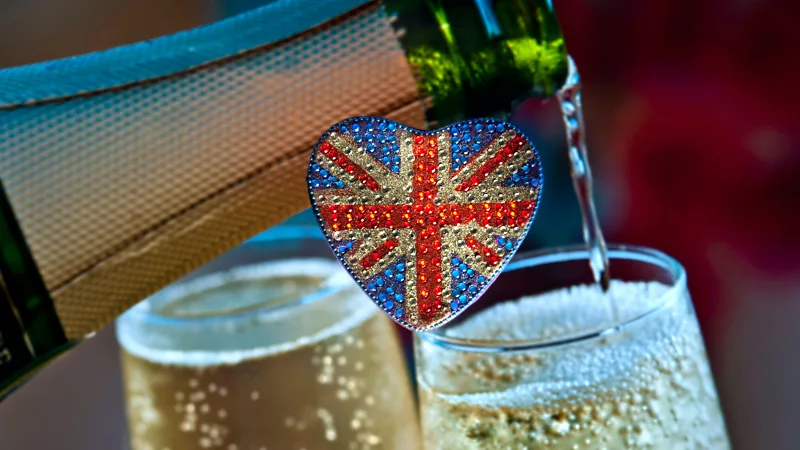
Earlier this year, an English sparkling wine became the first non-Champagne to be named the world’s top sparkling wine. Soon after, an American competitor won the Mondial du Fromage’s World’s Best Cheesemonger title for the first time in history.
In recent years, foreign chefs have taken top honors in competitions like the World Championship of Pâté-Croûte. The 2024 winner was Japanese chef Taiki Mano. In 2023, Danish chef Brian Mark Hansen won the Bocuse d’Or, often referred to as the Gastronomic Olympics. Several recent winners of Paris’ Grand Prix de la Baguette also come from non-French backgrounds. According to experts, this trend suggests that even as global cuisines rise in popularity, France still holds its place as a premier reference in the culinary world.
France’s culinary influence dates back centuries, shaped by iconic chefs like Marie-Antoine Carême and Auguste Escoffier, who elevated French haute cuisine and spread its influence worldwide. According to Paris-based culinary educator Allison Zinder, French techniques remain universal in classic gastronomy. As she explains, learning French cooking techniques gives chefs the tools to work anywhere in the world.
This influence extends beyond cooking into wine culture. The reputation of French oenology inspired Cherie Spriggs, Head Winemaker at Nyetimber in West Sussex, to enter the International Wine Challenge. When her Blanc de Blancs 2016 Magnum was awarded top sparkling wine, it marked the first time in 34 years that a non-French wine won the title. Spriggs described it as a milestone for England’s growing wine industry.
American competitor Emilia D’Albero expressed similar pride after she and teammate Courtney Johnson won gold at the Mondial du Fromage. Before this year, no American had ever taken home the top prize. D’Albero said she was especially honored by the praise she received from French judges.
Although it may seem surprising that French judges are so welcoming of foreign winners, history shows that France has long embraced outside influences. The baguette and croissant both trace their origins to the Austro-Hungarian Empire. Modern Parisian dining also reflects a broad global mix. TimeOut’s top Paris restaurants of 2025 include Korean, Japanese, Argentinian, English, and Filipino influences, and the only two new two-star Michelin restaurants in Paris this year are both led by Japanese chefs.
Japanese chefs have earned a particularly strong reputation within French gastronomy. Zinder notes that their precision and technical skill often align closely with French culinary values. The World Championship of Pâté-Croûte, founded in 2009, has become a global competition with regional qualifying rounds from Scandinavia to North America. According to co-founder Audrey Merle, Japan sends nearly as many applicants as France itself. Six of the event’s sixteen world champions have been Japanese.
Still, not all French chefs fully recognize the global prestige of their own traditions. Zinder believes that French chefs sometimes view classic techniques as old-fashioned. Australian chef Christopher Edwards, who runs Café des Musiciens in Nice and placed second in the World Egg-Mayonnaise Championship in 2022, said his dedication to traditional recipes can seem eccentric to some of his French colleagues.
The main challenge, however, is time. Preparing for competitions is demanding. Zinder recalled a colleague who prepared nearly 30 fish terrines in two months while perfecting a single recipe. D’Albero said she spent almost a full year training for the Mondial du Fromage. Edwards added that many French chefs are simply too busy working long hours to participate in contests.
Yet for those who win, the rewards can be transformative.
Jean and Roxane Sévègnes, owners of Café des Ministères, won the French Stuffed Cabbage Championship in 2022 after entering with a family recipe. Since then, the dish has become so popular that they can no longer remove it from the menu.
Victories can even change the direction of entire careers. Armenian chef Karen Torosyan, who moved to Belgium at 18, gained widespread recognition after winning the Pâté-Croûte championship in 2015. Within a year, both the Michelin Guide and Gault & Millau visited his restaurant for the first time. He earned a Michelin star soon after.
For Edwards, winning the egg-mayonnaise title gave him confidence that he had mastered a piece of French culinary identity. Spriggs said her wine award helped raise global awareness of English sparkling wine, noting that many people did not even know grapes were grown in England when she entered the field in 2007.
Despite assumptions that the French may resist foreign influence in their culinary traditions, many chefs say the opposite is true. According to Roxane Sévègnes, international interest in French cuisine is something to celebrate. She believes the success of foreign competitors shows just how far French gastronomy reaches and how many people around the world are eager to learn from it.