
Suspected Ebola Cases Triple in DRC as WHO Warns of Rapid Spread
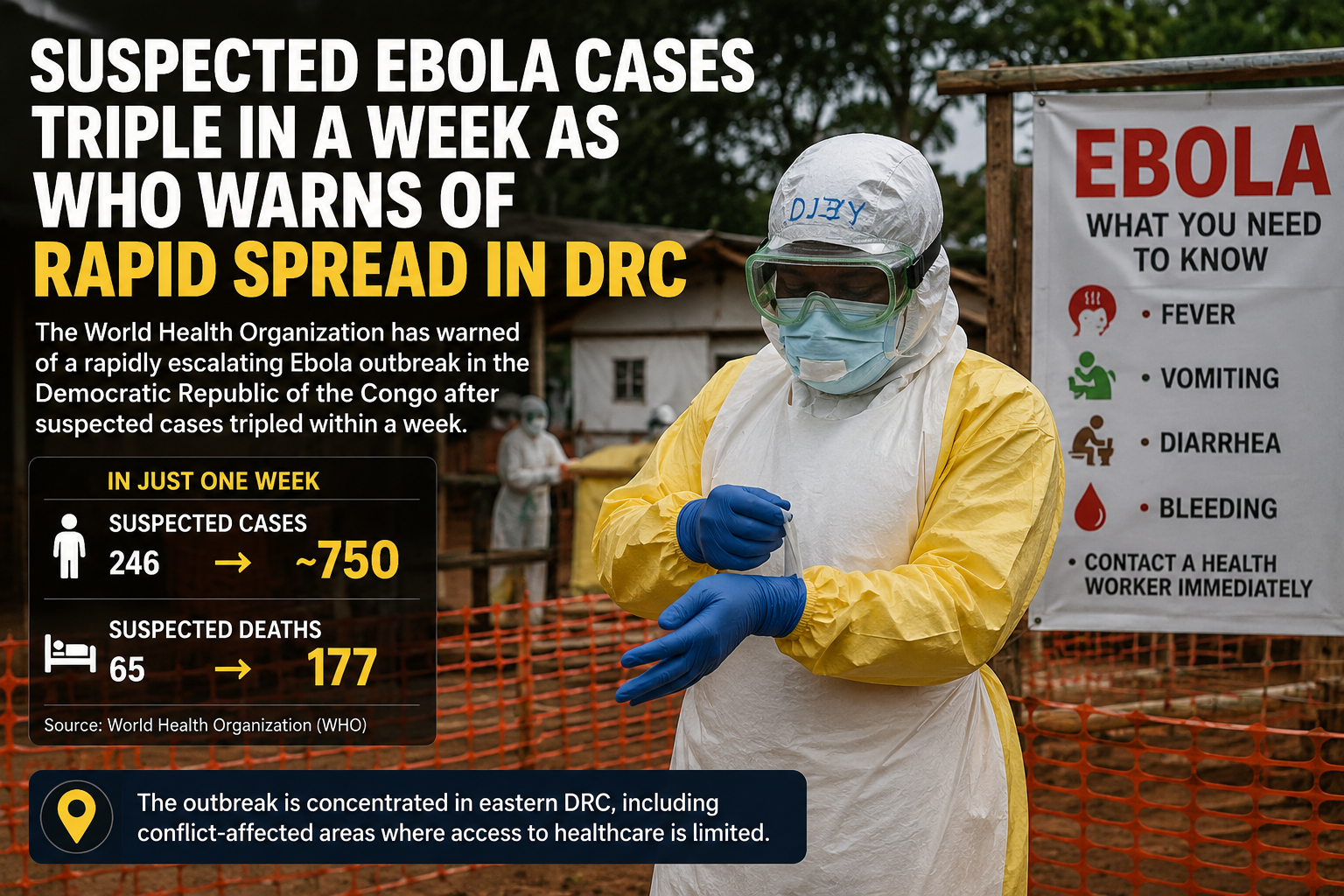
Suspected Ebola cases in the Democratic Republic of the Congo (DRC) have surged dramatically, tripling in just one week as health officials warn the outbreak is spreading rapidly and becoming increasingly difficult to contain.
According to the World Health Organization (WHO), suspected infections rose from around 246 to nearly 750 within seven days, while suspected deaths also increased sharply from about 65 to 177. The outbreak is concentrated in the country’s eastern provinces, including conflict-affected areas where access to healthcare is limited.
The current outbreak is caused by the rare Bundibugyo strain of the Ebola virus, for which there is currently no approved vaccine or specific treatment, making containment heavily reliant on surveillance, isolation, and infection control measures.
Health authorities say the rapid increase in suspected cases may reflect both wider transmission and improved detection in previously hard-to-reach communities. However, officials have stressed that the situation remains “deeply worrisome” due to continued gaps in healthcare access and ongoing insecurity in affected regions.
The WHO has raised the national risk level in the DRC to “very high,” warning that the outbreak could continue to expand if containment efforts are not strengthened. Challenges on the ground include limited resources, weak contact tracing systems, and community mistrust of health interventions.
Humanitarian organisations working in the region have also raised concerns about the impact of violence and instability on outbreak response efforts. In some areas, health facilities have been attacked, further disrupting treatment and isolation efforts and forcing some patients to flee.
Neighbouring Uganda has also reported confirmed cases linked to cross-border movement, though health officials say transmission there remains limited and largely under control for now.
The WHO and partner agencies are continuing to deploy emergency teams, improve surveillance, and support treatment centres, while also exploring potential use of experimental treatments and enhanced containment strategies.
Officials warn that without sustained international support and improved local cooperation, the outbreak risks expanding further across the region.
Got a news story or tip to share? Contact our editorial team by emailing news@lakelandpost.co.uk or call us directly on 0333 090 2080.