
Toxic Pollution May Haunt War Zones for Decades, Experts Warn
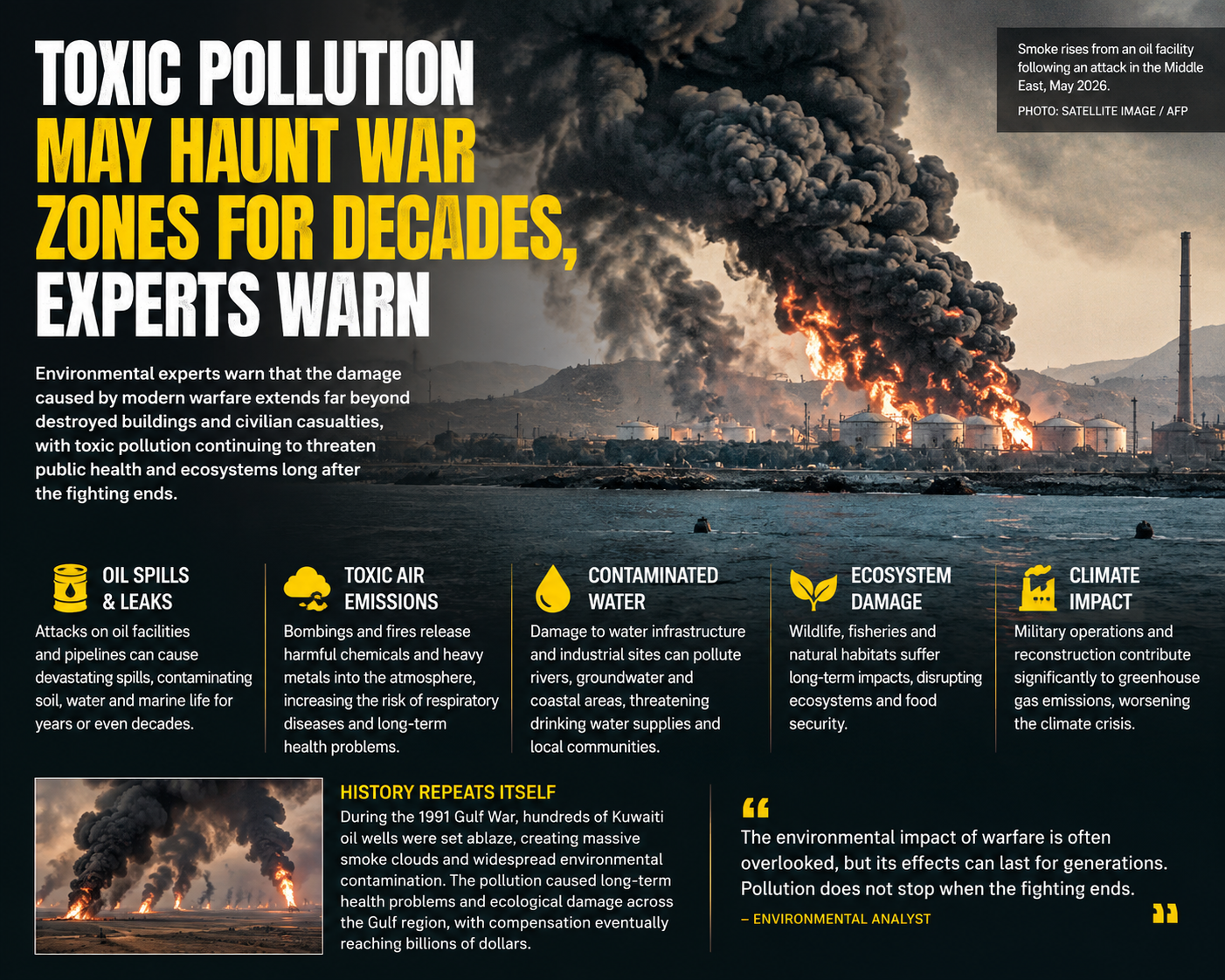
Environmental specialists and humanitarian observers are increasingly warning that wars leave behind more than immediate destruction, with pollution and toxic contamination often affecting communities for generations after conflicts end.
According to recent analysis published by attacks on oil facilities, pipelines, fuel depots, and industrial infrastructure during ongoing regional conflicts have already caused significant environmental harm across parts of the Middle East. Thick smoke, chemical emissions, oil spills, and contaminated water systems are among the growing concerns linked to the fighting.
Experts say the environmental consequences of war are often underestimated compared with the immediate human toll. Bombings and missile strikes can release dangerous substances including heavy metals, toxic dust particles, and carcinogenic chemicals into the atmosphere. These pollutants can contaminate soil, rivers, groundwater, and coastal ecosystems for years or even decades.
Recent satellite imagery reportedly showed signs of oil pollution and rising toxic emissions near key energy sites in Iran and the Gulf region following attacks earlier this year. Environmental monitoring groups also warned about increased levels of sulphur dioxide and airborne pollutants after strikes on refineries and fuel storage facilities.
Researchers pointed to historical examples such as the 1991 Gulf War, when hundreds of Kuwaiti oil wells were set ablaze, creating massive smoke clouds and widespread environmental contamination. The pollution caused long-term health problems and ecological damage across the Gulf region, with compensation eventually reaching billions of dollars through international claims processes.
Environmental organisations have also raised concerns over damage to water infrastructure and desalination plants, especially in regions heavily dependent on treated water supplies. Oil leaks and chemical runoff into the Gulf could threaten marine life, fisheries, and drinking water systems relied upon by millions of people.
Analysts say conflict zones often struggle to manage environmental disasters because war weakens government oversight and disrupts maintenance of critical infrastructure. In several countries affected by conflict, damaged pipelines, abandoned industrial sites, and neglected fuel facilities have reportedly contributed to worsening pollution and public health risks.
Climate experts have additionally warned that military operations themselves contribute significantly to greenhouse gas emissions through the use of fossil fuels, fires, reconstruction work, and destruction of urban infrastructure. Rebuilding damaged cities often requires large-scale cement and steel production, both considered major sources of carbon emissions.
Humanitarian groups say the environmental impact of warfare should receive greater international attention, arguing that pollution caused by conflict can continue harming civilians long after ceasefires are signed and rebuilding begins.
Got a news story or tip to share? Contact our editorial team by emailing news@lakelandpost.co.uk or call us directly on 0333 090 2080.