
Air Ambulance Rushes To Lake District After Serious Head Injury Emergency
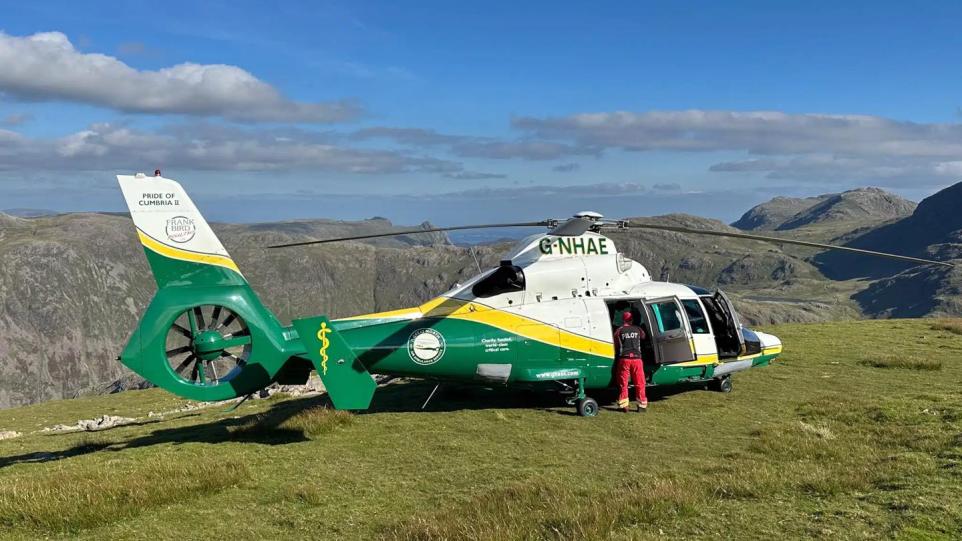
Emergency services mounted a major rescue operation in the Lake District after a person sustained a serious head injury, with specialist medical teams and an air ambulance deployed to provide urgent treatment at the scene.
The incident prompted a coordinated response involving local rescue personnel and the Great North Air Ambulance Service, whose critical care team attended to assess and stabilise the injured casualty before arranging transport to hospital for further treatment.
Due to the seriousness of the injuries, emergency responders acted quickly to ensure advanced medical care could be delivered as soon as possible. Air ambulance crews are specially trained to provide hospital level treatment in remote locations where rapid intervention is often essential.
The Lake District's rugged landscape, while attracting millions of walkers and outdoor enthusiasts each year, can present significant challenges for rescue teams when accidents occur. Specialist responders regularly work alongside ambulance crews and mountain rescue volunteers to reach casualties in difficult terrain.
Medical experts stress that head injuries should always be treated as potentially serious, even if symptoms initially appear minor. Early assessment, rapid treatment, and swift transport to specialist trauma centres can significantly improve patient outcomes.
The incident also highlights the crucial role played by air ambulance services across Cumbria, where helicopters frequently provide lifesaving support during emergencies involving walkers, climbers, cyclists, and other outdoor visitors. Their ability to deliver advanced critical care directly at the scene has become an essential part of the region's emergency response network.
Authorities continue to encourage anyone planning outdoor activities in the Lake District to prepare carefully before setting out by checking weather conditions, carrying appropriate equipment, and choosing routes suitable for their experience. These precautions can help reduce the risk of accidents while allowing visitors to enjoy the national park safely.
The condition of the injured person has not been publicly disclosed. Emergency services have not released further personal details, and the rescue operation serves as another reminder of the importance of preparedness and rapid emergency response in one of the UK's most popular outdoor destinations.
Got a news story or tip to share? Contact our editorial team by emailing news@lakelandpost.co.uk or call us directly on 0333 090 2080.