
UN Cuts Global Growth Forecast Amid Inflation and Economic Uncertainty
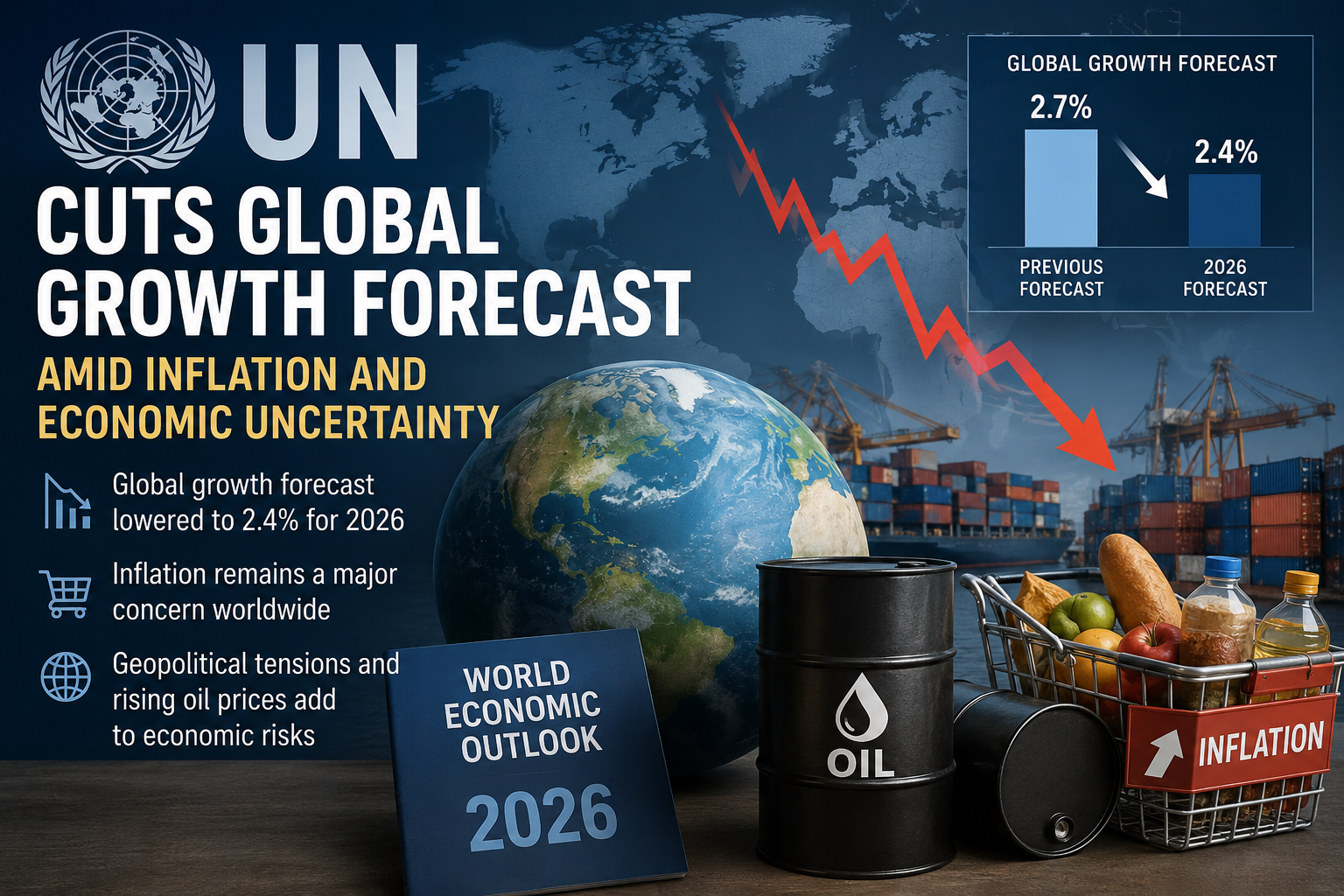
The United Nations has revised down its forecast for global economic growth, warning that inflationary pressures, trade disruptions and ongoing geopolitical instability continue to weigh heavily on the world economy.
In its latest economic outlook, the UN projected global growth of around 2.4 percent for 2026, lower than previous expectations, as many countries struggle with slower industrial activity, weak consumer demand and tightening financial conditions. The report pointed to rising interest rates and elevated debt levels as major challenges facing both advanced and emerging economies.
Economists warned that inflation remains a significant concern despite easing from the record highs seen in recent years. Food and energy prices continue to place pressure on households, particularly in lower-income nations where living costs have risen sharply. The UN noted that persistent inflation is reducing purchasing power and slowing consumer spending worldwide.
The report also highlighted uncertainty in global oil markets as a continuing risk to economic stability. Fluctuations in crude oil prices linked to conflicts, supply concerns and production cuts have increased volatility across international markets. Analysts say unstable energy prices could further complicate efforts by central banks to control inflation while maintaining economic growth.
Developing countries are expected to face some of the toughest challenges in the coming year. Many governments are dealing with high borrowing costs, weakening currencies and reduced foreign investment, limiting their ability to support economic recovery programmes. The UN warned that slower growth could worsen unemployment and poverty in vulnerable regions.
Meanwhile, global trade growth has also slowed as businesses remain cautious about investment and expansion. Ongoing geopolitical tensions, including conflicts affecting major shipping routes and supply chains, continue to disrupt international commerce and manufacturing activity.
Despite the weaker outlook, the UN said some economies have shown resilience through strong labour markets, recovering tourism sectors and easing supply chain disruptions compared with previous years. However, officials stressed that global recovery remains fragile and uneven across regions.
The organisation urged governments and central banks to cooperate closely on policies aimed at stabilising prices, supporting investment and protecting vulnerable populations from the effects of slowing growth and rising living costs.
Economists believe the coming months will be crucial in determining whether the global economy can avoid a deeper slowdown while balancing inflation control with the need to sustain employment and economic activity worldwide.
Got a news story or tip to share? Contact our editorial team by emailing news@lakelandpost.co.uk or call us directly on 0333 090 2080.