
The Internet Can’t Agree on This Tiny Bedroom Layout and the Debate Is Getting Heated
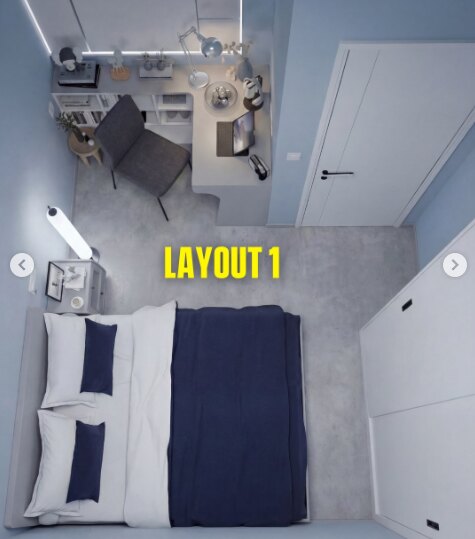
Two nearly identical small-room layouts have gone viral, and people are deeply divided over which one is better. Comment sections are filling up, opinions are hardening, and everyone seems convinced they’ve cracked the code to small-space living.
At the centre of the debate?
Where the bed should go and what that says about how we live.
Why This Tiny Room Sparked a Big Reaction
Small rooms force big decisions. When your bedroom is also your office, reading nook, and relaxation zone, every square foot matters. That’s why these two layouts struck a nerve: they represent two completely different philosophies of living.
One prioritises boundaries and routine.
The other prioritises openness and flow.
And depending on how your brain works, one might feel like peace while the other feels like chaos.
Layout 1: Clear Lines Between Rest and Work
In Layout 1, the bed is placed far from the desk. The room is visually divided into zones: one for sleeping, one for working.
Supporters of this layout argue that it creates a mental separation between rest and productivity. When you’re at the desk, you’re working. When you’re in bed, you’re switching off.
Fans say this setup:
Helps with focus and productivity
Makes it easier to maintain a routine
Feels calmer and more intentional
Reduces the temptation to work from bed
For people who struggle with sleep or work from home burnout, this layout feels like a lifesaver. It sends a clear signal to the brain: this is where work ends.
But critics say it can feel rigid and in very small rooms, sometimes even a bit cramped.
Layout 2: The Bed as the Anchor
Layout 2 flips the concept entirely. The bed becomes the centrepiece of the room, while the desk and storage are pushed to the edges.
Supporters say this layout feels:
More open and balanced
Less cluttered
Better suited to small spaces
More natural for everyday living
With the bed as the visual anchor, the room feels softer and more welcoming. People who favour this option say it avoids the boxed in feeling that can come from forcing strict zones into a tiny footprint.
They also argue that real life isn’t so neatly divided. Sometimes you read emails in bed. Sometimes you think creatively while lying down. Why fight it?
The Real Divide Isn’t About Furniture
What makes this debate so intense is that it’s not really about beds or desks it’s about how people relate to their space.
Those who love Layout 1 often value:
Structure
Routine
Clear boundaries
Productivity first living
Those who defend Layout 2 tend to value:
Flexibility
Comfort
Visual openness
Emotional ease
Neither side is wrong. They’re just optimising for different lifestyles.
What Designers Say
Interior designers often point out that there’s no universal “correct” layout only what works for the person using the room.
Some recommend Layout 1 for people who:
Work long hours from home
Struggle to switch off mentally
Need strong visual cues for routine
Others suggest Layout 2 for those who:
Spend limited time at a desk
Value aesthetics and openness
Want their bedroom to feel relaxing first, functional second
Lighting, storage, and daily habits matter just as much as furniture placement.
So… Which Layout Wins?
That’s where the internet remains stuck.
Scroll long enough, and you’ll find passionate arguments on both sides complete with mock floor plans, productivity studies, and personal anecdotes.
The truth?
The “best” layout depends entirely on how you live, work, and rest.
And maybe that’s why this tiny room debate has grown so loud. In a world where many of us are working, resting, and living in the same small spaces, the question hits close to home.