
Global Health Alert as Hantavirus Outbreak Linked to Cruise Ship Sparks Concern, Authorities Say Risk Remains Low
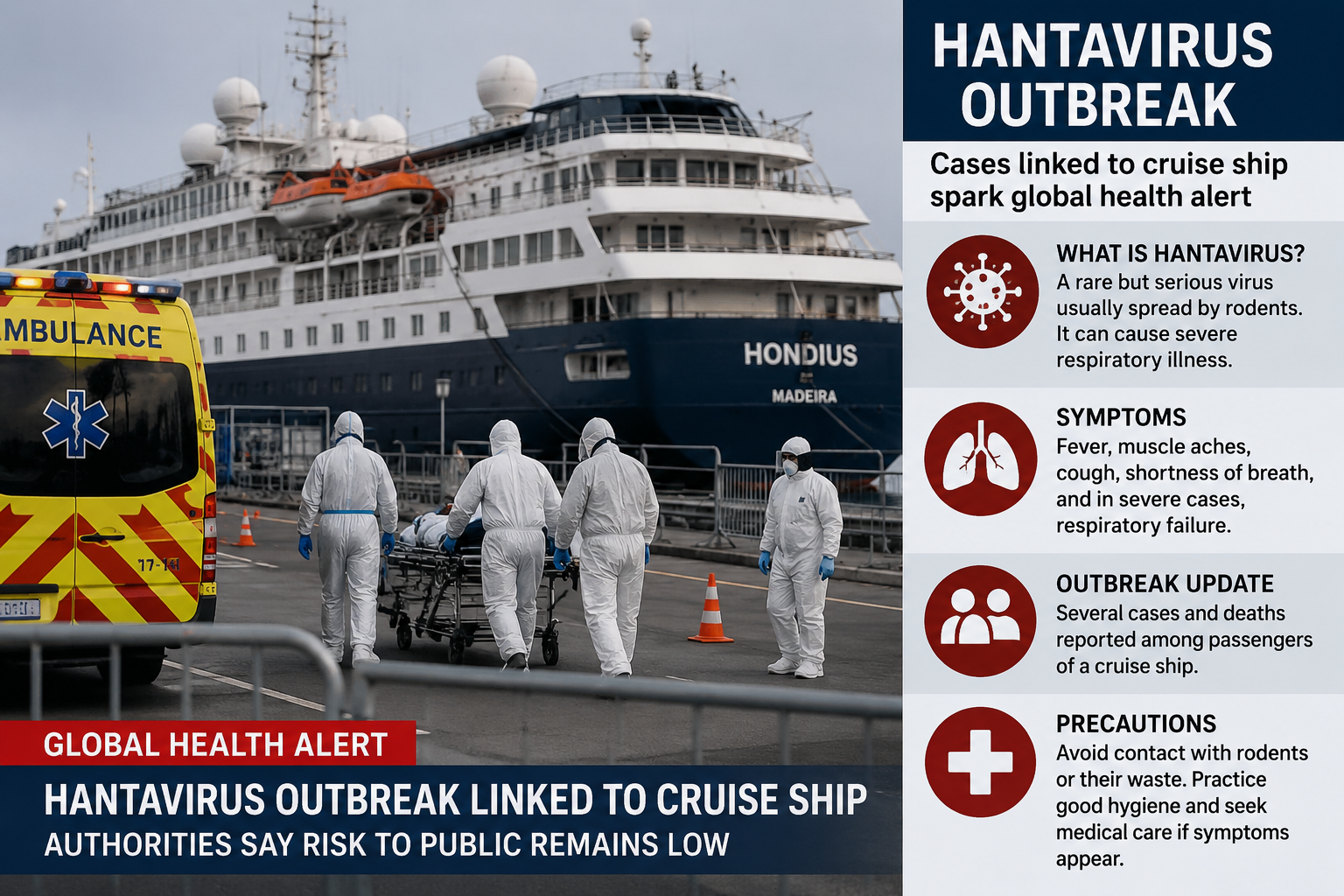
Health authorities around the world are closely monitoring a hantavirus outbreak linked to a cruise ship, following multiple confirmed cases and several deaths.
Despite growing concern due to international spread through passenger travel, leading health agencies including the World Health Organization (WHO) and the U.S. Centres for Disease Control and Prevention (CDC) continue to emphasize that the risk to the general public remains low.
The outbreak, associated with the MV Hoondis expedition cruise ship, was first identified in early May 2026 after passengers began developing severe respiratory symptoms during an Atlantic voyage. Laboratory testing later confirmed infections caused by the Andes strain of hantavirus, a rare variant capable of limited human-to-human transmission in close-contact environments.
According to WHO updates, at least seven confirmed cases and additional suspected infections have been reported across multiple countries, including the United States, United Kingdom, Germany, France, and South Africa. The outbreak has also resulted in three confirmed deaths, with several other patients requiring intensive medical care.
As a precaution, passengers exposed on the ship have been evacuated and placed under strict quarantine in different countries. In the United States, several individuals are being monitored at specialized biocontainment units in Nebraska and Atlanta, while others have been isolated in Europe and Australia under national public health supervision.
The CDC stated that although the situation is being treated with high alert, there is no evidence of sustained community transmission. Officials stressed that hantavirus is primarily spread through contact with infected rodents, and human-to-human transmission such as in this outbreak is extremely rare and requires prolonged close contact.
“The overall risk to the public remains low,” the CDC said in a recent update, while confirming that surveillance and contact tracing efforts are ongoing.
Health experts note that the confined environment of a cruise ship likely contributed to the spread among passengers. Investigations are ongoing to determine how the virus was introduced on board and whether environmental factors played a role.
The WHO has urged continued vigilance but has not recommended travel restrictions, stating that the outbreak appears contained within the affected group. Authorities also highlighted that all exposed passengers are being monitored for the full incubation period, which can extend several weeks.
Meanwhile, several repatriated passengers who tested negative for the virus have been released from hospital isolation and are continuing precautionary home quarantine.
Epidemiologists are also studying whether climate and ecological changes could be influencing rodent populations and increasing the likelihood of spillover events, though no direct link has yet been confirmed in this outbreak.
As global monitoring continues, health agencies are emphasizing preparedness, early detection, and rapid isolation measures to prevent further spread.
Got a news story or tip to share? Contact our editorial team by emailing news@lakelandpost.co.uk or call us directly on 0333 090 2080.