
Christa Pike Conscious And Speaking After Failed Execution Attempt
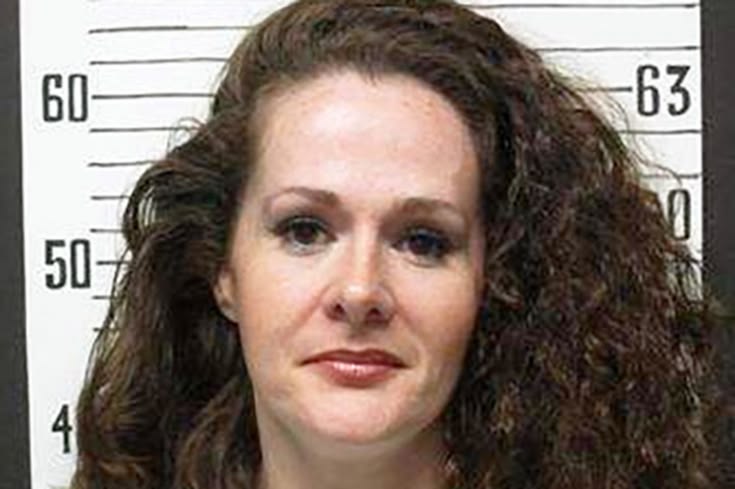
Christa Pike is conscious and speaking after surviving a failed lethal injection that left her critically injured and hospitalised.
Pike, 50, remains in hospital nearly a week after Tennessee attempted to execute her at Riverbend Maximum Security Institution in Nashville. Her attorneys said she is receiving critical medical care after initially being unconscious and placed on a ventilator following the execution attempt. They described her recovery as medically unprecedented and said her prognosis remains unclear, with a long recovery expected.
Pike survived after state officials administered two doses of pentobarbital during the attempted execution on September 30. Her lawyers said she suffered severe damage to both arms during the procedure and remains handcuffed to her hospital bed. The Tennessee Department of Correction confirmed that Pike remains hospitalised but said it could not provide further details about her condition because of federal medical privacy requirements.
In a statement released by her legal team, Pike's attorneys said she was conscious, speaking and continuing to receive medical treatment. They expressed gratitude towards the first responders and hospital staff who treated her after she was taken from the prison to hospital. The lawyers also thanked people who had sent messages offering support following the failed execution.
The development marks a significant change from the condition described by Pike's lawyers several days earlier. Following the execution attempt, they said she was critically ill, unconscious and dependent on a ventilator while medical staff worked to treat the effects of the drugs administered during the procedure. Her lawyers said at the time that hospital staff were also working to clear pentobarbital from her system.
Pike's attorneys have described the circumstances surrounding the execution attempt as exceptionally serious. They said her arms were swollen, burned and blistered when she arrived at hospital after difficulties were encountered while trying to establish intravenous access. An emergency legal filing seeking preservation of evidence also described Pike as crying, whimpering and breathing loudly during the procedure.
According to the legal filing, Pike complained that her arm felt as though it was about to burst open while the execution team attempted to administer the drugs. The filing said at least seven needles were used in efforts to establish intravenous access, with one reportedly removed after becoming severely bent. Her lawyers said the injuries were consistent with the serious complications they had warned could occur.
Pike had raised concerns about the planned lethal injection before the execution. Her legal team argued that her medical condition, including thrombocytosis, together with post traumatic stress disorder and small veins, created a substantial risk of unnecessary pain and suffering during the procedure. Those arguments formed part of several legal challenges made in the period leading up to the execution.
The attempted execution went ahead after a series of last minute legal proceedings. A federal appeals court had temporarily halted the execution shortly before it was due to take place, but the US Supreme Court subsequently allowed Tennessee to proceed. The Supreme Court's decision followed arguments concerning Pike's legal claims and whether her history of childhood sexual abuse had received adequate consideration during sentencing.
Pike was sentenced to death after being convicted of the 1995 murder of 19 year old Colleen Slemmer, a fellow Jobs Corps worker in Tennessee. Court records described Pike as having been 18 when she participated in the killing, which involved a prolonged attack. Her then boyfriend, Tadaryl Shipp, was also convicted of first degree murder and received a life sentence with the possibility of parole.
Pike's legal team has continued to ask Tennessee Governor Bill Lee to commute her death sentence to life imprisonment without the possibility of parole. Their request follows the failed execution and the medical complications that resulted from the state's attempt to administer the lethal injection. The governor has not agreed to that request, while the legal process surrounding Pike's case continues.
The failed execution has also prompted action from Tennessee officials. Governor Lee ordered a temporary halt to scheduled executions in the state following the incident and appointed former US Attorney Ed Stanton to conduct an independent review of the Department of Correction's handling of the execution attempt. The review is intended to determine whether the state's established protocol was followed and whether changes are required.
Tennessee Department of Correction Commissioner Frank Strada also resigned following the failed execution. The review will examine the circumstances surrounding the procedure and the state's execution protocols. Officials have said the investigation is intended to establish what happened during the attempt and determine whether further recommendations are necessary to ensure the protocol remains lawful and effective.
Pike's lawyers have also filed an emergency motion in Davidson County Chancery Court seeking preservation of physical, written and electronic evidence connected with the execution attempt. A status conference on that matter has been scheduled, as the legal team seeks to ensure records and other evidence relating to the procedure are retained while the circumstances are investigated.
The case has attracted wider attention because Pike is reportedly the first person known to have survived after lethal injection drugs were administered during an execution. The Death Penalty Information Center has described the circumstances as unprecedented, while the incident has renewed scrutiny of the practical and medical difficulties associated with lethal injection executions.
Pike's current condition represents an improvement from the critical state reported immediately after the failed execution, although her attorneys have stressed that her prognosis remains uncertain. She continues to receive hospital treatment for injuries sustained during the procedure, while legal proceedings and the state's independent review are expected to examine what went wrong.
Got a news story or tip to share? Contact our editorial team by emailing news@lakelandpost.co.uk or call us directly on 0333 090 2080.