
Trump, Putin And Xi Hold Historic Summit But Make No Major Breakthroughs
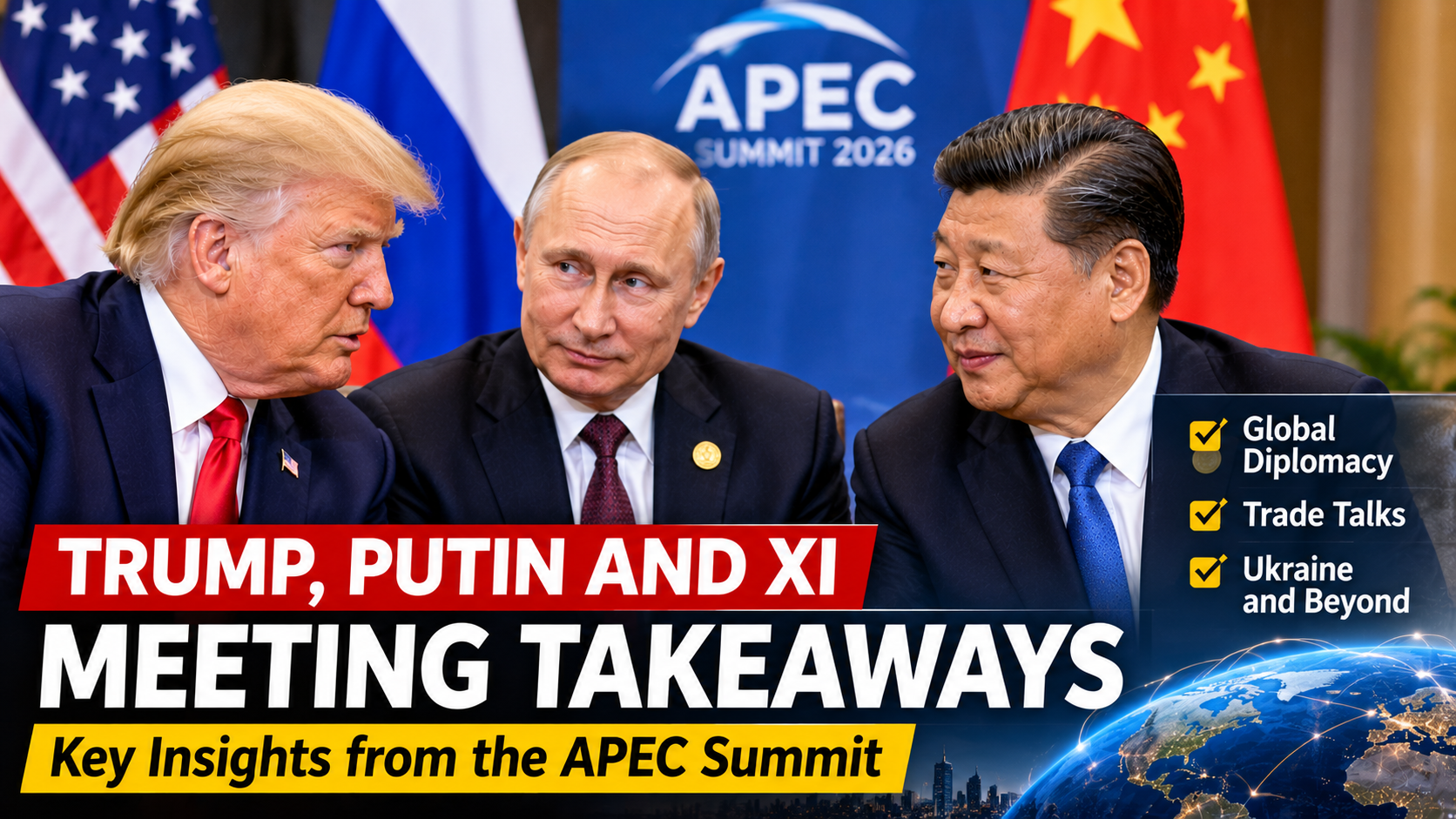
US President Donald Trump, Russian President Vladimir Putin and Chinese President Xi Jinping have held an unprecedented summit in Shenzhen, China, bringing together three major global powers.
The meeting took place on 19 November 2026 on the sidelines of the Asia-Pacific Economic Cooperation (APEC) gathering. The three leaders met at Kylin Villa for approximately 81 minutes, discussing international security, nuclear weapons, economic cooperation and ongoing conflicts. Although the gathering was described as historic, expectations of major diplomatic breakthroughs remained limited, with officials acknowledging beforehand that significant agreements were unlikely to emerge from a single meeting.
The summit provided an opportunity for all three presidents to demonstrate their international influence. Trump presented the gathering as an opportunity to establish a different approach to diplomacy, arguing that communication between rival powers was essential to achieving peace. Xi emphasised the shared responsibility of major nations in maintaining international stability, while Putin highlighted the importance of cooperation between countries with significant political, economic and military influence.
For Putin, the meeting represented an important opportunity to return to the centre of international diplomacy after years of isolation following Russia's invasion of Ukraine. His participation alongside the American and Chinese presidents allowed Moscow to demonstrate that it remained an influential global power. The Russian leader also benefited from discussions about diplomatic immunity, an issue of particular significance because the International Criminal Court has issued an arrest warrant against him over alleged war crimes in Ukraine.
Xi Jinping also gained diplomatic visibility by hosting the unprecedented meeting. China's position as the central organiser allowed the president to present Beijing as an important force in international negotiations. The summit followed separate bilateral discussions between the leaders and formed part of China's wider diplomatic engagement during the APEC gathering. However, important disagreements involving trade, security and regional influence between Washington and Beijing remained unresolved.
Trump used the discussions to pursue his interest in addressing the wars involving Russia and Iran. Both conflicts have affected international security and contributed to economic uncertainty, particularly through their impact on energy supplies. The American president hoped that China and Russia could help encourage progress towards ending the conflicts, given their respective relationships with the countries involved. However, neither Ukraine nor Iran was represented at the three-way meeting, limiting the prospects of reaching direct agreements on either war.
The war in Ukraine remained an important issue in Trump's discussions with Putin, although it was not the central subject of the trilateral meeting. Trump indicated that he wanted the conflict to end and believed that cooperation with Moscow and Beijing could contribute to that objective. Putin also referred to Ukraine when discussing shared interests in resolving regional conflicts. However, the meeting produced no announced agreement on a ceasefire, peace negotiations or a timetable for ending the war.
Nuclear security was another major subject discussed by the three presidents. Trump has expressed interest in negotiating a new nuclear arms-control arrangement involving the United States, Russia and China. The issue is particularly significant because the three countries possess the world's largest nuclear arsenals. Xi has previously expressed support for reducing nuclear threats, but China has been reluctant to enter an agreement with Washington and Moscow while its nuclear stockpile remains considerably smaller than theirs.
Following the meeting, the leaders issued a joint declaration outlining areas where they intended to cooperate. These included reducing nuclear risks, preventing the spread of nuclear weapons, maintaining international security and supporting stable global energy supplies. The statement also referred to reforming international institutions and protecting diplomatic immunity. Despite the language of cooperation, the declaration did not establish specific arms-control commitments or provide a detailed framework for resolving the major conflicts discussed during the summit.
Energy security featured prominently because international supplies have faced disruption from the conflict involving Iran and attacks on energy infrastructure. The Strait of Hormuz, an important route for global oil shipments, has become a significant concern for governments and energy markets. Trump reiterated that Iran should not be allowed to develop nuclear weapons and stressed the importance of keeping the waterway open. However, the declaration did not provide a detailed plan for restoring normal energy movements or resolving the underlying conflict.
The summit also highlighted disagreements surrounding the International Criminal Court. The joint declaration criticised what the leaders described as the misuse of international judicial authority and emphasised the importance of immunity for state officials. The issue carries particular significance for Putin, who faces an arrest warrant issued by the court. The United States has also opposed certain ICC actions, including proceedings involving Israeli political leadership, creating an area of shared criticism between the three governments.
Artificial intelligence and emerging technologies also formed part of the wider discussions surrounding Trump's visit to China. Technological competition has become an increasingly important aspect of relations between Washington and Beijing, particularly regarding advanced computing, AI development and access to strategic technologies. Cooperation in these areas could offer economic opportunities, but differences over national security, technology restrictions and international influence continue to complicate relations between the two countries. The summit did not announce a major breakthrough on these issues.
The gathering also attracted attention from European governments, particularly because of its implications for Ukraine. European leaders were meeting in Berlin as part of the Coalition of the Willing, which coordinates support for Kyiv. Trump's discussions with Putin and Xi were therefore closely watched by countries concerned about the future of European security. American representatives indicated that the president had communicated his desire to pursue a peaceful resolution, although no concrete commitments emerged from the Shenzhen meeting.
Despite the absence of major agreements, the summit demonstrated that the United States, China and Russia were prepared to engage directly at the highest political level. The leaders presented dialogue as an important step towards managing international disagreements, while the declaration established several broad areas for possible cooperation. Whether those commitments lead to meaningful diplomatic progress will depend on future discussions and the willingness of the three governments to translate their statements into practical action.
The meeting has therefore raised questions about whether the three countries could develop a more regular mechanism for managing major international issues. Their combined military and economic influence gives them considerable power over global security, trade and energy markets. However, their competing interests and differing positions on existing conflicts mean that closer diplomatic engagement does not necessarily guarantee agreement. The immediate outcome remains largely symbolic, with the long-term significance of the summit still to be determined.
For further local news, community updates and story tips, contact news@lakelandpost.co.uk or 0333 090 2080.