
Netanyahu Faces Crucial Test as Voters Weigh Security and Gaza’s Future
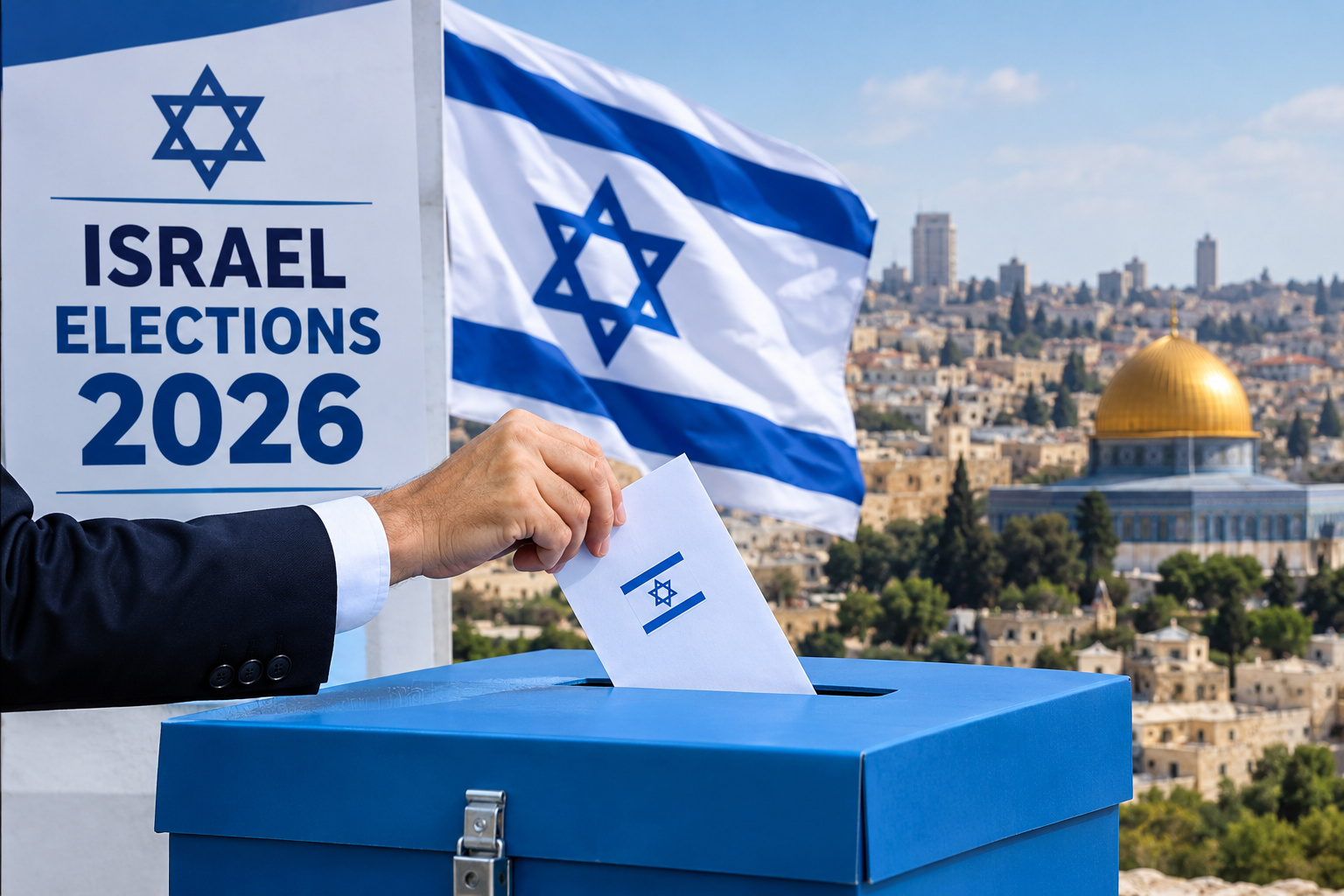
Israel is holding its first national election since the Hamas-led attacks of 7 October 2023, with Prime Minister Benjamin Netanyahu facing a significant challenge over his leadership, national security and the country’s future direction.
The election comes after years of conflict, domestic political divisions and growing international criticism of Israel’s policies. Voters are being asked to choose between continuing the approach pursued by Netanyahu’s government and supporting an alternative led by opposition figures, including former military chief Gadi Eisenkot. The result could influence decisions on security, relations with Palestinians, military obligations and the balance of power between Israel’s political institutions. However, the final outcome may remain uncertain until negotiations between political parties have concluded.
Netanyahu, Israel’s longest-serving prime minister, has built much of his political career around national security and his promise to protect the country from external threats. His leadership has nevertheless faced intense scrutiny since the October 2023 attacks, which exposed serious failures in Israel’s security arrangements. Opposition politicians have called for accountability and a formal investigation into the circumstances that allowed the attacks to take place. Netanyahu has rejected demands for a state commission of inquiry, making responsibility for the security failures a central issue in the election campaign.
The attacks of October 2023 and the conflicts that followed have fundamentally shaped the political debate. Israel subsequently fought wars involving Hamas in Gaza, Hezbollah in Lebanon and Iran, leaving the country facing continuing security challenges and significant diplomatic pressure. The conflicts have also affected Israeli society, with military personnel and reservists repeatedly deployed and families facing prolonged uncertainty. For voters, the election represents an opportunity to assess how the government has handled these developments and decide whether a change of leadership could deliver greater security and stability.
Israel’s electoral system means that winning the largest share of the vote does not automatically guarantee the premiership. Voters choose party lists for the 120-seat Knesset, Israel’s parliament, and parties must secure at least 3.25 per cent of the national vote to qualify for representation. A government requires the support of at least 61 lawmakers. Consequently, parties must negotiate with potential partners after the votes are counted, making the positions of smaller political groups crucial to determining who ultimately forms the next administration.
Opinion polls ahead of polling day suggested that neither Netanyahu’s political bloc nor the opposition was certain to secure the parliamentary majority required to govern independently. Netanyahu’s Likud party is competing against Eisenkot’s Yashar party, while several other parties are seeking to influence the balance of power. Differences between pollsters underline the uncertainty surrounding the result. Even if one party emerges as the largest, its leader will still need to assemble sufficient parliamentary support to become prime minister and establish a functioning government.
Military service has become another major domestic issue. Most Jewish Israeli adults are subject to compulsory military service, while ultra-Orthodox men have historically benefited from exemptions linked to religious study. The exemptions have generated longstanding disputes, particularly as the military faces personnel pressures during extended periods of conflict. Netanyahu’s governing partners include ultra-Orthodox parties that support preserving exemptions, while opposition parties have called for broader participation in national service. The debate has become increasingly important to reservists and families concerned about how military responsibilities are distributed across society.
The future of Gaza and Israel’s policies towards the occupied West Bank are also important areas of disagreement. Far-right members of the outgoing government, including Finance Minister Bezalel Smotrich and National Security Minister Itamar Ben-Gvir, have supported expanding Israeli settlements and adopting tougher policies towards Palestinians. Their positions have contributed to criticism from international governments and organisations. The election could determine whether these parties retain substantial influence over policy or whether a different coalition changes the government’s approach to the Palestinian territories.
Israel’s international standing has deteriorated amid the continuing conflict and widespread criticism of its military operations. Relations with key allies, regional governments and international institutions have become increasingly important to the political debate. A new administration would inherit unresolved questions about Gaza’s future, the possibility of reconstruction, security arrangements and the role of Palestinian institutions. It would also face pressure to manage regional tensions while addressing the concerns of Israeli voters who prioritise security and oppose concessions they believe could expose the country to further attacks.
The election’s immediate outcome may not settle the question of who will lead Israel. Once official results are available, political leaders will need to assess possible partnerships and negotiate support for a government. If neither bloc can secure a workable majority, the country could face a prolonged political stalemate, a minority administration, a broader unity government or the possibility of another election. The coming negotiations will therefore be as important as the vote itself in determining Israel’s political direction.
For further local news, community updates and story tips, contact news@lakelandpost.co.uk or 0333 090 2080.