
Kenya’s Ebola Case Raises Fears of Wider Cross Border Spread
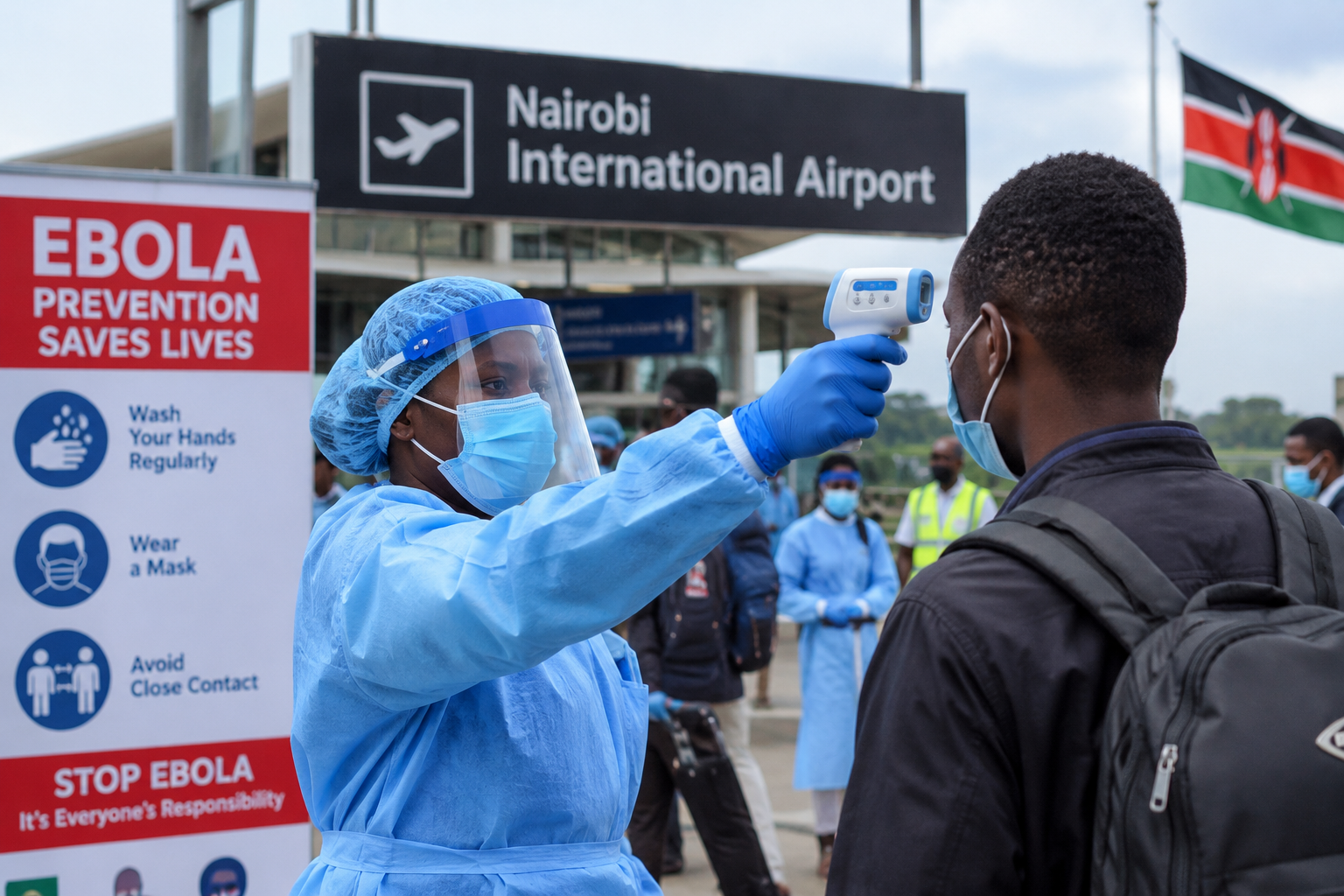
Kenya’s first confirmed case of Bundibugyo Ebola has raised fresh concerns about the risk of the disease spreading across international borders, despite months of preparation by health authorities.
The patient, an adult man who had travelled from the Democratic Republic of Congo (DRC) through Uganda, arrived in Nairobi on October 3, 2026. He had reportedly been unwell for several weeks and was taken to a hospital in the Kenyan capital, where medical tests confirmed the infection. He died on October 5 despite receiving medical care.
The case has prompted investigations into how the man passed through screening procedures in Uganda and Kenya without being identified as a suspected Ebola patient.
Kenya had previously screened large numbers of travellers and trained thousands of health workers in preparation for a possible outbreak. However, the incident has highlighted the limitations of temperature checks and other routine screening measures, particularly when an infected traveller does not display obvious symptoms at the time of assessment.
The outbreak has been concentrated mainly in eastern parts of the Democratic Republic of Congo, where health authorities have reported thousands of confirmed cases and deaths.
Frequent cross-border movement for work, trade and family reasons makes controlling the disease particularly challenging. Some people also use unofficial crossing points, making it harder for authorities to monitor travel and identify potential infections.
Uganda has strengthened its surveillance and information-sharing measures following the Kenyan case. Health officials are also working with neighbouring countries to improve the identification of travellers who may have been exposed to the virus.
Experts say border screening alone cannot prevent every infected person from travelling. Community surveillance, rapid testing, contact tracing and effective communication between countries are also essential to limiting further transmission.
Following the confirmed case, Kenyan officials began tracing people who may have had contact with the patient and strengthened screening arrangements at Nairobi’s main international airport.
Health authorities are also coordinating with officials in Uganda and the DRC to reconstruct the patient’s movements and identify possible exposure points.
The World Health Organization has emphasised the need for stronger cross-border preparedness, rapid detection and coordinated public health measures as the outbreak continues to evolve.
Bundibugyo virus is a type of Ebola virus that can cause severe illness. There is currently no licensed vaccine or specific approved treatment for this particular virus, making early detection, infection prevention and supportive medical care especially important.
The case has renewed attention on the need for African countries to prepare for infections that cross borders before they are detected.
Public health experts point to previous Ebola responses, including Nigeria’s successful containment of imported cases during the 2014 West African outbreak, as examples of how rapid identification and coordinated action can prevent wider transmission.
For Kenya and its neighbours, the immediate priority is to identify potential infections quickly, monitor exposed individuals and prevent further spread while maintaining cooperation across the region.
The developments underline a key challenge for outbreak prevention: screening travellers is important, but the speed and effectiveness of the response after a suspected case is identified can be just as critical.
Got a news story or tip to share? Contact our editorial team by emailing news@lakelandpost.co.uk or call us directly on 0333 090 2080.