
Israel Election Ends In Deadlock As Netanyahu And Opposition Fail To Secure Majority
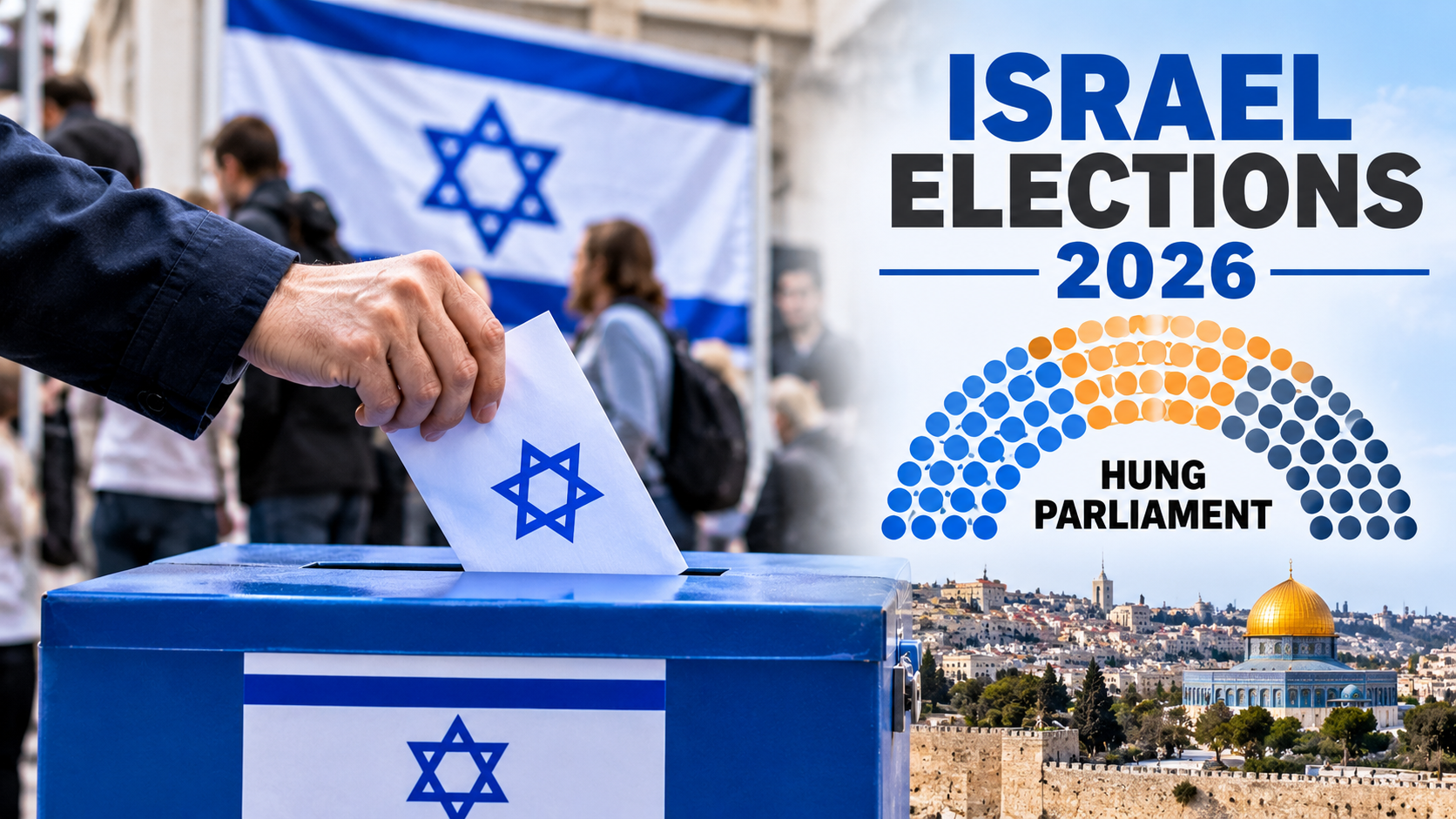
Israel is facing a fresh period of political uncertainty after its general election produced no clear winner, leaving rival political blocs short of a governing majority.
The final results of the 27 October 2026 election confirmed that neither Prime Minister Benjamin Netanyahu's political alliance nor the opposition grouping led by Gadi Eisenkot had secured enough seats to form a government independently. Netanyahu's bloc won 53 seats in the 120-member Knesset, while the opposition secured 48. Arab-led political parties collectively gained 19 seats, making their potential support an important factor in the negotiations.
The election outcome represents a significant challenge for Netanyahu, who has been seeking to maintain his position after years of political leadership. Although his alliance finished ahead of the opposition in terms of parliamentary seats, it remains eight seats short of the 61 required for a majority. The result means his political future will depend on negotiations with other parties, possible defections from rival groups or the formation of a broader coalition involving political opponents.
Eisenkot's opposition grouping also faces difficulties despite its efforts to replace Netanyahu. Its 48 seats leave it 13 short of a parliamentary majority, meaning cooperation with other political parties would be essential. The combined 19 seats won by the United Arab List, known as Ra'am, and the Joint List could potentially provide enough parliamentary support for an alternative administration. However, disagreements over cooperation with Arab-led parties have complicated that possibility.
One of the biggest obstacles facing the opposition is the position of several political leaders who have ruled out relying on Arab parties to establish a government. Former prime minister Naftali Bennett and former defence minister Avigdor Lieberman have expressed opposition to such an arrangement. This has limited the options available to Eisenkot, whose grouping would need to overcome political differences if it hopes to assemble a coalition capable of replacing Netanyahu.
Political tensions increased after Netanyahu raised allegations of voter fraud involving Arab-led parties. His claims were rejected by Arab political representatives, who accused him of attempting to undermine their electoral success. The allegations have also drawn attention from election authorities, with officials examining specific complaints while making clear that there was no evidence of systematic interference affecting the overall integrity of the vote.
The Central Elections Committee confirmed that complaints and suspected irregularities would be examined through the appropriate procedures. Police also arrested several people in southern Israel on suspicion of election-related offences. However, the committee indicated that there was no basis for claims that the election's integrity had been systematically compromised. The distinction is important as investigations into individual incidents do not establish that the overall election result was affected.
If the first candidate fails to secure a government, another political leader may be given an opportunity to try. Further parliamentary procedures can also allow members of the Knesset to propose an alternative candidate. These arrangements are designed to give political parties several opportunities to reach an agreement before the country is required to hold another general election. However, the process could take weeks or months if negotiations remain unsuccessful.
A further option would involve an opposition-led minority government receiving support from Arab parties without formally including them in the governing coalition. This could provide Eisenkot with a route to securing parliamentary backing, but it would depend on whether other opposition leaders were prepared to accept such an arrangement. The political positions expressed during the election campaign suggest that reaching agreement on this issue could prove particularly challenging.
Netanyahu also remains in office as caretaker prime minister while the political negotiations continue. His position means he can remain at the head of the government until a successor is successfully appointed and a new administration takes office. This arrangement provides continuity in government, although the lack of a permanent parliamentary majority could create difficulties when seeking support for major political decisions and legislation.
If all attempts to establish a governing coalition fail, Israel could face another general election. Such an outcome would extend the period of political uncertainty and require voters to return to the polls. For now, the immediate focus remains on President Herzog's consultations and whether Netanyahu's opponents can overcome their differences to form an alternative administration. The final outcome will depend on negotiations among the elected parties and their willingness to reach political compromises.
For further local news, community updates and story tips, contact news@lakelandpost.co.uk or 0333 090 2080.