
ICJ Begins Landmark Rohingya Genocide Case Against Myanmar
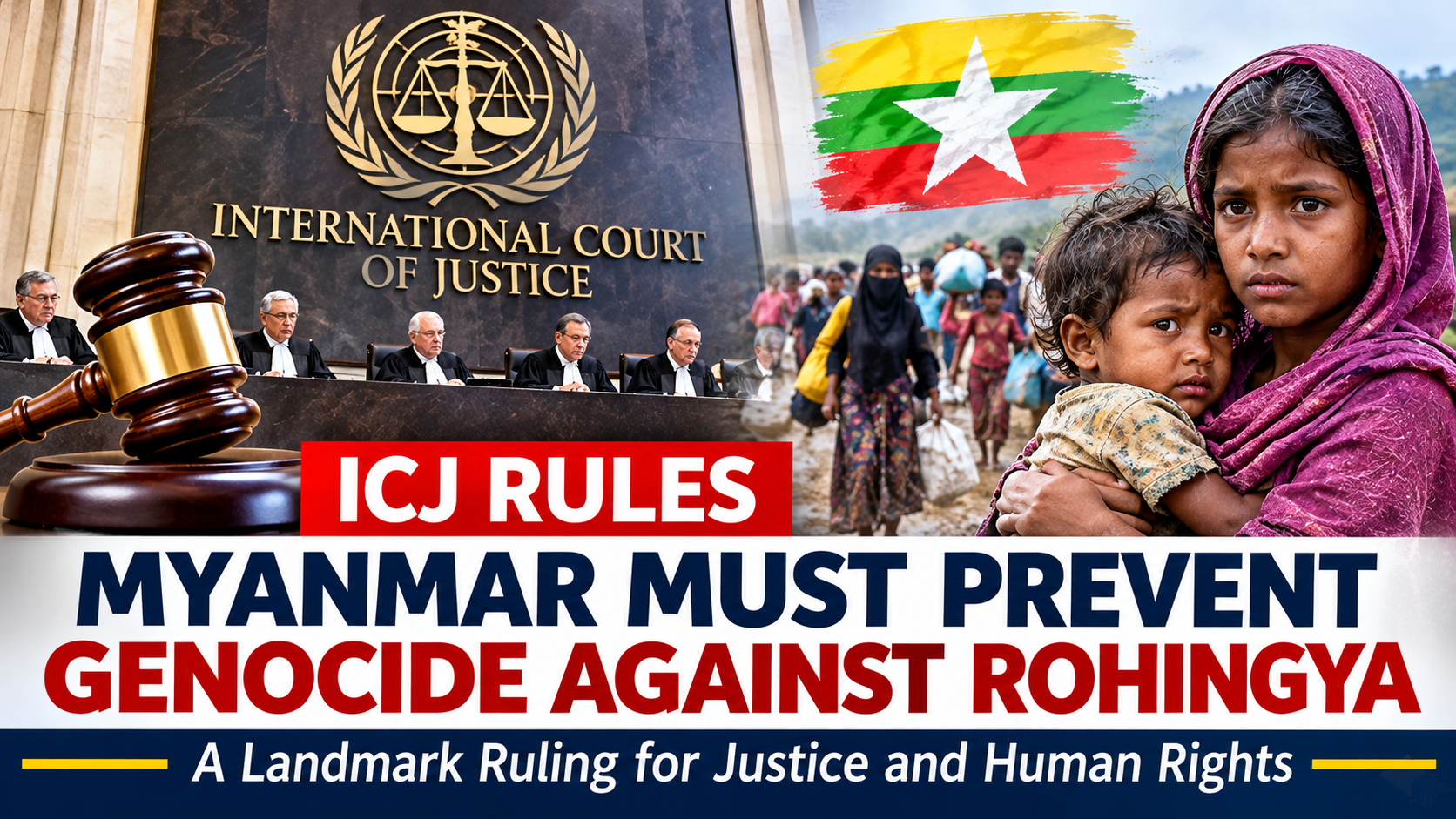
The International Court of Justice (ICJ) is hearing a landmark case concerning allegations that Myanmar committed genocide against the Rohingya Muslim population, bringing renewed international attention to the persecution of the minority community.
The court has now delivered its judgment in the case brought by The Gambia against Myanmar, finding the country responsible for genocide against the Rohingya. The decision was reached by a 9–6 majority, marking a historic development in international law.
The proceedings concern the military's 2017 operations in Rakhine State, western Myanmar, which triggered a mass displacement of Rohingya civilians. The campaign followed attacks on security posts by an armed Rohingya group. Myanmar's military described its operations as counter-insurgency measures, while survivors and international investigators documented widespread killings, sexual violence, torture and the destruction of villages.
According to the court's findings, Myanmar's security forces killed thousands of Rohingya civilians and committed widespread sexual violence. Judges also identified extreme violence against children and attacks on civilians attempting to escape across the border into Bangladesh. The findings provide judicial recognition of the scale and nature of the atrocities suffered by the minority community during the military campaign.
The Gambia initiated the proceedings in November 2019, arguing that Myanmar had violated the 1948 Genocide Convention through its treatment of the Rohingya population. The West African country brought the case with support from the Organisation of Islamic Cooperation, which represents 57 member states. The legal action sought to establish Myanmar's responsibility under international law and secure measures to prevent further atrocities against the community.
Myanmar has consistently rejected the genocide allegations, maintaining that its military operations were legitimate responses to attacks by armed groups. The country's representatives previously challenged the evidence and arguments presented by The Gambia. However, the ICJ's judgment has now established state responsibility for genocide, making the decision a significant development in the legal proceedings.
The consequences of the 2017 violence remain particularly visible in Bangladesh, which received hundreds of thousands of Rohingya refugees fleeing Myanmar. More than 730,000 people crossed the border during the military crackdown, joining an existing displaced population. Around 1.2 million Rohingya refugees are now living in the camps around Cox's Bazar, where humanitarian organisations continue to provide food, healthcare, shelter and other essential assistance.
The ruling is also significant because the ICJ had never previously found a state responsible for committing genocide. The court has dealt with other cases involving alleged violations of the Genocide Convention, including proceedings concerning the 1995 Srebrenica massacre in Bosnia. However, its latest decision represents a major development in determining how states can be held legally accountable for genocide under international treaties.
The case also has wider implications for international justice, particularly other proceedings involving allegations of genocide. Legal experts are expected to examine the court's reasoning and interpretation of the Genocide Convention, including how it assesses evidence of genocidal intent and responsibility. The judgment could therefore influence legal arguments in other international disputes, although each case must be assessed on its own evidence and circumstances.
The ICJ's decisions are legally binding on the countries involved, and its judgments cannot be appealed. However, the court does not have its own enforcement mechanism. If Myanmar fails to comply with its obligations, The Gambia could seek action through the United Nations Security Council, although any response would depend on the council's procedures and decisions.
The proceedings must also be distinguished from criminal trials against individuals. The ICJ determines legal disputes and state responsibility, rather than imposing prison sentences on military commanders or political leaders. Individual prosecutions for genocide, war crimes and crimes against humanity fall under the jurisdiction of separate criminal courts, including the International Criminal Court.
For Rohingya refugees living in Bangladesh, the judgment represents an important legal development after years of displacement and uncertainty. However, a court ruling alone does not guarantee immediate repatriation or improvements in living conditions. Continuing conflict in Rakhine State, restrictions on rights and concerns about personal security remain major obstacles to a safe and voluntary return to Myanmar.
The latest judgment places renewed international attention on the future of the Rohingya population and the responsibilities of Myanmar under international law. Questions surrounding accountability, reparations, citizenship and the safe return of refugees remain central to the wider crisis. The decision marks a significant step in the legal pursuit of justice, although resolving the humanitarian and political challenges facing the community will require further action.
For further local news, community updates and story tips, contact news@lakelandpost.co.uk or 0333 090 2080.