
UK And EU Agree Brexit Reset Deal To Rebuild Relations And Boost Trade
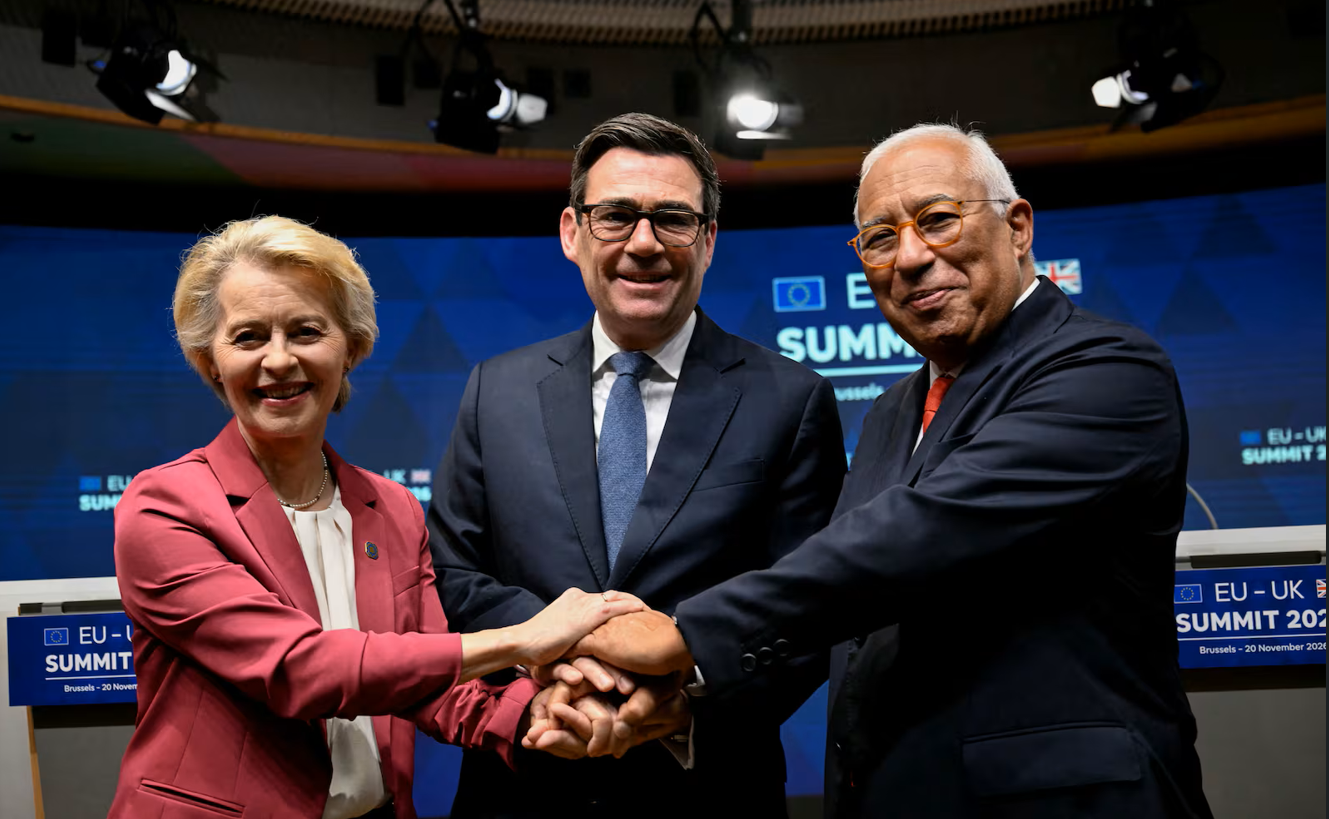
Britain and the European Union have reached a new agreement to improve post-Brexit relations, reduce trade barriers and expand opportunities for young people.
The agreement was announced following a UK-EU summit in Brussels on Friday, November 20, 2026. Prime Minister Andy Burnham met European Commission President Ursula von der Leyen and European Council President António Costa as both sides confirmed the outcome of negotiations. Downing Street described the deal as concluded, although officials acknowledged that discussions would continue on certain outstanding issues before all elements could be implemented.
The package focuses on three major areas: food and agricultural trade, carbon emissions trading and a new youth mobility arrangement. The measures are intended to make cooperation easier between Britain and the EU while addressing some of the practical difficulties that have affected businesses and individuals since Brexit.
One of the most significant changes concerns the movement of food and agricultural products across the UK-EU border. The proposed agreement will remove many existing checks and certification requirements for qualifying products, making it easier for businesses to export goods between the two markets.
The arrangement will require Britain to align with relevant EU sanitary and phytosanitary standards covering food safety, animal health and plant protection. The changes are expected to reduce paperwork, inspection costs and delays for exporters. The new arrangements are scheduled to take effect from March 2028, subject to the necessary implementation procedures.
The deal also introduces a Youth Experience Scheme, allowing up to 100,000 young people from each side to live in the other territory for up to three years. Participants will be able to work, study, volunteer, take part in au-pair arrangements or travel. The scheme is intended to restore opportunities for younger generations that were significantly restricted after freedom of movement ended following Brexit. The two sides aim to make opportunities available no later than January 2030.
Carbon emissions trading is another important part of the agreement. Britain and the EU have agreed to link their respective emissions trading systems from 2028, allowing greater recognition of carbon allowances between the two markets. The arrangement is intended to reduce the risk of British and European exporters facing additional carbon-related charges when trading with one another. It could be particularly significant for energy-intensive industries, including steel and manufacturing.
The agreement also includes further cooperation on energy security, defence and international affairs. Both sides reaffirmed their commitment to supporting Ukraine and strengthening European security. They also agreed to deepen collaboration on maritime security, cyber threats, law enforcement and efforts to tackle organised crime. These commitments demonstrate that the reset extends beyond commercial arrangements and seeks to establish a broader strategic partnership between Britain and its closest European neighbours.
However, the agreement does not resolve every outstanding issue. University tuition fees remain an important subject for further negotiations. The UK and EU have committed to reaching a supplementary agreement within six months, covering fees for students from each side who wish to study in the other's territory. The outcome could affect the cost of studying abroad and the ability of British and European universities to attract international students.
The tuition fee discussions have been politically sensitive because European students currently face different fee arrangements from British students at UK universities. The EU had sought more equal treatment, while the British government was concerned about the financial implications of changing the system. The final summit statement sets a timetable for further negotiations rather than announcing a completed tuition fee settlement.
Prime Minister Andy Burnham presented the agreement as an opportunity to improve economic conditions and rebuild trust between the two sides. He argued that reducing trade barriers could help businesses, support employment and potentially ease pressure on household budgets through more efficient food supply chains. European Commission President Ursula von der Leyen also described the agreement as an important turning point in relations between the UK and the EU.
The deal has nevertheless reopened political arguments about the consequences of Brexit. Supporters of leaving the EU may view closer alignment with European rules as a step backwards, particularly where Britain will need to follow standards developed in Brussels. Critics of Brexit, meanwhile, argue that the new arrangements demonstrate the economic and practical difficulties created by leaving the single market and customs arrangements.
The agreement does not mean Britain is rejoining the European Union, restoring general freedom of movement or returning to the single market. Instead, it establishes a framework for closer cooperation in selected areas while maintaining the UK's position outside the bloc. Any future decision to seek EU membership would require a separate political process and negotiations.
For British businesses, the potential benefits will depend on how quickly the agreements are implemented and how effectively companies adapt to the new arrangements. Food producers, agricultural exporters and manufacturers could see lower administrative costs, while industries affected by carbon border charges may benefit from the planned emissions system link. However, businesses will need to follow the agreed regulatory requirements as they come into force.
The new arrangements will also require further legal and administrative work on both sides. The summit statement sets out implementation targets, but the agreements must proceed through the relevant domestic and European procedures. Businesses, universities and individuals should therefore avoid assuming that every change will take effect immediately following the announcement.
The UK-EU summit marks a significant development in relations nearly a decade after the 2016 Brexit referendum. It signals a willingness from both sides to move beyond years of political tension and focus on practical areas of shared interest. Whether the reset delivers substantial economic and social benefits will depend on the implementation of the agreements and the progress of negotiations still underway.
For further local news, community updates and story tips, contact news@lakelandpost.co.uk or 0333 090 2080.