
Israel Election Ends Without Clear Winner as Netanyahu Faces Coalition Challenge
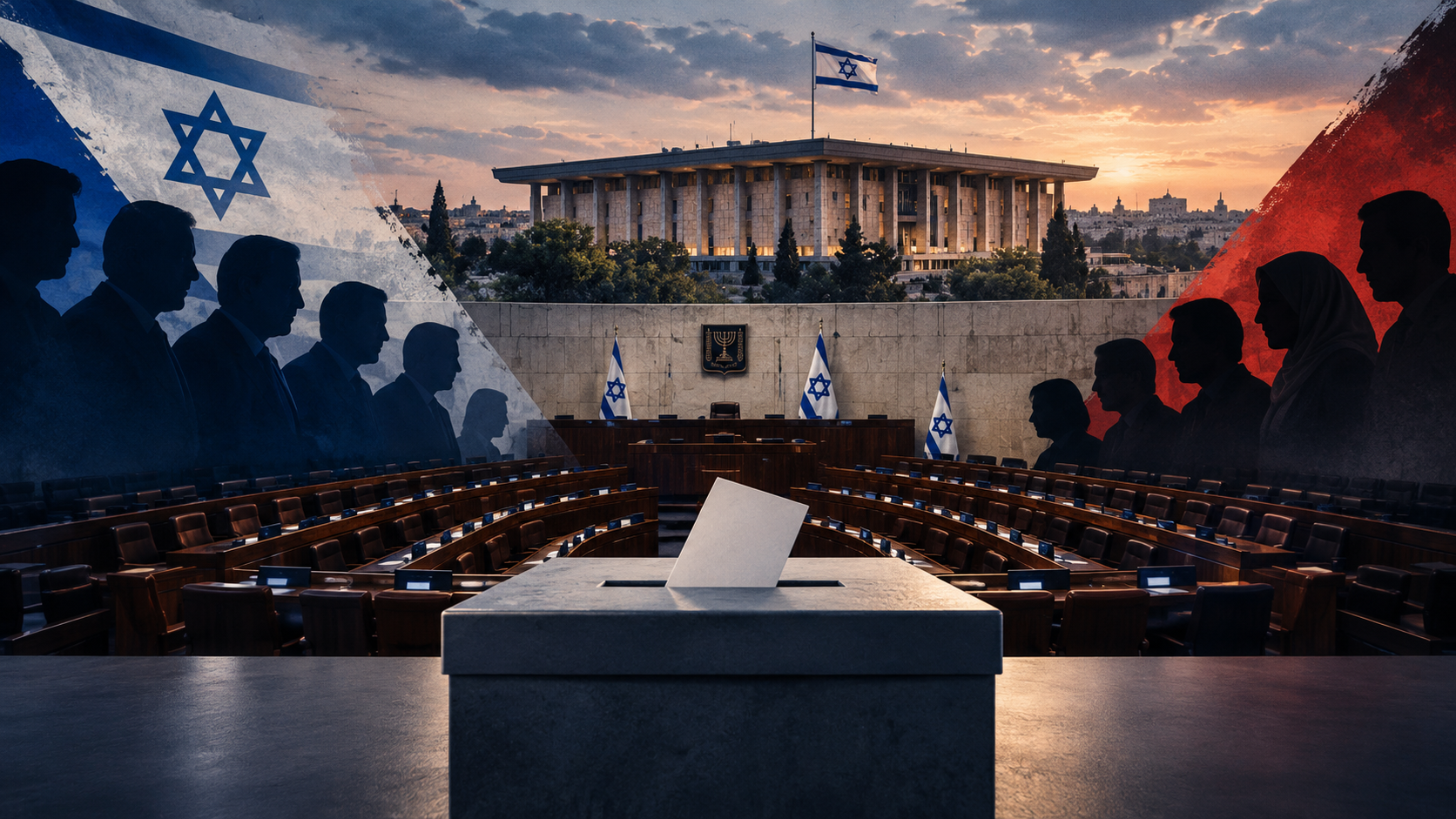
Israel’s general election has produced an uncertain result, leaving rival political blocs short of a clear path to forming the next government.
Exit polls released after voting ended on Tuesday, 27 October, indicated that Netanyahu’s Likud-led coalition had fallen short of the numbers required to secure a parliamentary majority. The opposition bloc, led by former military chief Gadi Eisenkot, appeared to have a narrow advantage in some projections. However, the figures remain provisional, and the final distribution of seats will determine which political leaders have the strongest prospects of forming a government.
Israel’s parliament, known as the Knesset, has 120 seats, meaning a governing coalition normally needs the support of at least 61 members. The country’s fragmented political system makes coalition-building essential, as no single party has ever secured an outright majority on its own. Even when one party emerges as the largest, its leader must negotiate with other parties to assemble sufficient support to govern.
Netanyahu’s Likud party appeared set to remain the largest individual party, despite the wider coalition facing difficulties in securing enough parliamentary support. The veteran prime minister has dominated Israeli politics for decades and has repeatedly returned to office through coalition agreements. His political future will depend not only on his party’s performance but also on whether smaller parties are willing to support another administration led by him.
Eisenkot has emerged as a leading figure in the opposition’s effort to replace Netanyahu. A former chief of staff of the Israel Defense Forces, he leads the centrist Yashar party and has campaigned on the prospect of political change after years of division. The opposition brings together parties with differing political positions, united primarily by their desire to end Netanyahu’s leadership. Turning that shared objective into a workable coalition could prove difficult.
Arab-led political parties have also emerged as an important factor in the election outcome. Exit-poll projections suggested they could collectively secure a substantial number of seats, potentially giving them considerable influence over which bloc can form a government. Their performance reflects increased participation among Arab citizens of Israel, whose votes could become particularly significant if neither of the main political camps can reach the required majority independently.
However, cooperation with Arab-led parties remains politically contentious. Netanyahu and several opposition figures have previously rejected forming a government that depends on their support, creating an additional obstacle to coalition negotiations. If the final results confirm the projected balance of seats, political leaders may face pressure to reconsider their positions or explore alternative arrangements, including minority-government proposals that rely on support from outside the governing coalition.
The election was widely viewed as a test of public confidence in Netanyahu following the Hamas-led attacks of 7 October 2023 and the subsequent regional conflicts. Security concerns, the government’s handling of the attacks and the wars that followed have weighed heavily on Israeli politics. Netanyahu’s supporters have defended his leadership during the conflicts, while opponents have called for accountability over the security failures and a change in political direction.
Military-service exemptions for ultra-Orthodox Jewish men also featured prominently in the political debate. The issue has become a source of tension over the distribution of responsibilities between different sections of Israeli society. Eisenkot has pledged to end the existing exemptions, while the parties associated with Netanyahu’s governing bloc include religious groups that have traditionally defended arrangements allowing many ultra-Orthodox men to avoid compulsory military service.
Despite the range of issues facing the country, the campaign also centred on the contrasting approaches of the main political leaders. Netanyahu presented his experience and security policies as reasons to remain in office, while Eisenkot sought to position himself as an alternative capable of bringing Israelis together. Questions about Israel’s international relationships, the humanitarian situation in Gaza and the country’s wider regional security challenges formed part of the broader political context surrounding the vote.
Voter participation was particularly high, with turnout reaching 77.7 per cent, according to figures reported by the Central Elections Committee. This was the highest level recorded since 1999 and represented a significant increase compared with the previous national election in 2022. The strong participation highlighted the importance many voters attached to the outcome, although the final political consequences will depend on the confirmed results and subsequent negotiations.
The immediate next step is the completion of the official count and consultations over who should be given the opportunity to form a government. President Isaac Herzog is responsible for consulting political parties before selecting the candidate he considers best placed to assemble a viable coalition. That process does not automatically guarantee the largest party’s leader will become prime minister; the decisive question is which candidate can demonstrate sufficient parliamentary support.
If negotiations fail, Israel could face another election, extending a period of political uncertainty. The country experienced repeated electoral deadlock between 2019 and 2022, when five national elections were held in less than four years. For now, the exit polls indicate a closely divided political landscape rather than a definitive transfer of power. The official results and the willingness of rival parties to negotiate will determine whether Netanyahu can remain at the head of a new coalition or the opposition can establish an alternative administration.
For further local news, community updates and story tips, contact news@lakelandpost.co.uk or 0333 090 2080.