
Pope Leo’s South America Tour Highlights Missionary Vision And His Deep Ties To Peru
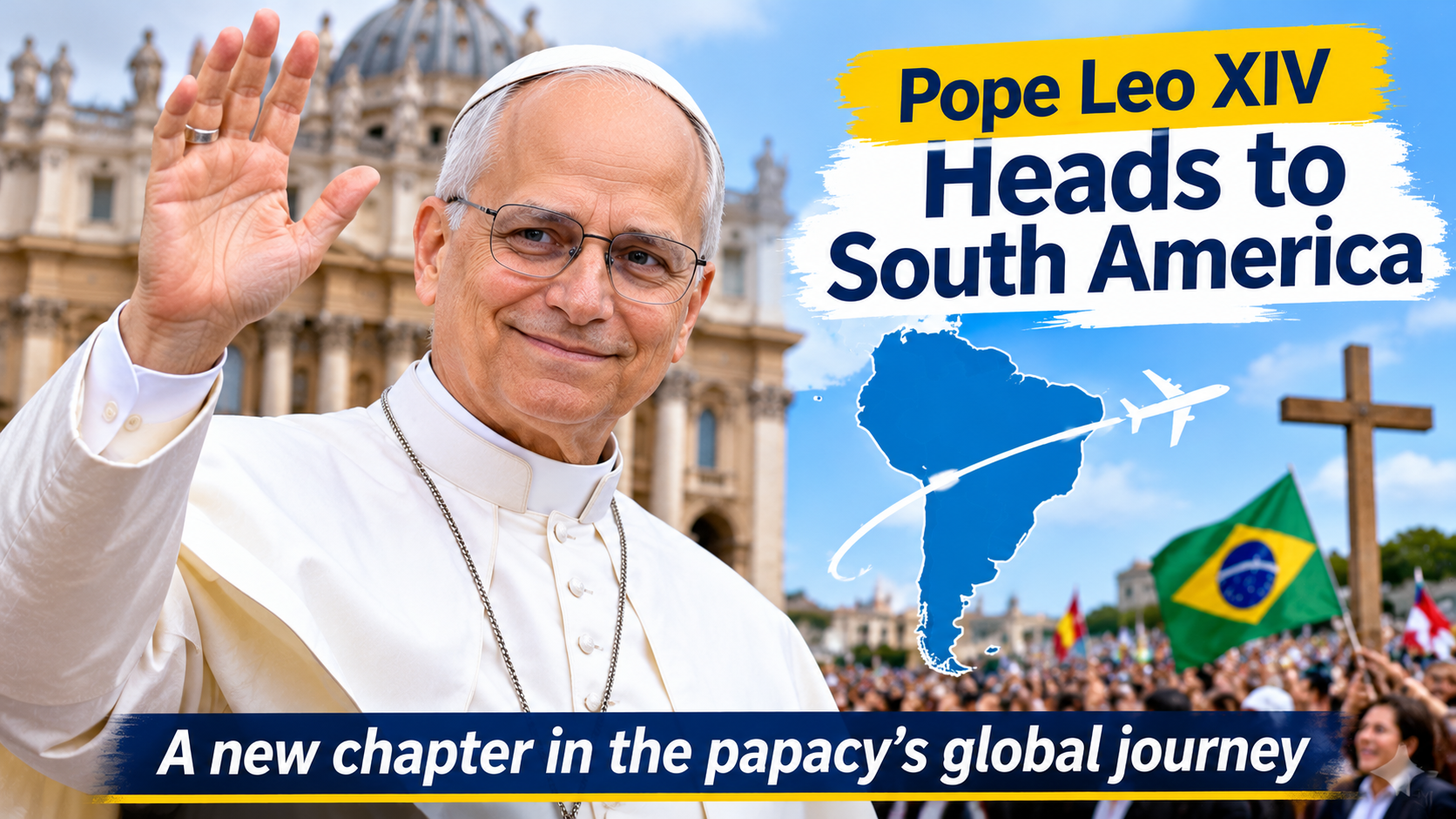
Pope Leo XIV has concluded a major South American tour that highlighted his missionary background, political messages and strong personal connections across the continent.
The 71-year-old pontiff completed the 12-day journey through Uruguay, Argentina and Peru on 16 November, following an intensive programme of public appearances, religious services and meetings with political leaders. His visit attracted millions of people and provided an opportunity to communicate the priorities guiding his early papacy. The journey was particularly significant because it came less than a month after he underwent surgery for lung cancer, raising questions about his ability to manage such a demanding international schedule.
The return to Peru was the most personal part of the journey for the Chicago-born pope, who spent nearly two decades working as a missionary and church leader in the country. He previously served as Bishop of Chiclayo between 2015 and 2023 and acquired Peruvian citizenship during his time there. His arrival was greeted by enormous crowds, with an estimated three million people gathering in Lima to welcome him. Supporters repeatedly chanted that the Pope was Peruvian, reflecting the close relationship he developed with the country.
During his final Mass at Las Palmas Air Base in Lima, attended by approximately 1.5 million people, Leo spoke emotionally about his connection with Peru. He told the congregation that the Peruvian people were also his people and said he would carry the experience of the visit back to Rome. His remarks received strong applause from the crowd, bringing an emotional conclusion to a journey that had taken him through communities closely connected to his earlier religious work.
The tour also provided an opportunity for Leo to demonstrate his position on democracy and political responsibility. In Argentina, he met President Javier Milei and emphasised the importance of protecting vulnerable people while pursuing economic development. He expressed concern about policies that could place additional pressure on poorer communities and encouraged political leaders to consider the wider social consequences of economic decisions. His comments reflected the Catholic Church's continuing focus on poverty, inequality and social protection.
In Peru, the Pope also addressed President Keiko Fujimori following her narrow election victory earlier in the year. He encouraged efforts to rebuild public confidence and strengthen democratic institutions. His comments carried particular significance given the country's political history and Leo's previous experience there as a church leader. He has previously spoken about human rights concerns associated with the government of former president Alberto Fujimori, including the controversial pardon granted to the former leader.
Environmental protection was another major theme during the visit, particularly during the Pope's journey into the Amazon region. In Pucallpa, he warned that deforestation, pollution and the exploitation of natural resources were threatening both the rainforest and the Indigenous communities who depend on it. He called for greater protection of the environment and highlighted the connection between ecological damage and the struggles faced by poorer populations. His message reinforced the Vatican's emphasis on environmental responsibility and social justice.
The Pope also used the journey to draw attention to people experiencing poverty, disability, isolation and social exclusion. In Uruguay, he visited vulnerable communities and highlighted concerns about children affected by drug-related violence. He also called for greater solidarity with people experiencing loneliness and suffering, while emphasising the importance of respecting women. These appearances demonstrated how his papacy intends to maintain a strong focus on communities that frequently receive limited attention from political and social institutions.
Meetings with survivors of sexual abuse involving Catholic clergy formed another important part of the tour. Leo held private discussions with survivors in both Argentina and Peru, with the Vatican confirming that the Peruvian meeting addressed how the Church could improve its response to victims. However, some survivors criticised the limited number of people invited to participate. A small protest also took place outside the Vatican's diplomatic residence in Lima, highlighting continuing demands for accountability and greater recognition of victims' experiences.
His visit to Argentina attracted particularly large gatherings, with more than two million people attending Masses in Buenos Aires and nearby Luján. The country holds additional significance because it was the homeland of his predecessor, Pope Francis. Many Argentine Catholics had hoped Francis would return to the country during his papacy, making Leo's arrival an important religious occasion. The crowds welcomed the pontiff with enthusiasm, while his appearances included visits to religious sites and meetings with local communities.
The physical demands of the journey were closely watched because of Leo's recent medical treatment. He underwent surgery on 13 October to remove a section of his right lung after doctors identified a malignant tumour. Nevertheless, he maintained a busy schedule throughout the South American visit, delivering speeches, attending public events and travelling across different geographical environments, including high-altitude areas and the Amazon region. His ability to complete the itinerary demonstrated that he could undertake an extensive international programme following his recent operation.
The journey included 50 scheduled events across the three countries and attracted an estimated combined audience of 13 million people. Beyond the large public gatherings, it offered Leo an opportunity to reconnect with communities that influenced his development as a religious leader. His experiences in Peru, particularly his years working in Chiclayo, remain an important part of his personal and pastoral identity. Observers have suggested that the visit could help define the missionary character and social priorities of his developing papacy.
As he departed Lima for Rome, Leo used the Spanish expressions hasta luego and hasta pronto, conveying a hope of meeting Peruvians again rather than treating the visit as a final farewell. His emotional departure brought an end to a significant international journey that combined religious celebrations with messages about democracy, environmental protection and institutional accountability. The experience has also strengthened the visibility of his South American connections as he continues his responsibilities as leader of the worldwide Catholic Church.
For further local news, community updates and story tips, contact news@lakelandpost.co.uk or 0333 090 2080.