
UK And EU Agree Brexit Reset Deal To End A Decade Of Strained Relations
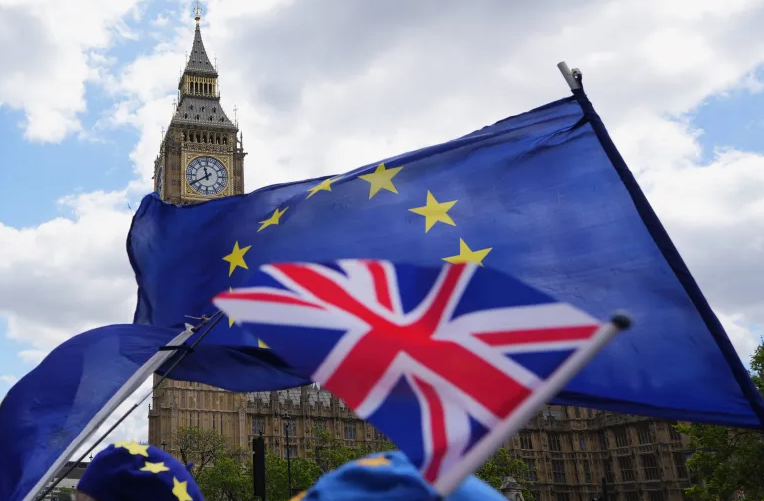
Britain and the European Union have agreed a series of measures to rebuild relations, improve trade and create new opportunities for young people.
The agreement was announced following a summit in Brussels on Friday, November 20, marking a significant development nearly a decade after the 2016 Brexit referendum. British Prime Minister Andy Burnham met European Commission President Ursula von der Leyen and European Council President António Costa, with both sides confirming that negotiations had concluded in several key policy areas. The package focuses on reducing practical barriers created after Britain's departure from the European Union.
Three major areas form the centre of the agreement: food and agricultural trade, carbon emissions trading and youth mobility. The two sides have also committed to closer cooperation on economic security, defence and other shared challenges. Officials say the arrangements will require further legal procedures and implementation work before all the changes become operational.
One of the most important measures concerns the movement of food, plants and animal products between Britain and the EU. The proposed sanitary and phytosanitary agreement will remove many existing health certificates, inspections and border checks for qualifying products. This is expected to reduce administrative costs and delays for businesses involved in cross-border agricultural and food trade.
The new arrangements will require Britain to follow relevant EU rules covering food safety, animal health and plant protection. The agreement is designed to establish a common sanitary and phytosanitary area, making trade easier while maintaining agreed standards. The UK government estimates that the arrangement could be worth approximately £5.1 billion to the British economy. The changes are scheduled to apply from March 1, 2028.
The agreement also has implications for trade between Great Britain and Northern Ireland. Greater alignment with EU agricultural standards is expected to simplify the movement of certain food products across the Irish Sea. However, the deal does not remove all customs procedures or mean that every existing border arrangement will disappear.
Another important element is the planned connection between the UK and EU emissions trading systems. The systems are expected to be linked from 2028, allowing carbon allowances to be recognised across both markets. This could reduce the risk of British and European businesses facing additional carbon-related charges when exporting certain goods, including steel.
The carbon arrangement is particularly relevant to energy-intensive industries and manufacturers. Businesses operating in sectors affected by carbon pricing could benefit from more predictable trading conditions and reduced costs. However, the practical benefits will depend on the final implementation arrangements and how companies adapt to the linked systems.
Youth mobility is another major part of the agreement. The proposed scheme will allow up to 100,000 young people from each side annually to live, work or study in the other territory for up to three years. It is intended to restore some opportunities for younger people that became more restricted after the end of freedom of movement following Brexit.
Under the planned arrangement, eligible young people will be able to gain international work experience, pursue educational opportunities and experience life in another country. The scheme is expected to begin by January 2030. Further details, including eligibility requirements and application procedures, will need to be established before it becomes available.
University tuition fees remain an unresolved issue. The UK and EU have agreed to continue negotiations, with the aim of reaching an agreement within six months. The discussions concern the fees charged to British students studying in European countries and European students attending universities in the United Kingdom.
The disagreement centres partly on whether EU students should receive tuition arrangements similar to those available to domestic students at British universities. The EU has sought improved access, while the UK government has considered the financial implications. No final agreement on tuition fee arrangements was announced at the Brussels summit.
The wider reset also includes commitments to strengthen economic security and supply chains. Britain and the EU intend to work more closely on areas such as steel, electric vehicles and emerging technologies. Regular discussions are expected to help both sides respond to international economic pressures and reduce vulnerabilities in important industries.
Security cooperation featured prominently during the summit discussions. Both sides expressed support for closer collaboration on European defence, military mobility and responses to emerging threats. The agreement reflects shared concerns about international instability, cyber threats and foreign interference, although further work will be needed to turn these commitments into practical arrangements.
Prime Minister Andy Burnham said the agreements could provide economic benefits for Britain and Europe. He estimated that the reset could increase the UK's economic output by 0.5 per cent, equivalent to approximately £17 billion. The government has also highlighted the potential benefits of reduced food trade costs and improved opportunities for businesses.
However, the agreement has attracted criticism from politicians who remain opposed to closer alignment with the European Union. Reform UK leader Nigel Farage criticised the arrangements and described them as a betrayal of Brexit. Supporters of the agreement argue that closer practical cooperation can benefit trade and employment without reversing Britain's departure from the bloc.
The government has emphasised that the agreement does not mean Britain is rejoining the European Union, returning to the single market or restoring general freedom of movement. Instead, it establishes cooperation in selected areas while the UK remains outside the bloc. Nevertheless, the requirement to follow certain EU standards has renewed debate about the balance between economic cooperation and regulatory independence.
The next stage will involve legal procedures, domestic implementation and further negotiations on outstanding matters. Businesses, universities and individuals will need to wait for detailed guidance before making decisions based on the proposed changes. The food trade arrangements are expected from 2028, while the youth mobility scheme is targeted for 2030.
The Brussels summit represents an important moment in the relationship between Britain and the European Union. Whether the agreement delivers the promised economic and social benefits will depend on how effectively both sides implement the measures and resolve the remaining disagreements. For businesses, students and young people, the coming months will provide a clearer picture of what the reset means in practice.
For further local news, community updates and story tips, contact news@lakelandpost.co.uk or 0333 090 2080.