
Hexham Farming Conference Examines The Future Of British Agriculture
Farmers and agricultural leaders gathered at Hexham Auction Mart to examine the challenges and opportunities shaping the future of British agriculture.
The Northern Farming Conference 2026 took place on Wednesday, November 4, under the theme “Turning a Corner: Building the Future of Farming”. The event brought together farmers, industry representatives and agricultural professionals from across Britain to discuss how the sector can respond to changing economic conditions, political uncertainty and practical challenges affecting farm businesses.
The conference focused on the need for profitable and adaptable farming businesses, alongside greater certainty over government policy and agricultural support. Discussions also explored food security, investment, international markets and the importance of attracting younger people into the industry.
The opening panel was chaired by Adam Bedford of GSC Grays and featured Tom Bradshaw, president of the National Farmers’ Union, Gavin Lane, president of the Country Land and Business Association, and George Dunn, chief executive of the Tenant Farmers Association. The speakers considered the pressures facing agricultural businesses and what would be needed to support the sector over the coming years.
Gavin Lane highlighted the importance of building profitable businesses that can respond to changing circumstances. He discussed how food production could work alongside environmental management, technology and alternative sources of income, arguing that adapting to change would be essential for long-term success.
Tom Bradshaw emphasised the importance of domestic food production and fair trading conditions for British farmers. The discussion also considered how international markets and global developments influence the agricultural sector, including the commercial pressures faced by producers competing in changing markets.
George Dunn brought attention to the circumstances of tenant farmers, for whom long-term security can be particularly important when considering investment and business development. The wider discussion highlighted how different farming arrangements can affect the ability of businesses to plan, adapt and make decisions for the future.
International trade and market conditions also featured in the conference programme. Speakers considered how global demand, commodity prices and wider economic developments can influence British agriculture. These issues affect farm businesses through changing input costs, selling prices and the commercial decisions producers must make to remain financially sustainable.
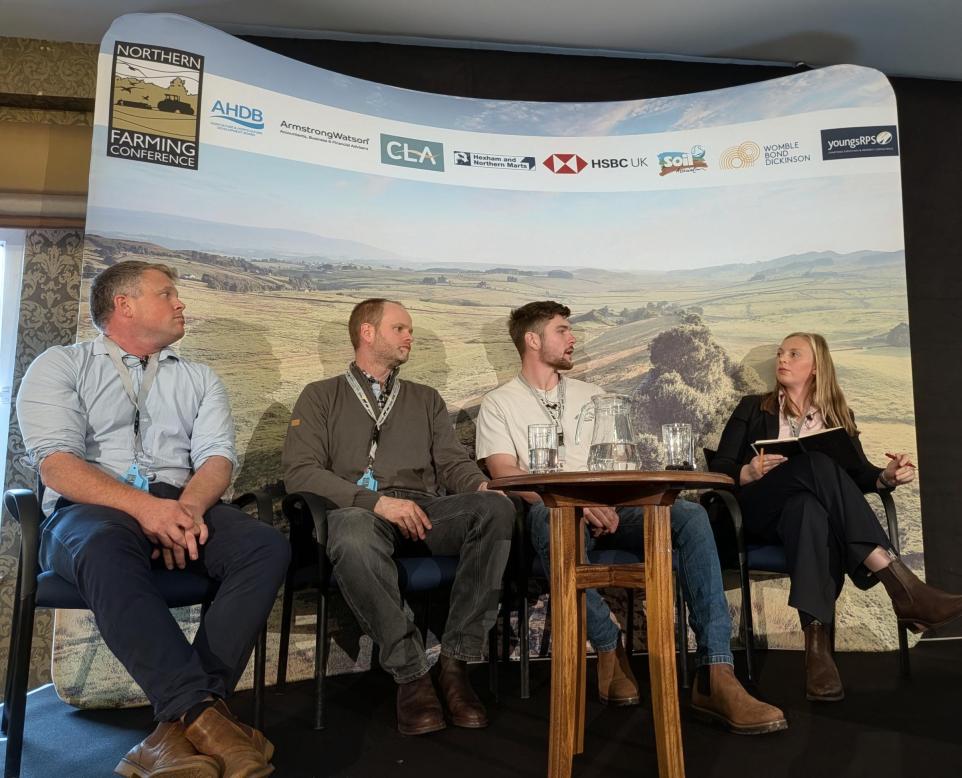
The afternoon session shifted towards the practical experiences of working farmers. Chaired by Northumberland farmer Jen Oglesby, the panel included Jamie Leslie from Scholland Farm in Shetland, David Cross from West Norfolk and Joe Nelless of Thistleyhaugh Farm near Morpeth.
The farmers discussed how they were managing costs, reviewing financial plans and adapting their farming systems. Reducing dependence on agricultural support payments was another important subject, with the panel considering how businesses could strengthen their financial position and develop more sustainable approaches to farming.
Succession planning emerged as a major issue during the discussion. Many British farms are family businesses where transferring responsibility between generations can involve financial, practical and emotional challenges. The panel considered how younger farmers can prepare to take on greater responsibilities while recognising the experience and commitment of older family members.
Joe Nelless spoke about the importance of approaching generational change with respect. He highlighted the years of work and personal commitment that older generations may have invested in a family farm, explaining why transferring responsibility can sometimes be difficult. Clear financial information and realistic business plans were identified as useful foundations for these conversations.
The conference also considered how the agricultural industry can attract and retain the next generation of workers and business leaders. Creating opportunities for new entrants, including people without a family farming background, was part of the wider discussion about the sector's long-term future.
The event concluded with a contribution from rural affairs journalist, author and Just Farmers founder Anna Jones. She encouraged delegates to reconsider how British agriculture communicates its achievements and challenges to the wider public, particularly when discussing the industry's future and its appeal to younger generations.
Her contribution raised questions about whether the frequent emphasis on hardship and uncertainty risks overshadowing the positive developments taking place across farming. The discussion suggested that sharing examples of innovation, successful businesses and opportunities could help create a more balanced understanding of the sector.
The conference highlighted that British farming faces significant pressures, but also has opportunities to improve profitability, embrace innovation and develop new business approaches. Its discussions underlined the importance of cooperation between farmers, industry organisations and policymakers as the sector prepares for future changes.
For farmers across Northumberland and the wider UK, the event provided an opportunity to exchange experiences and consider practical ways to strengthen their businesses. The message from Hexham was that long-term resilience will depend on adaptability, sound planning and ensuring the next generation has the confidence and opportunities to take the industry forward.
For further local news, community updates and story tips, contact news@lakelandpost.co.uk or 0333 090 2080.