
Five Walkers Rescued From Helvellyn In Storm-Force Winds
Five walkers needed mountain rescue assistance on Helvellyn after severe cramp and storm-force winds left their group unable to continue safely.
The group began climbing the Lake District mountain at approximately 3.30pm and reached the summit before encountering difficulties on the descent. One member developed severe cramp and became unable to move, leaving the others unable to continue their journey safely. As conditions deteriorated and the group became cold, they called emergency services for assistance. The walkers also reported having only two torches between them, creating additional concerns as daylight faded and they faced the prospect of continuing down the mountain in difficult conditions.
Nineteen volunteers from Keswick Mountain Rescue Team were deployed to assist the party. Although the conditions were dry, the wind was exceptionally strong, making movement across the fell hazardous for both the stranded walkers and the rescuers. Team members reported that the gusts were powerful enough to threaten their balance, requiring them to wear helmets for protection. The rescue highlighted the risks that severe winds can create on exposed mountain routes, particularly when walkers are already struggling with injury or exhaustion.
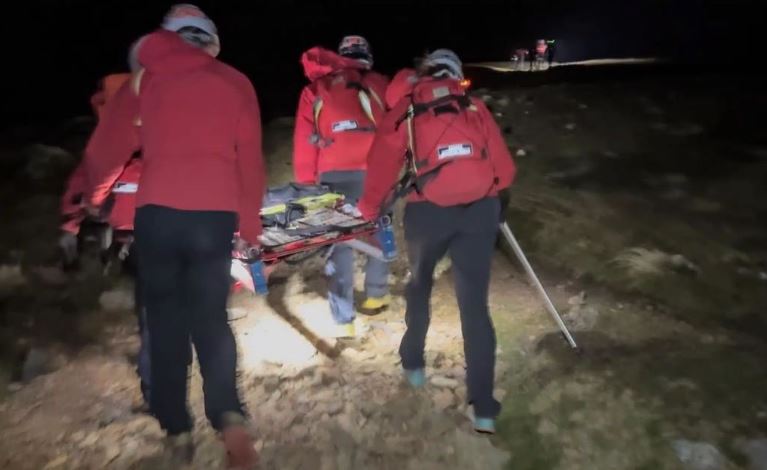
The rescue team faced considerable difficulties transporting equipment up the mountain. Rescuers used a split stretcher designed to make carrying easier, but the strong winds made even its separate sections difficult to control. Four team members were needed to carry each half of the stretcher along the steep, pitched path while contending with the gale. The conditions required careful coordination and additional manpower, increasing the physical demands of reaching the casualty and bringing the group safely off the fell.
Once the first rescuers reached the walkers, the four members of the party who were not injured were escorted down the mountain. The remaining walker stayed with the casualty inside a group shelter while further assistance arrived. Keeping the injured man sheltered helped the team manage the situation while the rescue operation continued in the exposed conditions. The approach allowed rescuers to separate the evacuation of the uninjured walkers from the care needed by the person experiencing severe cramp.
A team paramedic examined the casualty after rescuers reached him. Following the assessment, the man was encouraged and assisted to walk down the mountain rather than being carried on a stretcher. This avoided the need for a more complicated stretcher evacuation in the challenging wind conditions. The decision followed the medical assessment and the assistance available from the rescue team, allowing the group to make progress towards safety while reducing the need to transport the casualty over the steep route.
The entire operation took four hours and 16 minutes to complete, involving 19 mountain rescue volunteers. The length of the incident reflected the difficulties posed by the weather, terrain and need to assist the casualty while escorting the rest of the group. Even without rain, storm-force winds created significant challenges for those working on the mountain. The incident also demonstrated how a problem affecting one member of a walking party can quickly become a wider emergency when conditions make it difficult for the rest of the group to continue.
Keswick Mountain Rescue Team used the incident to remind walkers to carry reliable headtorches when heading into the fells. Daylight hours are shortening during autumn, increasing the likelihood that people who start their walks later in the afternoon may have to complete their descents in darkness. A phone torch may not provide sufficient light for negotiating uneven ground, identifying the route or avoiding hazards. A dependable headtorch also allows walkers to keep their hands free while moving across steep or difficult terrain.
Walkers were also urged to check mountain weather forecasts before setting out and to plan their journeys around the conditions expected. Weather on exposed summits and ridges can be substantially more challenging than conditions experienced in sheltered locations. Strong winds can affect balance, make progress difficult and increase the risk of losing a safe footing. Planning a suitable route, allowing enough time for the descent and being prepared to change plans can help reduce the likelihood of an emergency developing on the fells.
The incident is another reminder that reaching a summit should not be treated as the end of a mountain walk. The descent can bring its own difficulties, especially when the weather changes, a member of the group becomes unwell or the available daylight begins to disappear. Walkers need to consider their return journey before setting off and ensure that everyone in the party has suitable clothing, navigation equipment, lighting and enough time to complete the route safely. Conditions should be reassessed throughout the walk rather than only at the start.
The rescue also underlines the importance of carrying equipment appropriate to the route and season. Reliable lighting, suitable footwear, weather-resistant clothing and a means of navigation can all become essential when conditions deteriorate. Walkers should avoid relying solely on mobile phone batteries or basic lighting, particularly on longer routes where the journey may take longer than expected. Having the right equipment does not remove every risk, but it can help people respond more effectively when a walk becomes difficult or an unexpected problem occurs.
Mountain rescue volunteers operate in challenging conditions to help people who become injured, unwell or unable to continue safely. In this incident, the team had to work against powerful winds while carrying equipment over steep terrain and arranging separate support for the casualty and the other walkers. The operation required teamwork, medical assessment and careful decisions about how to evacuate the group. The outcome meant the injured man could walk off the fell with assistance, avoiding the need for a stretcher carry.
The incident reinforces the importance of preparation when visiting the Lake District fells, where conditions can change quickly and exposed routes can become hazardous. Walkers are encouraged to check forecasts, carry suitable equipment and leave enough time to return before darkness. If circumstances make it unsafe to continue, seeking help early can prevent a difficult situation from becoming more serious. For the group on Helvellyn, the combination of severe cramp, limited torches and storm-force winds made the assistance of mountain rescue volunteers necessary to complete the descent safely.
Got a news story or tip to share? Contact our editorial team by emailing news@lakelandpost.co.uk or call us directly on 0333 090 2080.