
Cumbria Engineering Pioneer Celebrates 100th Birthday With Special Royal Message
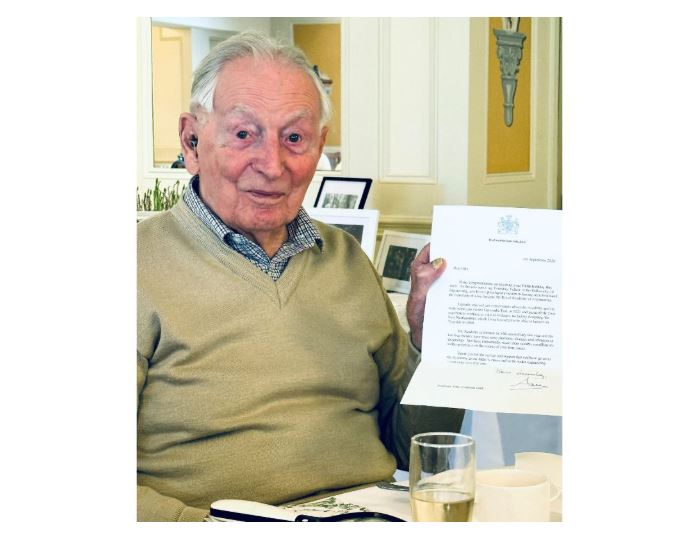
Naval architect Professor John Caldwell has celebrated his 100th birthday in Cumbria with a congratulatory message from The Princess Royal.
Professor Caldwell has enjoyed a remarkable career spanning decades of engineering innovation, academic work and contributions to Britain's maritime industry. His achievements have earned him recognition as one of the country's distinguished naval architects, with his professional journey beginning during the Second World War. Reaching his centenary marks a significant personal milestone for a man whose career reflects a period of considerable change in British shipbuilding, engineering education and technological development.
His journey into engineering began in 1943, when he became an apprentice at the Vickers-Armstrong shipyard in Barrow-in-Furness. At the time, Britain's shipbuilding industry occupied a major position in global maritime manufacturing, providing opportunities for skilled workers to contribute to the design and construction of vessels. The experience at the Barrow shipyard established the foundation for Professor Caldwell's later work in naval architecture, where technical calculations, structural integrity and safety would become central to his professional life.
Following his early experience in industry, Professor Caldwell went on to develop an academic career at the University of Newcastle. He specialised in design and structural safety, areas of engineering that require detailed analysis of how vessels and other structures perform under demanding conditions. His work took place during a period when British shipyards were responsible for a substantial proportion of the world's shipbuilding output, giving naval architects an important role in developing and maintaining the country's engineering capabilities.
The scale of change in the maritime industry during his lifetime has been considerable. When Professor Caldwell began his career, Britain built approximately half of the world's ships, whereas its share is now reported to be below one per cent. His professional journey therefore spans a period in which Britain's position in global shipbuilding changed dramatically, while the engineering profession itself continued to develop new approaches to design, technology and structural safety.
Professor Caldwell's contribution to engineering also extended into the establishment of the Royal Academy of Engineering. On 11 June 1976, he joined almost 130 leading engineers at the inaugural meeting of the Fellowship of Engineering, held at Buckingham Palace. The meeting was hosted by Prince Philip, the academy's founding senior fellow, as part of the formation of an organisation intended to bring together leading figures from across the engineering profession.
Professor Caldwell is now the last surviving founding fellow of the Royal Academy of Engineering, giving his centenary particular significance as the organisation celebrates its 50th anniversary in 2026. The academy's establishment brought together influential engineers from different specialisms, creating a fellowship dedicated to recognising engineering excellence and supporting the profession. His continued presence provides a direct personal link to the organisation's beginnings and the engineers who gathered for its inaugural meeting five decades ago.
The Princess Royal, who has been a royal fellow of the academy since 2010, sent Professor Caldwell a special message congratulating him on reaching 100. Her message also recognised his service to the engineering community and the contribution he has made throughout his career. The royal recognition follows an earlier meeting between the pair, when they discussed his professional experiences and the creation of the academy.
During their meeting in 2021, The Princess Royal and Professor Caldwell reflected on his career in naval architecture, his work in engineering education and his involvement with shipyards along the River Tyne. Their conversation provided an opportunity to revisit the development of the engineering fellowship and the wider changes that had shaped his professional life. The meeting also brought attention to a significant moment in British maritime history involving one of the largest vessels constructed in the country at the time.
They recalled the launch of the Esso Northumbria on 2 May 1969, an event attended by Professor Caldwell and carried out by The Princess Royal. The vessel was the first ship she launched and was described as the largest vessel ever built in Britain at that time. The occasion involved complex engineering calculations, particularly concerning the speed at which the huge tanker would move down the slipway during its launch.
Professor Caldwell recalled the difficulties associated with calculating the launch, explaining that too much grease on the slipway could have allowed the vessel to slide too quickly and potentially travel across the river. Such calculations were critical because the movement of a large ship during launch had to be carefully controlled to avoid an accident. Fortunately, the launch proceeded successfully, providing another notable moment connecting Professor Caldwell's engineering career with the country's maritime history.
The centenary celebrations took place at a lunch near Professor Caldwell's home in Cumbria, attended by family and friends. His son, Phil Caldwell, described the gathering as a joyful occasion and said his father was in good form throughout the event. The family read The Princess Royal's letter aloud in front of those attending, giving everyone present the opportunity to share in the significance of the royal recognition and the milestone birthday.
Phil Caldwell said his father was delighted by the message and particularly pleased by the words of praise for his service. The family's celebration brought together his personal achievements and professional legacy, recognising a career that began in a Barrow shipyard during wartime and continued through decades of engineering and academic work. The congratulatory message provided a further acknowledgement of his place in the history of British engineering.
Professor Caldwell's 100th birthday also coincides with an important anniversary for the Royal Academy of Engineering, which was established in 1976. From its founding group of approximately 130 fellows, the academy has expanded to include more than 1,700 fellows, reflecting the growth and diversification of engineering over the past half-century. Its work now spans a broad range of disciplines, including advanced communications, artificial intelligence, engineering biology and materials science.
As Professor Caldwell reaches his centenary, his story connects several generations of engineering development, from the traditional shipyards of Barrow-in-Furness to the modern research and technological challenges addressed by the profession today. His career in naval architecture, academic work and participation in establishing the engineering fellowship have formed a lasting contribution to Britain's engineering community. The royal message and family gathering marked both his personal milestone and his longstanding association with the profession.
For further local news, community updates and story tips, contact news@lakelandpost.co.uk or 01768 862313.