
Andy Burnham’s EU Reset Plans Spark Debate Over Tax Powers And Household Energy Bills
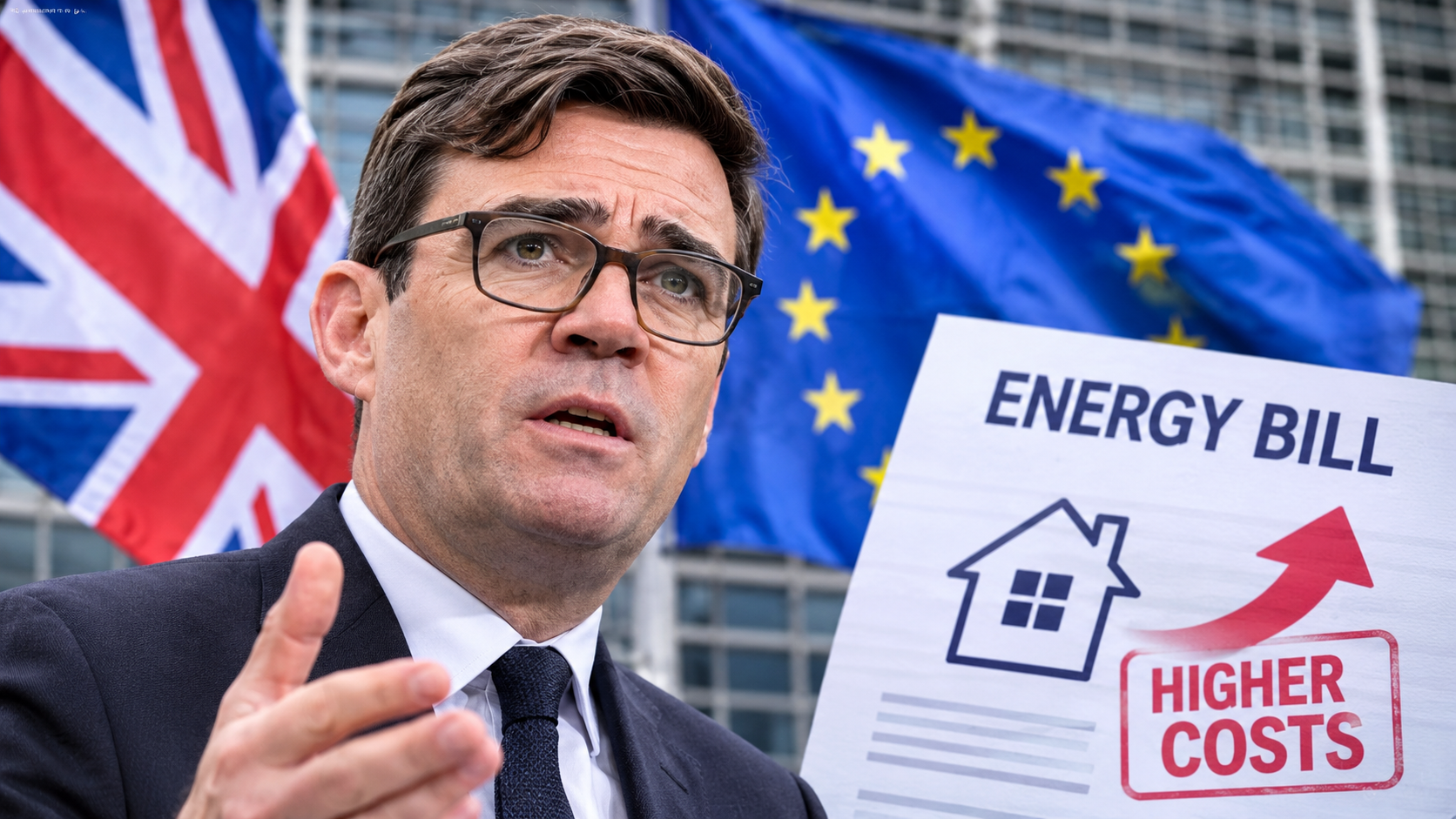
Andy Burnham’s plans to strengthen relations with the European Union have triggered fresh debate over taxation, Brexit and household energy costs.
The controversy follows warnings from Stay Out, an anti-EU campaign group, which claims that returning to EU membership could bring a significant proportion of British taxation within the scope of European rules. The group argues that changes to VAT arrangements could also affect the Government’s recent decision to remove VAT from domestic electricity bills.
According to the campaign group's analysis, approximately £927 billion of the £1.1 trillion raised in UK taxes each year could fall within the scope of EU legislation or European Court of Justice rulings if Britain rejoined the bloc. This represents around 84 per cent of total tax revenue, although the figure combines taxes directly governed by EU rules with those the group believes could be affected by court decisions.
Stay Out estimates that around 25 per cent of British tax revenue would be directly governed by EU legislation, while a further 59 per cent could fall within the influence of European court rulings. The organisation says this could limit the freedom of future UK governments to change certain tax policies. These figures are the campaign group's assessment and should not be treated as an independently established forecast of the consequences of any future agreement.
One of the main concerns raised by the group involves domestic electricity bills. The UK Government removed VAT from household electricity bills in October as a temporary measure intended to ease pressure on consumers. The reduction is scheduled to remain in place until June 2027, but campaigners argue that a return to EU membership could require the UK to reconsider the arrangement.
Under EU VAT rules, reduced rates are subject to restrictions, including minimum-rate requirements and rules governing which goods and services qualify. Stay Out argues that these provisions could prevent Britain from maintaining a zero-rated VAT arrangement for domestic electricity if it became an EU member again. The precise effect would depend on the terms of any future membership agreement and the applicable rules.
The campaign has also raised concerns about taxation on fuel, private school fees and other areas. It argues that EU rules could restrict future governments' ability to reduce VAT on petrol and diesel below the standard rate. The organisation also claims that changes would be required to the existing VAT arrangements for private school fees and duty-free shopping for British travellers visiting EU countries.
Oliver Lewis, chairman of Stay Out, has criticised the prospect of closer European integration. He argues that British voters should retain control over taxation through Parliament and has called on the Government to explain how any future relationship with the EU could affect national tax decisions. His comments form part of the campaign group's opposition to Britain returning to EU membership.
The debate has developed as Burnham prepares for discussions with European leaders in Brussels. The proposed cooperation covers areas including food and drink trade, energy and youth mobility. The Government has presented closer cooperation as a way to reduce barriers for businesses, improve trade and support economic growth without immediately returning to full EU membership.
Burnham has previously said that the UK's existing Brexit arrangements have not delivered the benefits promised to the public. In a speech ahead of the summit, he argued that the country had lost more than it gained from leaving the bloc and called for a more practical relationship with European partners. He has also said that any new agreement must respect Labour's existing commitments on the single market, customs union and freedom of movement.
The Prime Minister has set out conditions for any agreement with Brussels, including improvements to the current Brexit arrangements and tangible benefits for communities and businesses across the UK. He has also indicated that discussions about the country's longer-term relationship with Europe would take place after the summit, with the public involved in any future decision.
The proposals have attracted criticism from political opponents who argue that closer ties with the EU could reduce Britain's ability to make independent decisions. Shadow Chancellor Andrew Griffith has said that British taxes should be determined by the UK Parliament. He has also questioned whether European rules could make it harder for future governments to introduce tax reductions.
Supporters of closer cooperation, meanwhile, argue that improving relations with the EU could help British businesses by reducing paperwork and the cost of exporting goods. Food and agricultural trade are among the areas expected to feature in discussions, alongside energy cooperation and opportunities for younger people to work across borders.
The issue of youth mobility has also become part of the political debate. Reports surrounding the proposed agreement have raised questions about the number of young European citizens who could be permitted to work in the UK under a new arrangement. The Government's approach to such an agreement will be closely examined by those concerned about immigration policy and the future direction of Britain's relationship with Europe.
For households, the immediate question is whether any future change in the UK's relationship with the EU would affect energy bills or other everyday costs. However, the campaign group's warnings relate to the possibility of full EU membership rather than an established consequence of the cooperation agreements currently under discussion. No confirmed change to household electricity VAT has been announced as a result of the proposed summit arrangements.
The wider debate reflects continuing disagreements over the economic and political consequences of Brexit. While some politicians are calling for closer links with European institutions, others remain concerned about national control over taxation, immigration and regulation. The outcome of the Brussels discussions is expected to provide further detail about the Government's approach, although any decision on full EU membership remains a separate and much larger question.
For further local news, community updates and story tips, contact news@lakelandpost.co.uk or 0333 090 2080.