
Newton Abbot Museum Brings Local History To Life With Interactive Exhibits And Free Admission
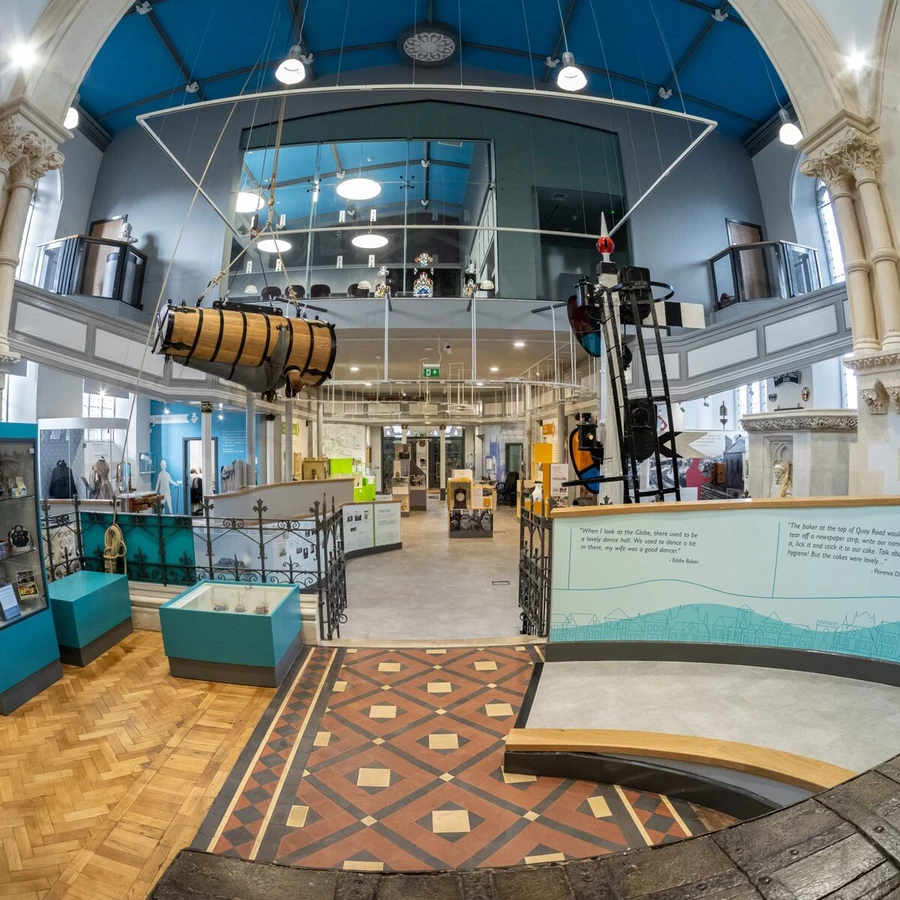
Newton Abbot Museum is inviting residents and visitors to explore the town’s rich heritage through historic collections, interactive displays and free family-friendly activities.
Located at Newton’s Place on Wolborough Street, the museum brings together stories spanning centuries of local life. Its collections explore the people, industries and events that helped shape Newton Abbot, offering visitors an opportunity to understand how the town developed and changed over time.
The museum holds more than 17,000 objects, ranging from ancient tools and archaeological discoveries to items connected with Victorian trade and twentieth-century migration. Together, these collections provide an insight into the everyday lives, working traditions and changing communities that have contributed to the town’s identity.
Railway heritage is among the museum’s key attractions. Visitors can explore displays featuring working railway signals and discover how the railway industry influenced Newton Abbot’s growth. The railway section highlights the importance of transport and engineering to the area, while interactive features allow visitors to engage with aspects of railway history.
Other notable displays include the Sandford Orleigh wood carvings and Lethbridge’s diving machine. These distinctive objects offer different perspectives on local craftsmanship, invention and historical life, helping bring the museum’s wider collection to life.
The museum also explores the area’s earlier history, including archaeological discoveries and objects dating back thousands of years. Displays help visitors understand how people lived in the region long before the development of the modern town, connecting local stories with wider historical changes.
Interactive activities are an important part of the visitor experience. More than 20 hands-on features encourage people of different ages to take part, with opportunities to design an Aller Vale pot, operate signal bells, make rope and compare Victorian fabrics associated with different social backgrounds.
Digital displays provide another way to explore Newton Abbot’s past. Visitors can examine historic maps, browse photographs, watch archive films and listen to recordings that preserve voices and memories from the town’s railway era and earlier generations.
The museum is housed within Newton’s Place, a restored Victorian church that originally opened as St Leonard’s Church in 1835. The Grade II listed building has been transformed into a shared community space while retaining important elements of its historic character.
The restoration formed part of a £2.2 million project that began in 2016, bringing together the museum, Town Council facilities and spaces for community activities. Support from the National Lottery Heritage Fund, local donations and heritage organisations helped make the redevelopment possible.
Alongside its permanent displays, the museum regularly hosts temporary exhibitions, workshops, talks and family activities. Its programme includes creative sessions, memory cafés, educational opportunities and special tours, giving visitors reasons to return and discover different aspects of the collections.
One current exhibition, Insects Uncovered: Biodiversity in Newton Abbot, explores butterflies, moths and local biodiversity through specimens from Doctor Henry Mapleton’s collection. Running until March 2027, the exhibition also includes a family trail inviting children to find hidden butterflies and moths around the museum.
Visitors can also view two recently restored photographs of Newton Abbot, believed to have been produced by the John Hinde company in the early 1970s. The images, originally created using large-format transparencies for postcards, offer a visual record of the town during a period of its recent history. They are scheduled to remain on display until 8 December 2026.
The museum welcomes families, schools and organised groups, with learning sessions and guided visits available by advance arrangement. Activities can be linked to curriculum themes or tailored to particular interests, making the collections useful for both educational visits and informal family outings.
Accessibility is another feature of the visitor facilities. The building has a lift and ramps through the main gallery, automatic entrance doors and accessible toilets. A wheelchair is available to borrow, while sensory resources, tactile maps and large-print materials can help visitors with different access requirements.
Admission to Newton Abbot Museum is free, and individual visitors do not need to book in advance. It is generally open from Tuesday to Saturday, 9.30am to 4.30pm, and closed on Sundays, Mondays and bank holidays. Visitors are advised to check the museum’s website before travelling for any temporary closure notices or changes to opening arrangements.
The museum is located at Newton’s Place, Wolborough Street, Newton Abbot, Devon, TQ12 1JQ. Further information about exhibitions, activities, group visits and accessibility is available by contacting the museum on 01626 201121 or emailing enquiries@newtonabbot-tc.gov.uk.
For further local news, community updates and story tips, contact news@lakelandpost.co.uk or 0333 090 2080.