
Ebola Patient Evacuated From Nigeria to Switzerland
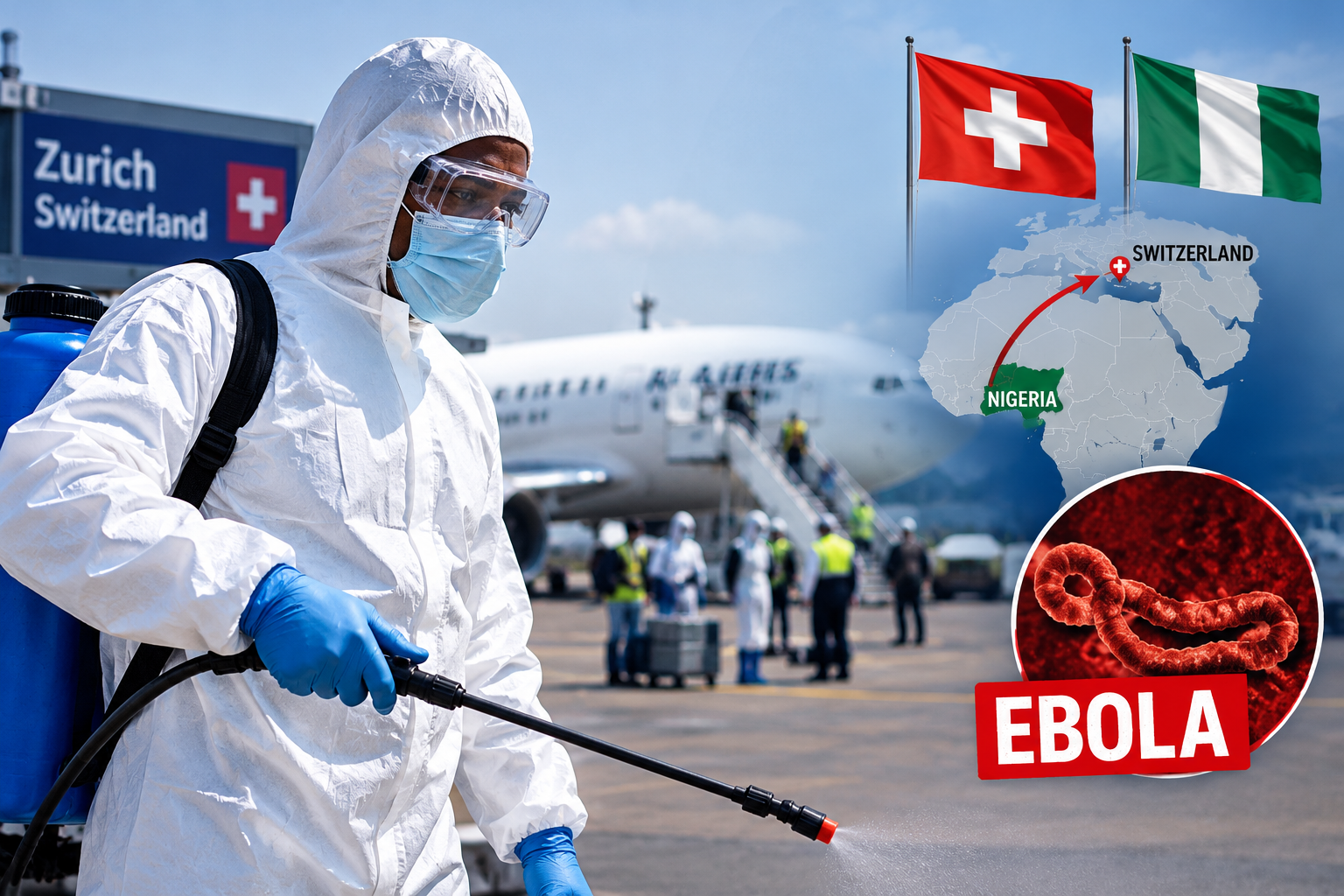
A woman diagnosed with Ebola in Nigeria has been transferred to Switzerland for specialist medical care, as health authorities continue efforts to contain an outbreak involving the rare Bundibugyo strain of the virus.
The patient, who is the Ugandan-born wife of a Swiss diplomat based in Abuja, was flown out of Nigeria on 26 October after receiving treatment from Nigerian medical teams. Her condition had improved significantly before the evacuation, according to Nigeria’s health minister, Muhammad Ali Pate. She was reported to be stable, conscious and able to communicate. Despite the improvement, officials stressed that she could remain infectious and that strict precautions would continue during her treatment and transfer.
The woman is being treated at Geneva University Hospitals, while her husband has been placed in isolation at University Hospital Zurich. The couple travelled on the same medical evacuation flight but were taken to separate facilities. Swiss health authorities confirmed that the hospitals were equipped to manage cases involving serious infectious diseases. The arrangements are intended to ensure that both individuals receive appropriate medical attention while infection prevention procedures remain in place.
The case represents Nigeria’s first confirmed Ebola infection in more than a decade. The diagnosis was announced after the woman returned to Abuja from travel in Uganda. Nigerian health authorities have been investigating her movements and possible exposure to the virus, but the precise source of the infection has not been established. Officials are also examining whether the case could be connected to transmission elsewhere in the region, given that Ebola infections have been reported in several African countries during the current outbreak.
According to Nigeria’s health authorities, the woman arrived in Abuja on 3 October after travelling from Uganda via Addis Ababa. She began experiencing symptoms several days later and subsequently sought medical attention. The national disease control agency was notified of the suspected case on 19 October, and laboratory testing confirmed Ebola infection on 20 October. The timeline has prompted questions about where the infection occurred and whether other people could have been exposed before the diagnosis was confirmed.
Health officials are investigating the possibility that the woman contracted the virus while in Uganda or during her journey through regional transport hubs. Her travel history has become a significant part of the investigation because cases have also been identified elsewhere in East Africa. However, authorities have not confirmed a definitive source of infection. Investigators are working to establish the chain of transmission, including whether there was an identifiable connection between this case and other confirmed infections.
The transfer to Switzerland follows treatment provided by Nigerian healthcare professionals, who helped stabilise the woman’s condition before she left the country. The World Health Organization’s regional leadership for Africa said the evacuation was arranged because the patient and her husband are Swiss citizens. Responsibility for her continued treatment has now shifted to the Swiss medical system, while Nigeria continues its public health response and monitoring of the remaining contacts.
Swiss authorities have sought to reassure the public that appropriate safeguards are in place. The hospitals receiving the couple have specialist facilities and procedures for managing serious infectious diseases. Officials have stated that the situation does not pose a risk to the wider Swiss population. The husband’s isolation and the woman’s treatment under strict infection-control arrangements form part of the measures designed to prevent possible transmission beyond the clinical setting.
Kenya has also reported Ebola infections linked to the wider outbreak, including cases associated with a person who travelled from the Democratic Republic of Congo through Uganda. The developments have raised concern among regional health agencies about the possibility of transmission through travel routes connecting affected areas. Uganda had previously reported cases earlier in the year before being declared free of the outbreak, but the latest infections have prompted renewed scrutiny of surveillance and cross-border monitoring.
The World Health Organization and Africa Centres for Disease Control and Prevention are working with national authorities to understand how the virus has spread and identify possible links between cases. Investigations include examining travel histories, testing suspected infections and tracing people who may have been exposed. Experts are particularly interested in determining whether infections recorded in different countries share a common source or represent separate transmission events. The findings will help guide decisions about surveillance, containment and the allocation of medical resources.
For Nigeria, the evacuation marks an important development in the immediate management of its confirmed case, but authorities have stressed that vigilance must continue. The transfer of the patient and her husband does not remove the need to monitor contacts or maintain infection-control measures. Officials are continuing to investigate how the woman became infected and whether any further cases could emerge among those who were exposed. The situation remains under close observation as public health agencies coordinate their response across the region.
For further local news, community updates and story tips, contact news@lakelandpost.co.uk or 0333 090 2080.