
New Walney Academy Technical Centre Offers Blueprint for Barrow’s Future Workforce
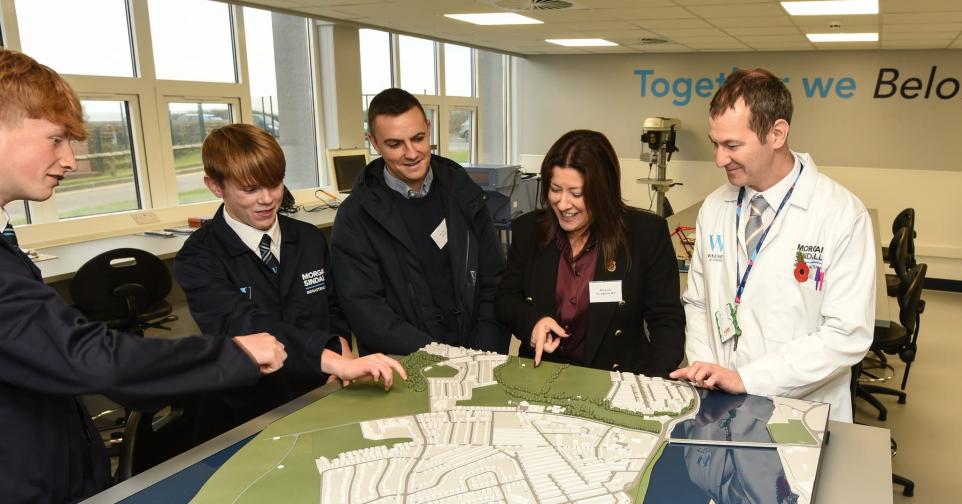
A new technical education centre at Walney Academy is being presented as a blueprint for connecting young people with skilled careers and Barrow’s future industries.
The £2 million facility brings specialist technical education into the 11–16 secondary school, giving pupils access to practical learning environments designed around real workplace conditions. It introduces a model known as a University Technical College (UTC) Sleeve, combining traditional academic education with industry-focused training.
The centre was officially launched on 6 November at an event attended by representatives from industry, politics and the local community. Guests heard presentations, took part in discussions about tackling youth unemployment and toured the refurbished facilities.
The project has received £1.7 million in funding from Team Barrow, a partnership bringing together government, local authorities, businesses and community organisations. The investment forms part of wider efforts to ensure local people can benefit from the employment opportunities expected to emerge from Barrow’s economic development.
Two specialist learning pathways have been developed in collaboration with employers: engineering and healthcare. The intention is to give pupils an earlier understanding of the skills and qualifications required in sectors that are important to the local economy and wider national workforce.
The engineering facilities include specialist spaces for mechanical engineering, mechatronics and computer-aided design. Pupils will have opportunities to work with industry-standard equipment and develop practical knowledge that can support progression into further technical education, apprenticeships and employment.
Healthcare students will have access to realistic training environments, including an NHS-standard hospital ward, physiotherapy facilities and domestic care settings. These spaces are designed to help young people understand healthcare roles and gain practical experience in environments that reflect professional working conditions.
The UTC Sleeve approach adapts the principles of University Technical Colleges for use within an existing secondary school. Rather than requiring a separate institution, it brings specialist technical provision alongside the normal school curriculum, making employer-led learning available to pupils in a familiar educational setting.
Local employers are expected to play an important role in shaping the curriculum and supporting students through practical projects, mentoring and work experience. The approach aims to ensure that what pupils learn reflects the requirements of businesses and industries recruiting in the region.
The centre is also intended to benefit young people beyond Walney Academy. Through a hub-and-spoke arrangement, other schools will be able to access its facilities and enrichment opportunities, extending the project's potential impact across the wider Furness area.
The initiative has particular relevance for Barrow, where major industries require a skilled workforce in engineering, manufacturing, infrastructure and related sectors. Supporters believe earlier exposure to technical careers could help young people make informed choices about their education and future employment.
Furness Education Trust, which oversees Walney Academy, has described the centre as an important investment in the area's young people. Chief executive Simon Laheney said the partnership had created an environment where students could develop the knowledge and confidence needed to progress into further education, employment or apprenticeships.
The Baker Dearing Educational Trust has also backed the project, with its Life President, Lord Baker, describing the opening as a significant step forward for technical education. The organisation has called for the UTC Sleeve model to be considered for wider use across England, helping more secondary school pupils access employer-led technical learning.
The project has also attracted support from the University of Cumbria, which sees closer links between education and industry as important to regional economic development. Vice-Chancellor Professor Julie Mennell said the centre could help create clearer routes into skilled employment and higher education while supporting the workforce needs of local employers.
For Barrow, the centre represents an attempt to connect investment in the town's industries with opportunities for the next generation. Its longer-term success will depend on how effectively schools, employers and education partners work together to turn practical learning into recognised qualifications, apprenticeships and sustainable careers.
For further local news, community updates and story tips, contact news@lakelandpost.co.uk or 0333 090 2080.